Moped Notes · Moped history
American moped sales went from about 25,000 in 1975 to 150,000 in 1977, and the advertising behind that jump sold one thing ahead of everything else: gas money.

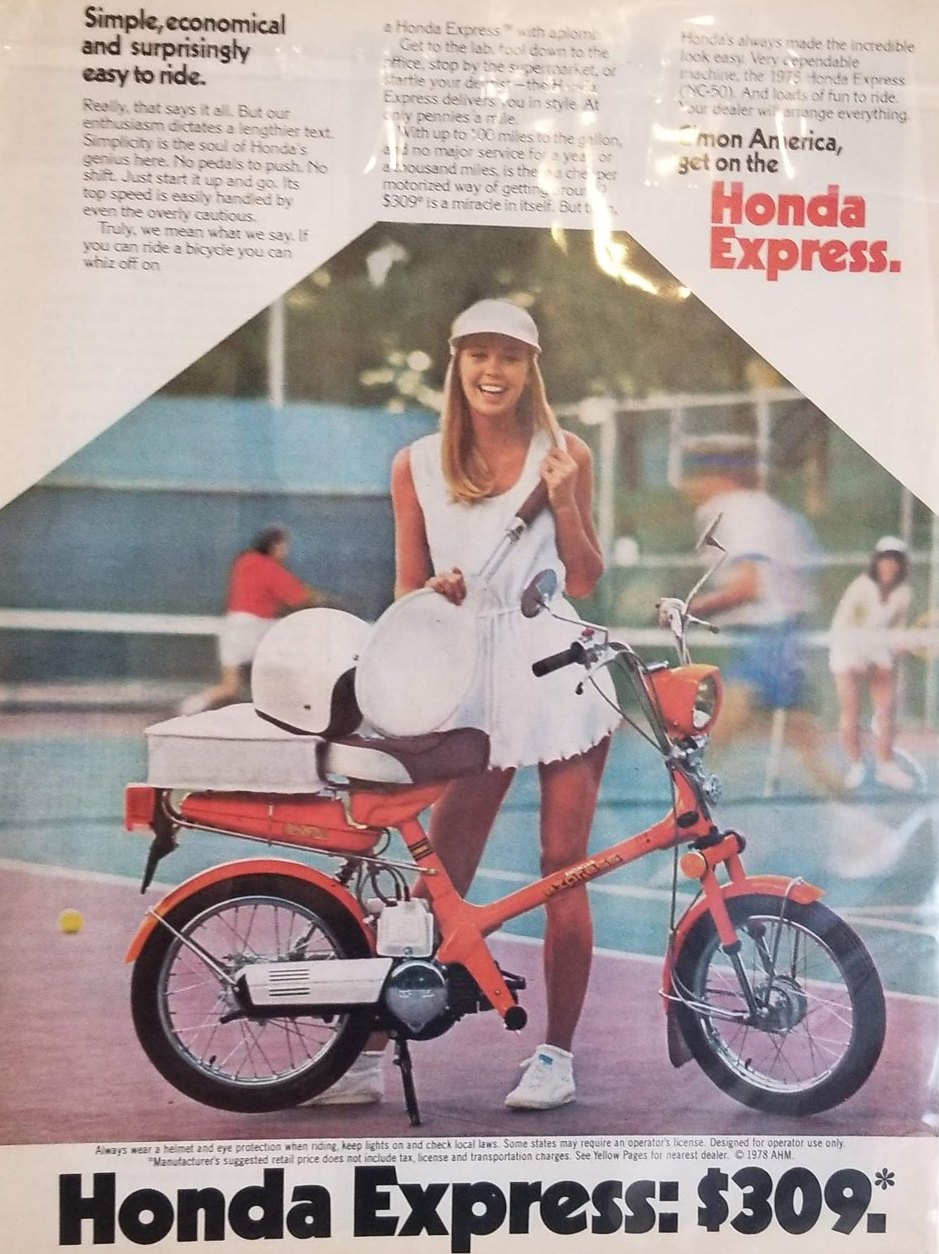
In 1977 a moped cost roughly $325 to $550 and ran 100 to 200 miles on a gallon. By 1980 the Moped Association of America was quoting 120 miles per gallon and a payback number. Ride 12 miles a day instead of driving and you saved about 240 gallons and $300 a year, so the bike paid for itself in around two years. Four in five car trips were under 10 miles, which is the moped's comfortable range.
About 30 models were on the market in 1977, and only one American company, Columbia of Westfield, Massachusetts, built them. The rest came from France, Austria, the Netherlands, Italy, Taiwan and Czechoslovakia. Bicycle shops and Honda dealers carried them, and one history says some turned up in drugstores and on newsstands. Dealers were back-ordered. Batavus West sold 54 in its first month at a Newport Beach outlet, and a Puch salesman said he shipped 1,500 units in a single month.
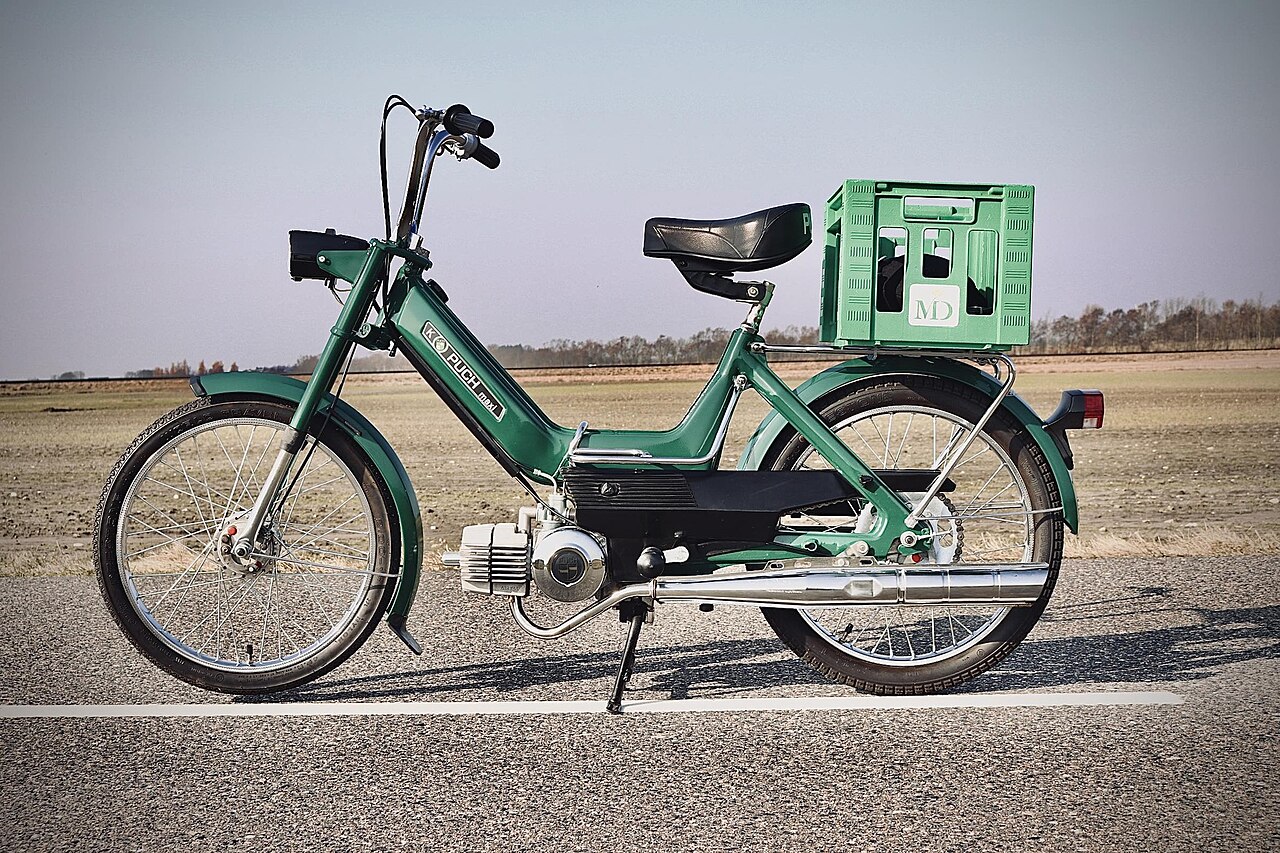
Students bought first. By 1977 most buyers were 25 to 50: commuters, housewives, city dwellers. In 1980 about one in five buyers was a woman, and dealers saw rising interest from people over 50. Buyers in their 30s and 40s were the least enthusiastic.
The pitch even had government backing. Jimmy Carter promoted mopeds as part of an energy conservation program, and some high schools ran "Moped Ed" courses.
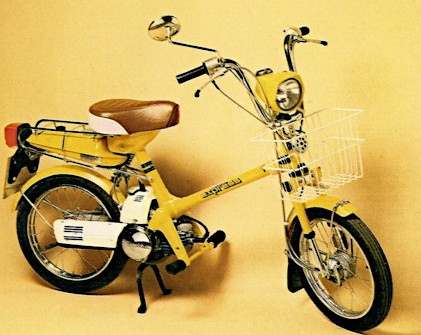
The message stayed simple. Learning to ride was compared to taking off training wheels, with no manual transmission to master, and many states asked for no helmet or insurance. A Honda Express commercial from the period, as catalogued by Oddball Films, opens on a paperboy and has a high school girl saying it is as easy to ride as a bicycle. Honda had introduced the Express in 1977 to catch the market created by the 1973 oil crisis.
By 1985 the money was in scooters, and the pitch changed. Cycle World described an American Honda commercial for the Elite with Grace Jones and Adam Ant, aimed at young, trend-conscious buyers, with the line that it is sexy. Wieden+Kennedy cut a Lou Reed spot for the Elite the same year. Yamaha went the other way: its Riva ads showed middle-class Americans having wholesome fun, and its surveys said people over 30 already accepted scooters.
Period commercials you can watch: the Honda Express spot, the Honda Urban Express NU50 ad from May 1982, and the 1985 Honda Elite ad on The Vintagent.
Lawmakers worried about 30 mph vehicles mixing with traffic. Police worried that mopeds, which needed no license in most states, were a ride for people whose car licenses had been revoked. The novelty wore off and mopeds started to look wimpy. One history says fewer than 12 moped dealers were left nationwide by 1985, down from several hundred at the late-1970s peak. Jack's Scooter Shop puts Japanese scooter sales at just 55,000 units in 1989.
The ads are gone, but the bikes and the gas-money math still work.
Find your bike, then pick up something for the garage:
General information from published sources and owner experience. Your bike, your state and your tools may differ, so check your own service manual and local rules. Moped Motel is an independent fan site, not a repair service. No seller, brand or channel mentioned here paid to be included or asked to be, and we have no affiliation with any of them.
More guides are on the Moped Wrench Guides page, with the sources. Want to meet the riders? See Feature Your Bike.

T-Shirts, hats, and customs. Checkout happens on Etsy.
Moped Motel is vintage two-stroke moped apparel. We print over 100 moped designs on t-shirts, long sleeves, hoodies, sweatshirts, hats and beanies, inspired by real Puch, Tomos and other classic mopeds. Everything is printed to order, and checkout is on Etsy.
// MOPED ARCADE
Name That Moped, Pinball, Blackjack and Stack. Free to play.
Play now