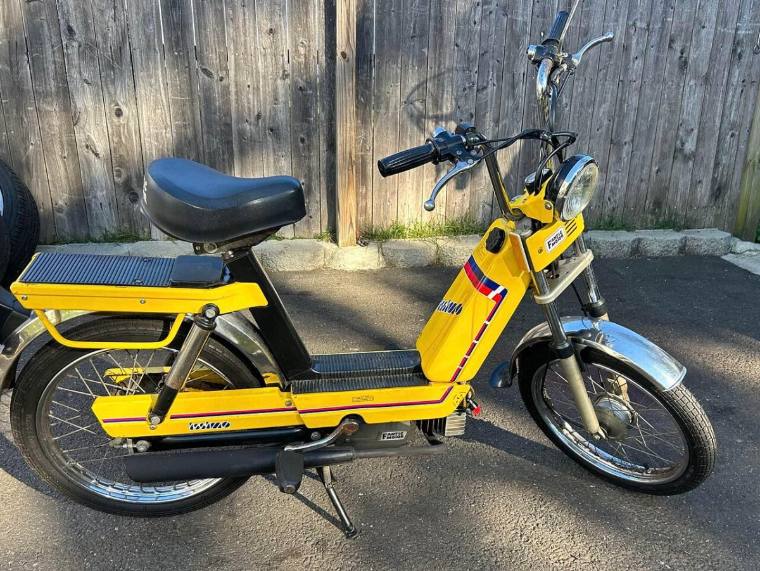
Home / Moped Library
The Moped Library
196 vintage mopeds with photos, 105 more models and versions, 51 brands
Last updated October 13, 2026. New bikes get added every drop.
Free history on the mopeds people still ride, wrench on and hunt for. Pick a brand, then a model: every bike has a real photo, the years, the engine and what makes it different, pulled from moped club archives, collector sites like Myron's Mopeds and Moped Army, and encyclopedias. Bikes we've made merch from show it right on the card.
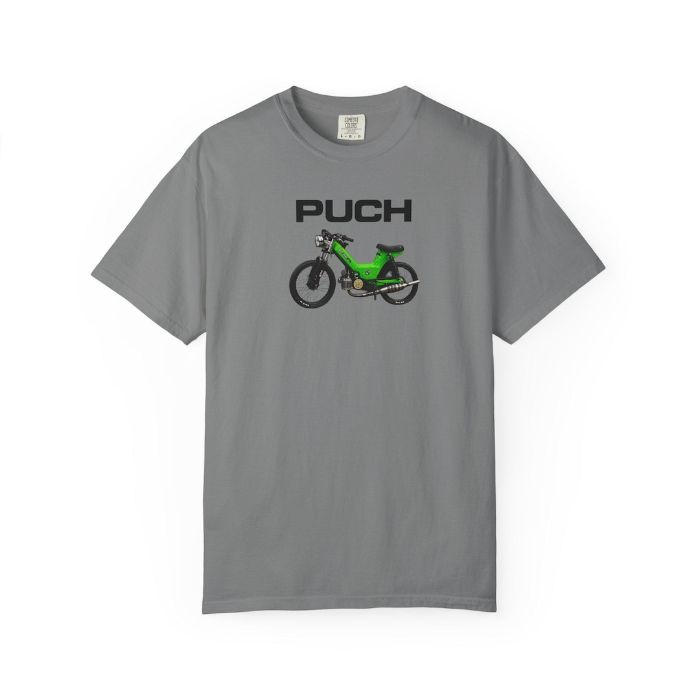
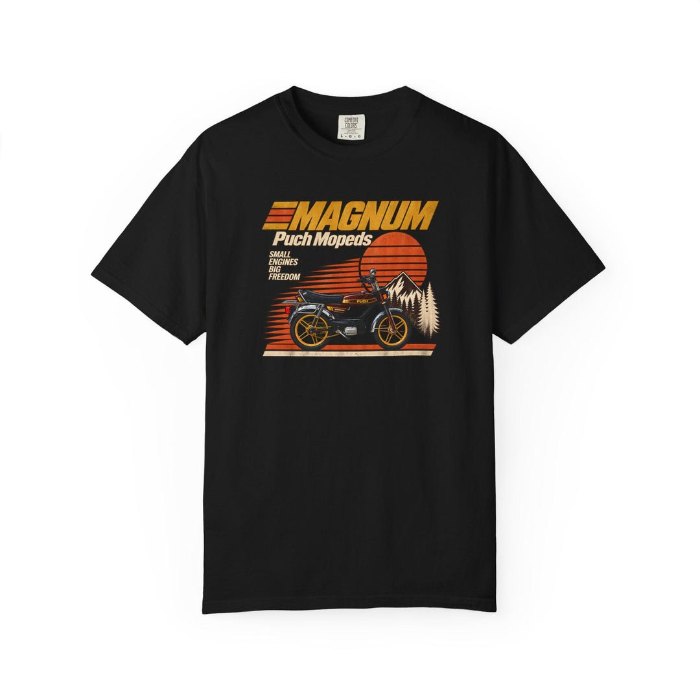
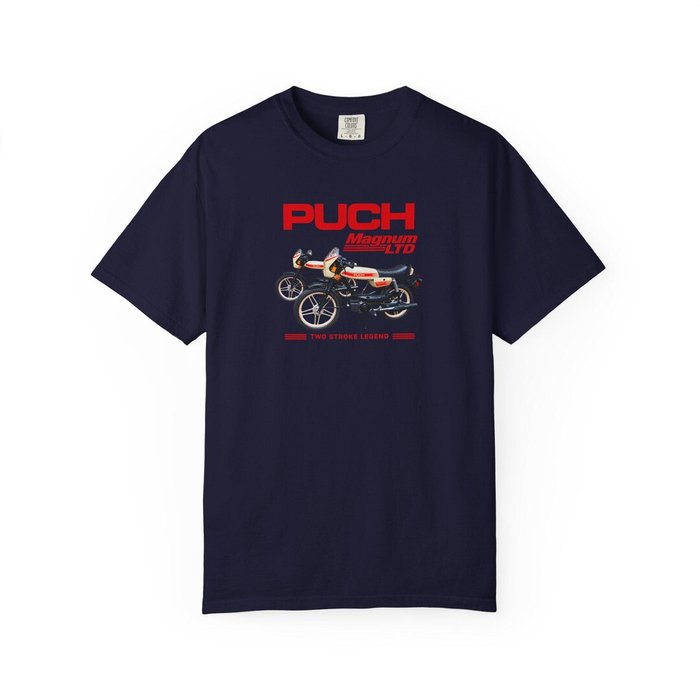
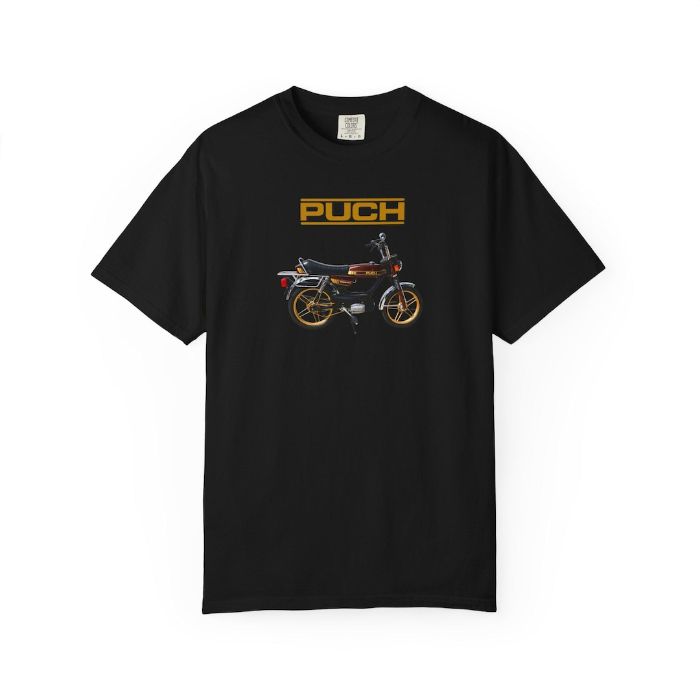
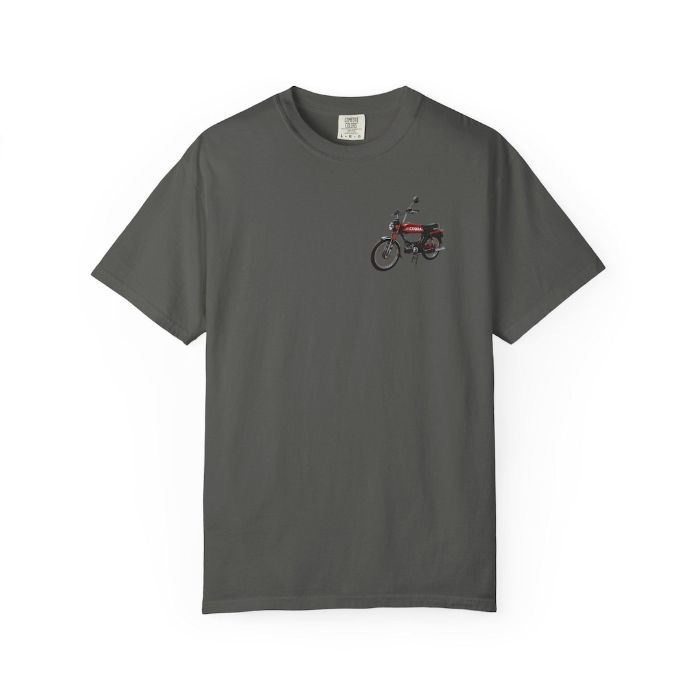
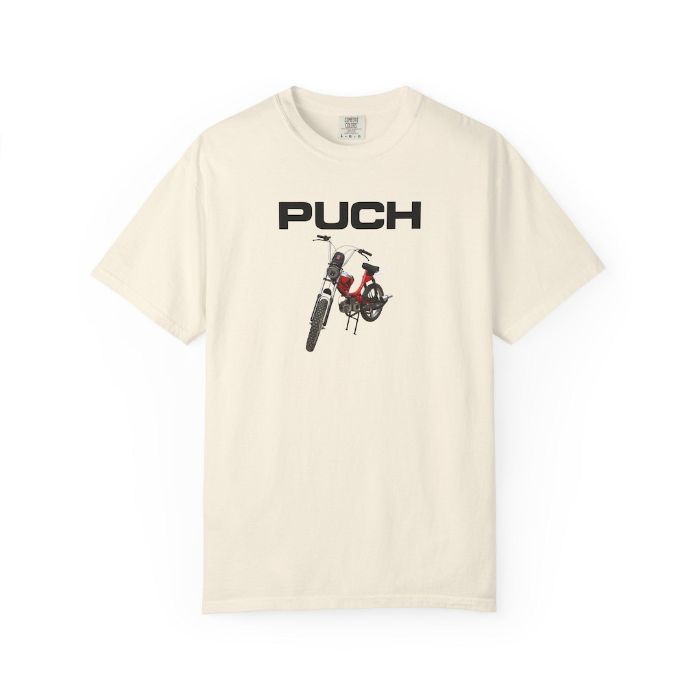
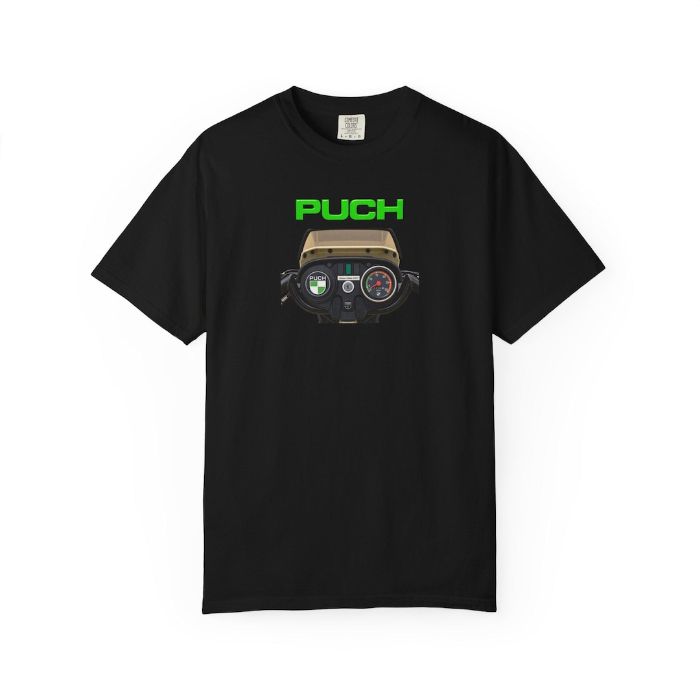
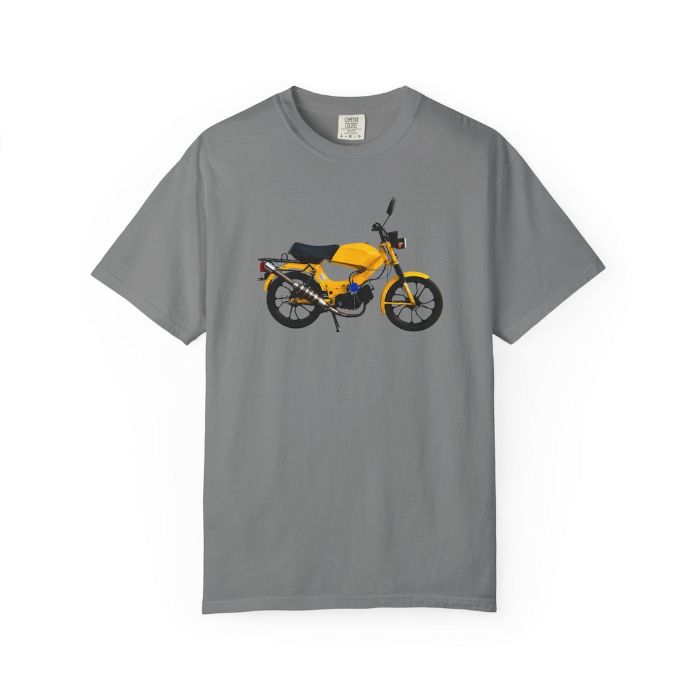
Some of these are bikes from our own fleet, and when we've turned one into a shirt it's right there on its page. Don't see yours? DM us your bike.
Steyr-Daimler-Puch of Graz built mopeds from the 1950s until Piaggio bought the two-wheel business in 1987. In the US, Puch was the best-selling moped brand of the boom, and Sears, JCPenney and Murray all sold Puch-engined bikes under their own names.
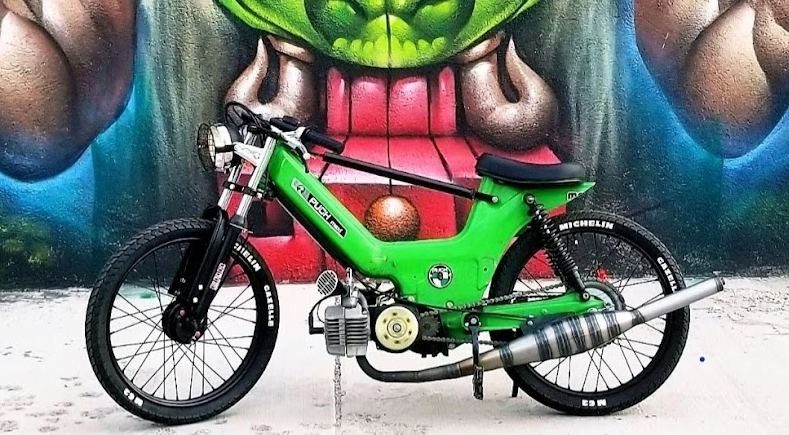
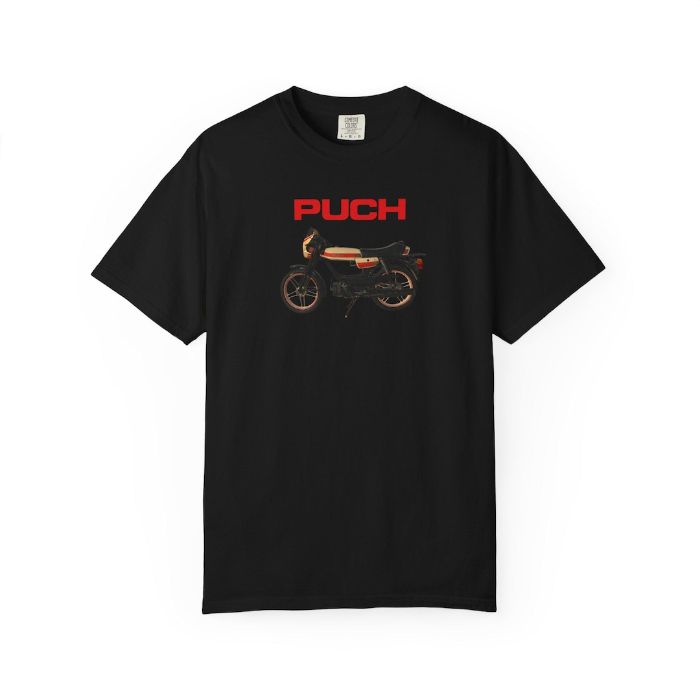
1969–1995 · E50 single speed or ZA50 two-speed
About 1.8 million built. The moped most people picture when you say Puch.
Full history →From the Moped Motel fleet
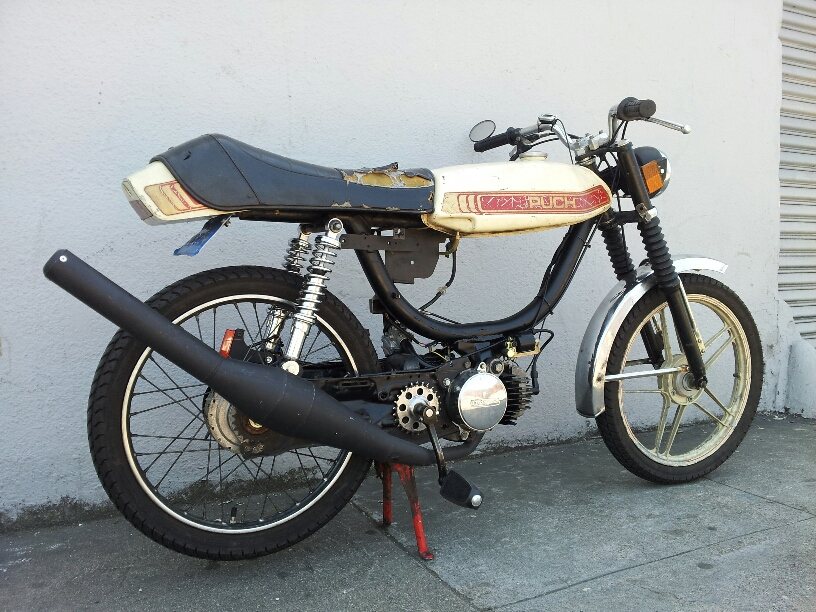
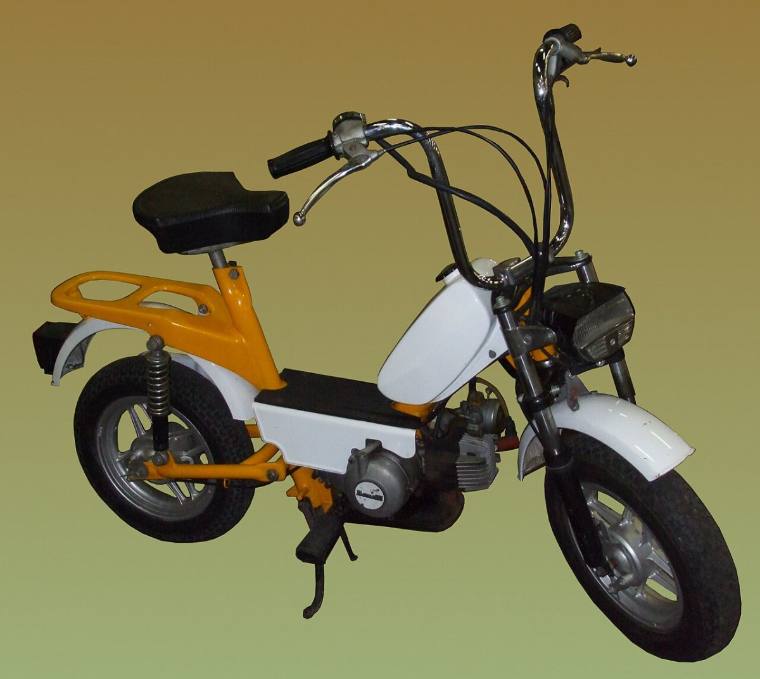
1978–1980 · E50, or ZA50 two-speed
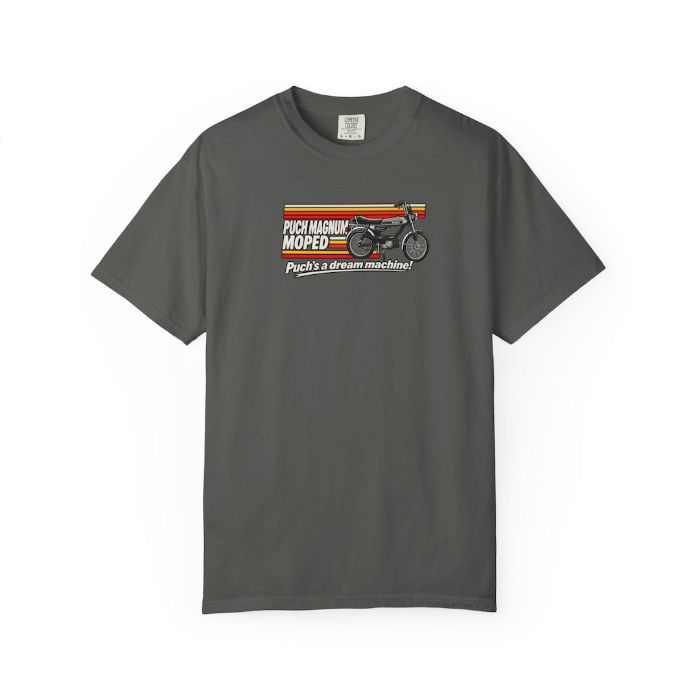
Built for North America. The tank on top made it look like a small motorcycle. The LTD was a numbered run of 500.
Full history →Photo: Uzetheforce, CC BY-SA 3.0
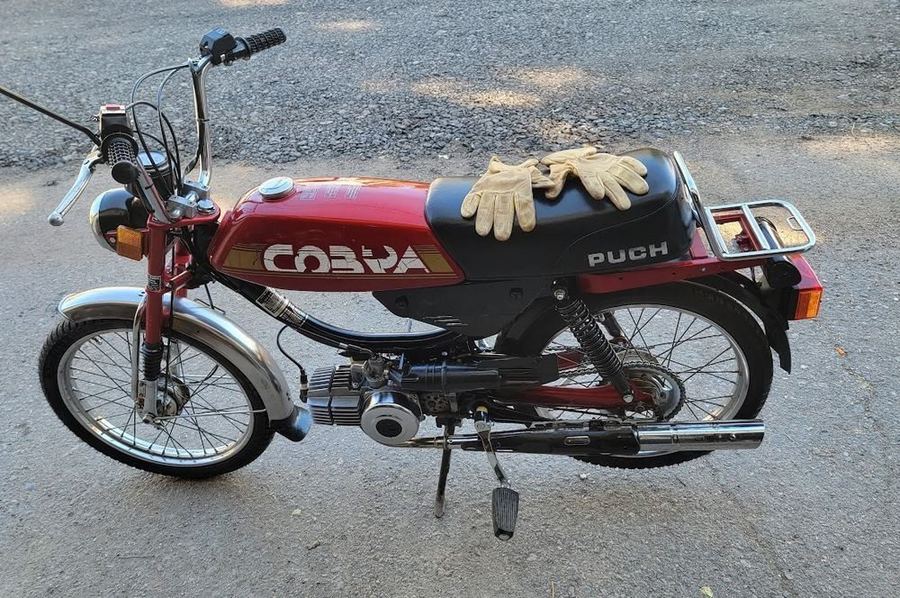
1984–1986, US only · E50, ZA50 in 1986
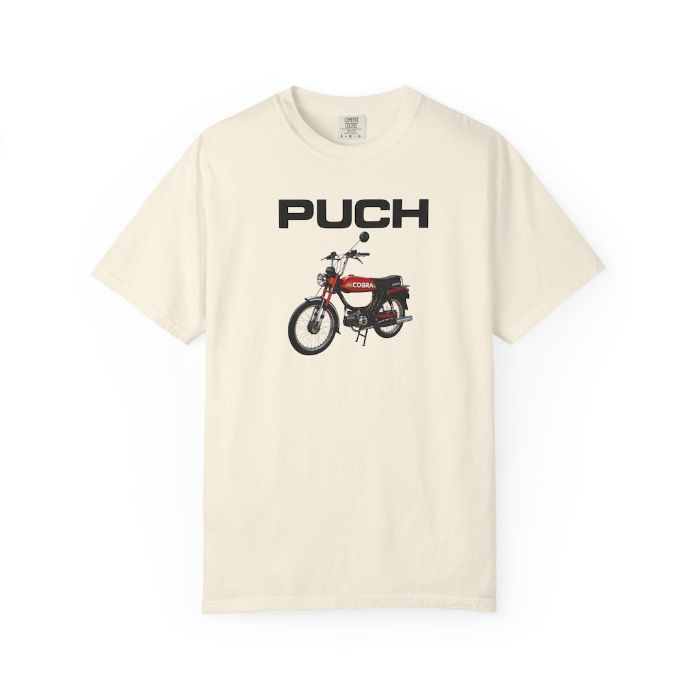
One of the last Puchs built for America. The white 1986 ones are the rarest.
Full history →From the Moped Motel fleet
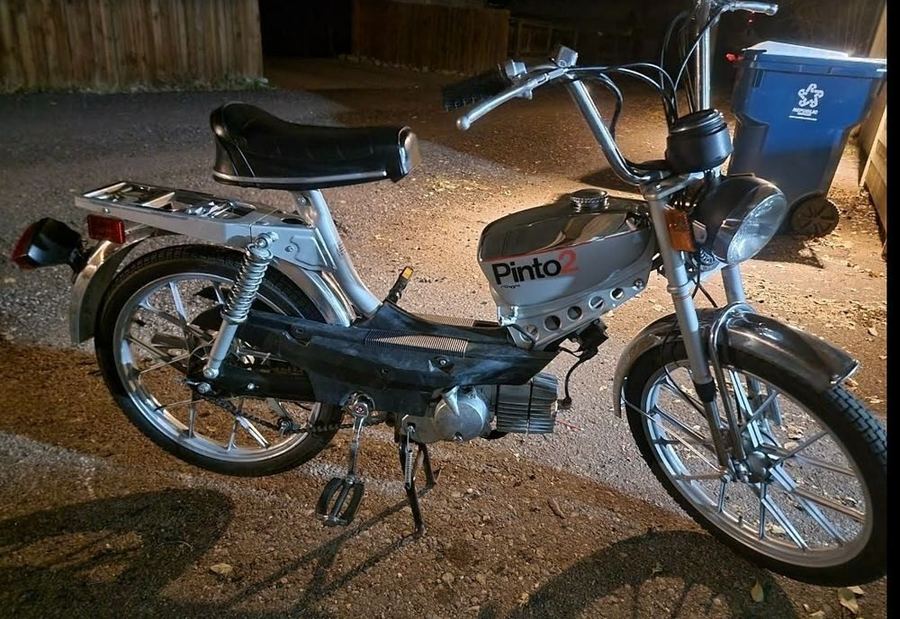
Store brand · Puch E50
An Austrian-built Puch sold through JCPenney.
Full history →From the Moped Motel fleet
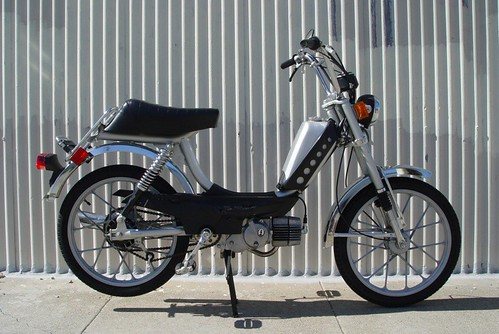
1977–1979 · Puch E50
A Puch sold through the Sears catalog in three trims.
Full history →Photo: BitBoy, CC BY 2.0
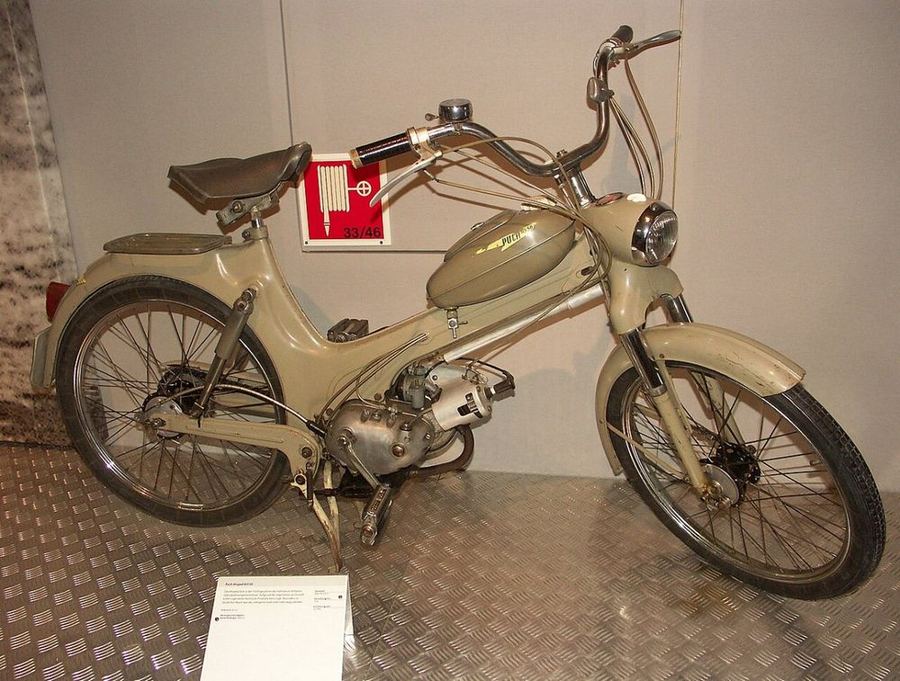
1954–1982 · 48.8cc two-stroke
Built almost unchanged for 28 years. Austrians nicknamed it the "Stangelpuch," and the Austrian post rode them for decades.
Photo: Dnalor 01, CC BY-SA 3.0 at
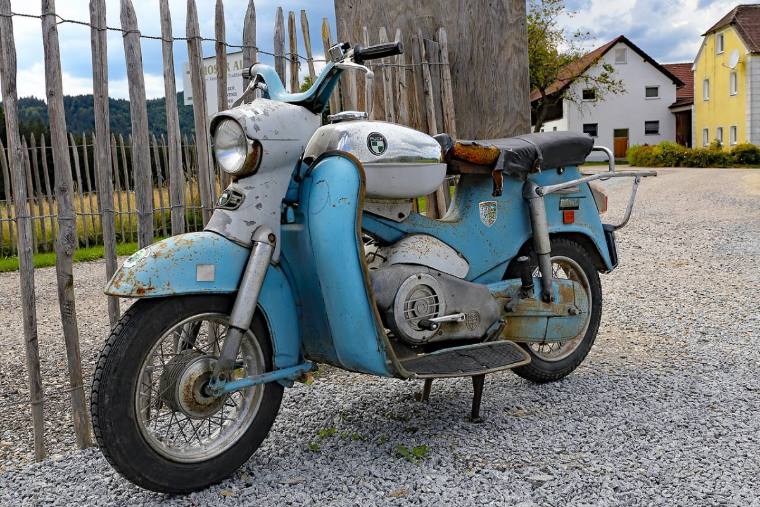
1959–1981 · 48.8cc two-stroke
A two-seat moped scooter. DS stands for Doppelsitzer, German for double seat.
Photo: Duke of W4, CC BY-SA 4.0
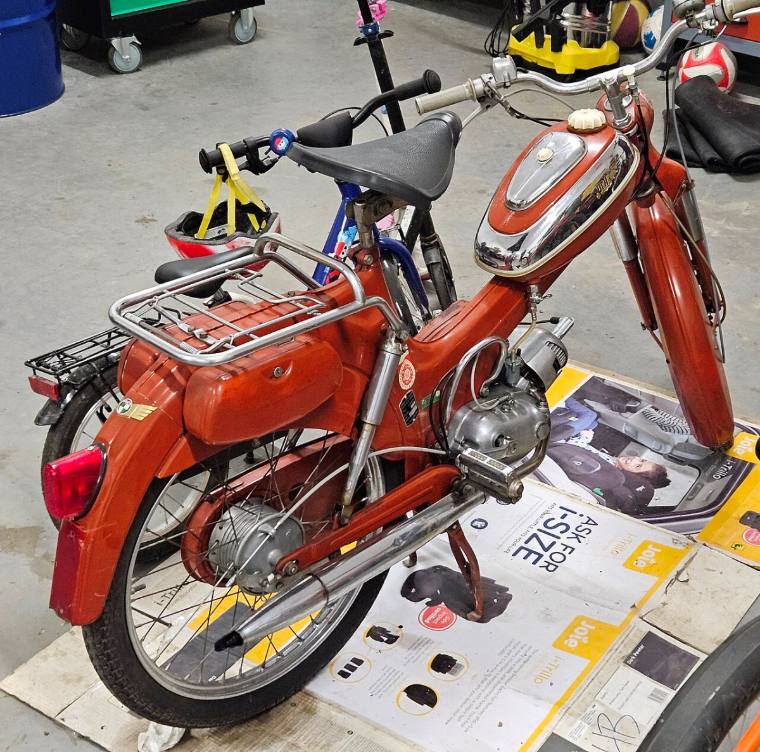
Shown: VS 50 L · 50cc two-stroke
A Steyr-Daimler-Puch moped from the MS 50 era.
Photo: Zeitblick, CC BY-SA 4.0
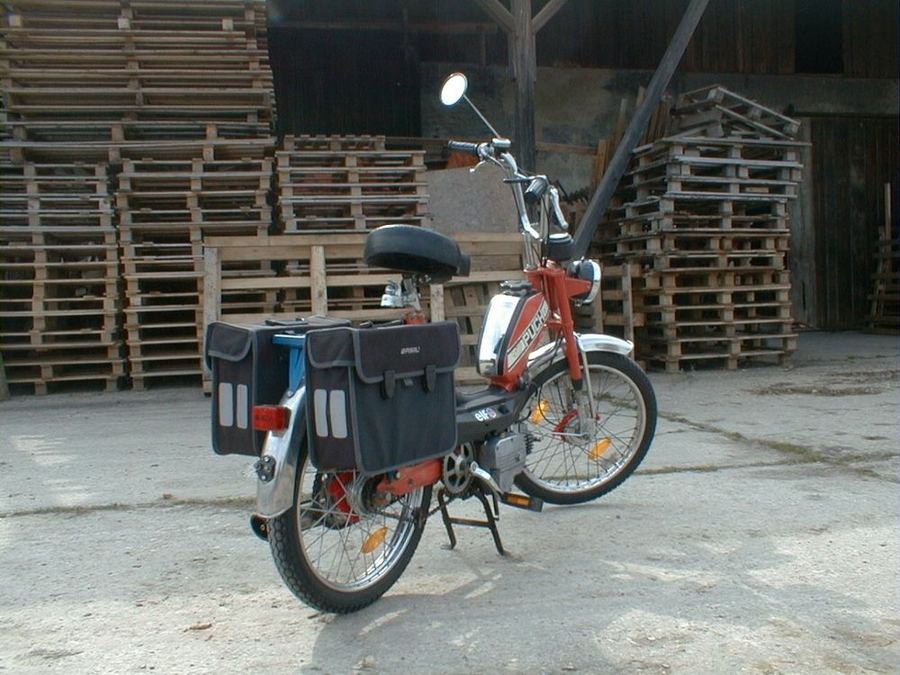
From 1962 · 48.8cc, two-speed
The Maxi's pricier half-sister, with a slim tank and big chrome spoke wheels.
Photo: Markus Zinnecker, CC BY-SA 3.0
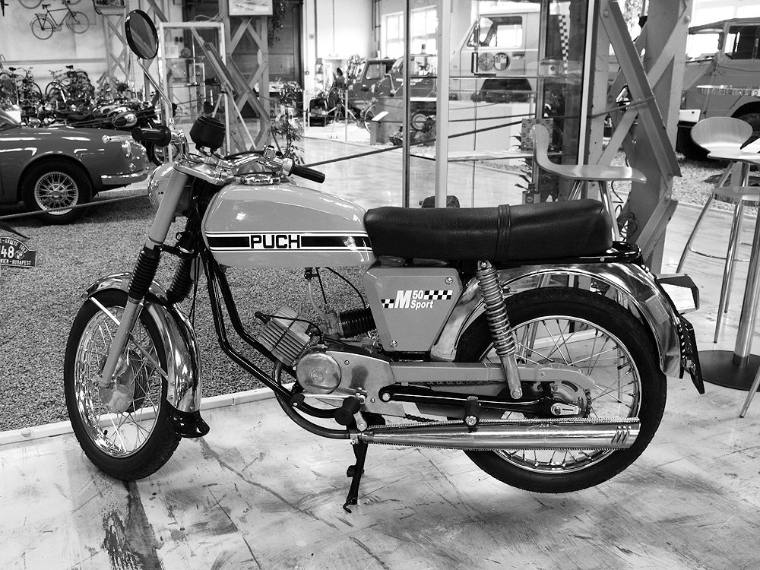
1967–1976 · four or six speeds, foot shift
Built because buyers wanted mopeds that looked like real motorcycles.
Photo: Der.krusche, CC BY-SA 3.0
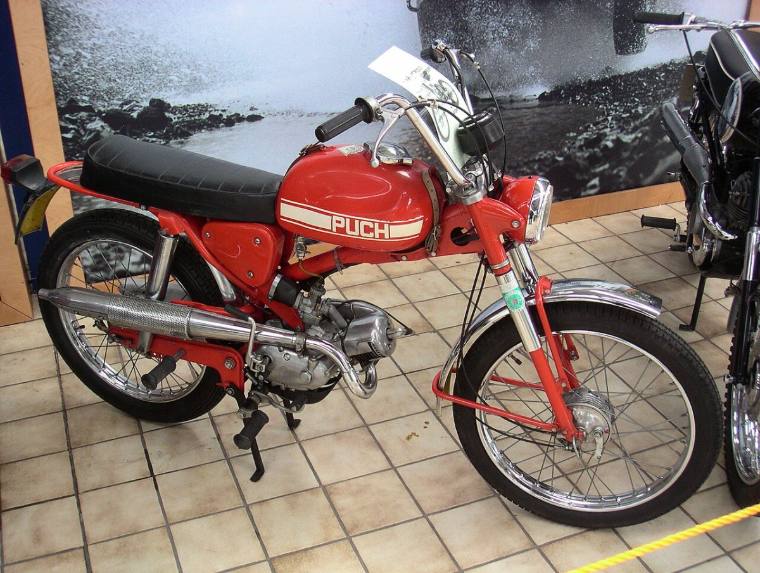
50cc two-stroke
Puch's motorcycle-style 50, often turned into a chopper.
Photo: Dnalor 01, CC BY-SA 3.0 at
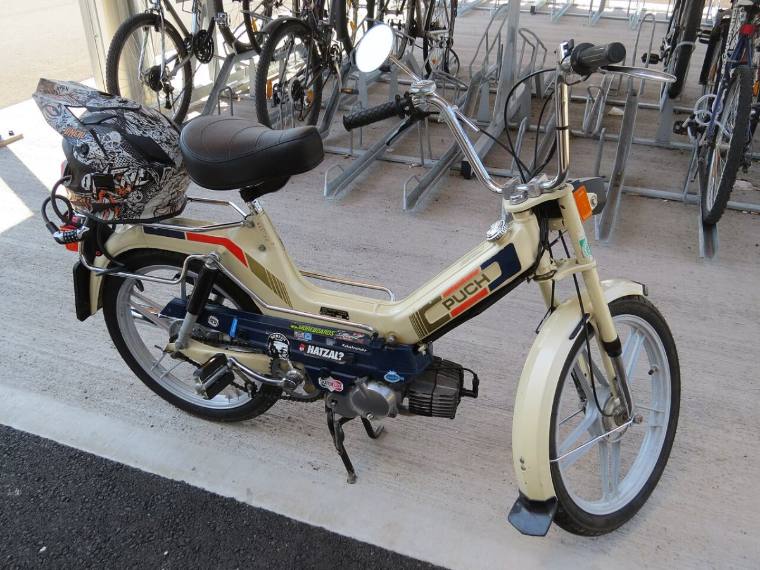
US 1975–76 · E50 one-speed
The standard full-suspension Maxi. The 'D' or 'LS' version added a long seat for a passenger.
Photo: GT1976, CC BY-SA 4.0
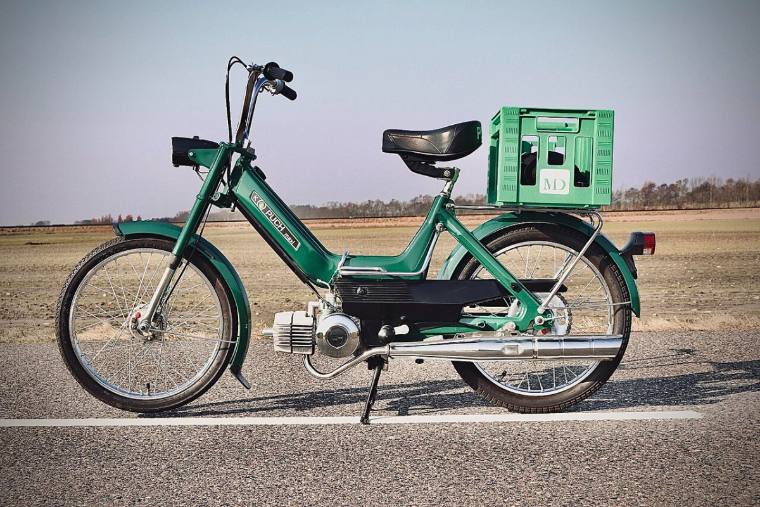
Europe · E50 with kickstart
The K stands for Kickstarter: a Maxi you kick to life instead of pedaling.
Photo: Sugemallen, CC0
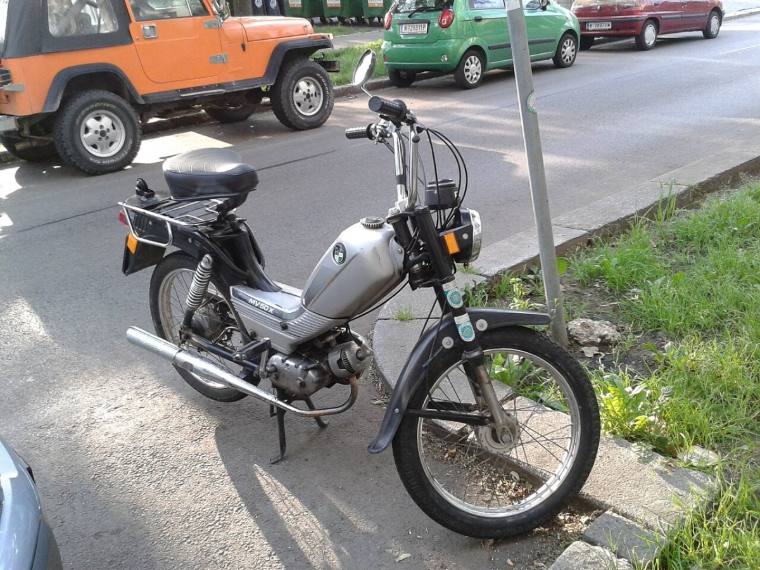
Shown: MV 50 X · 50cc two-stroke
A Maxi-era Puch with a motorcycle-style tank. Britain's postal museum keeps one from 1980.
Photo: Priwo, Public domain
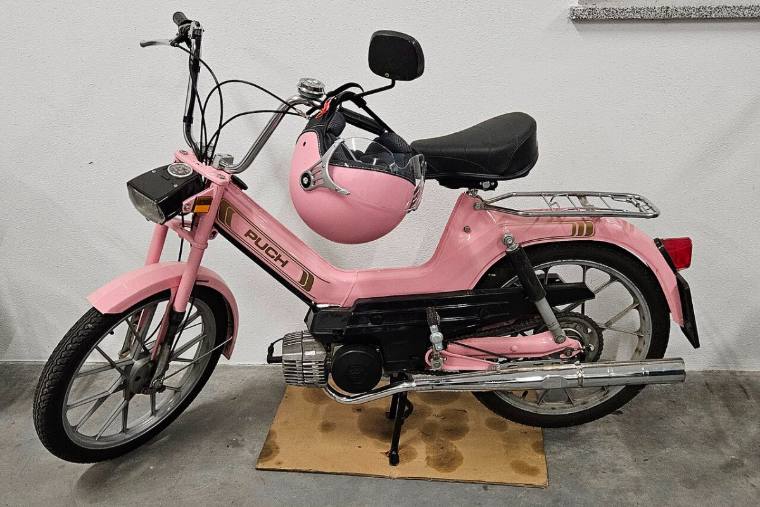
US 1977–78 · E50 one-speed
Cross mag wheels on the Maxi. The two-speed Sport MKII followed in 1978.
Photo: Zeitblick, CC BY-SA 4.0
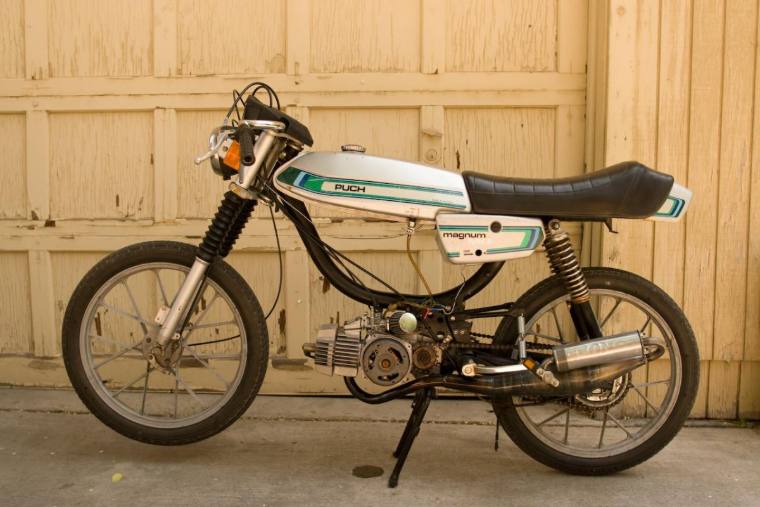
1978–1983 · ZA50 two-speed
Silver with green stripes. The MKII had hydraulic suspension, mags and oil injection; the 1980 Magnum II kept the look with spring suspension. Shown: a silver-and-green Magnum.
Photo: Jared eberhardt from Los Angeles, United States, CC BY-SA 2.0
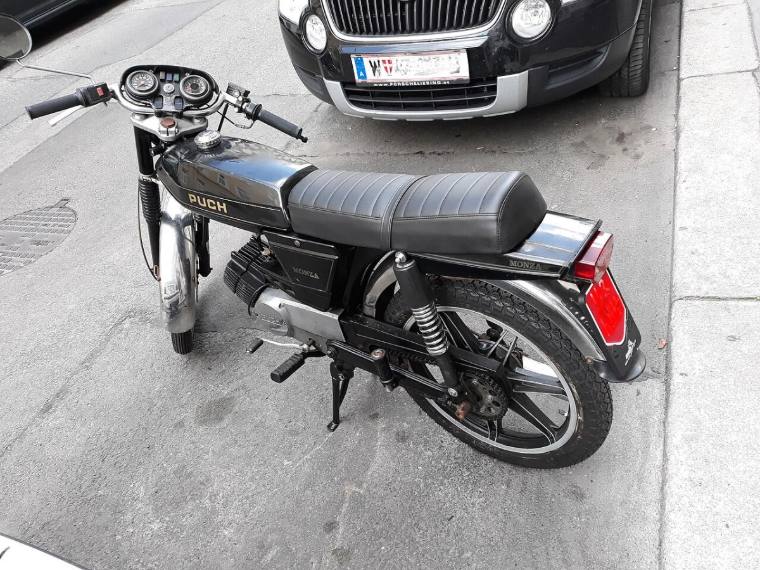
Shown: four-speed Monza · 50cc
Puch's sporty kickstart 50. The Magnum LTD borrowed its dashboard.
Photo: Priwo, Public domain
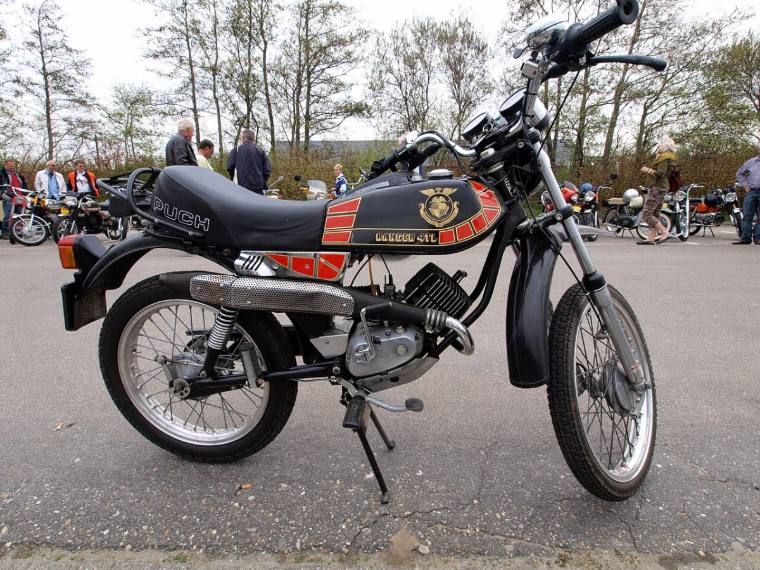
1979–1987 · 50cc off-road
A light off-road moped built for Puch at its Spanish plant in Gijón, sold mostly in Austria and Germany.
Photo: AlfvanBeem, CC0
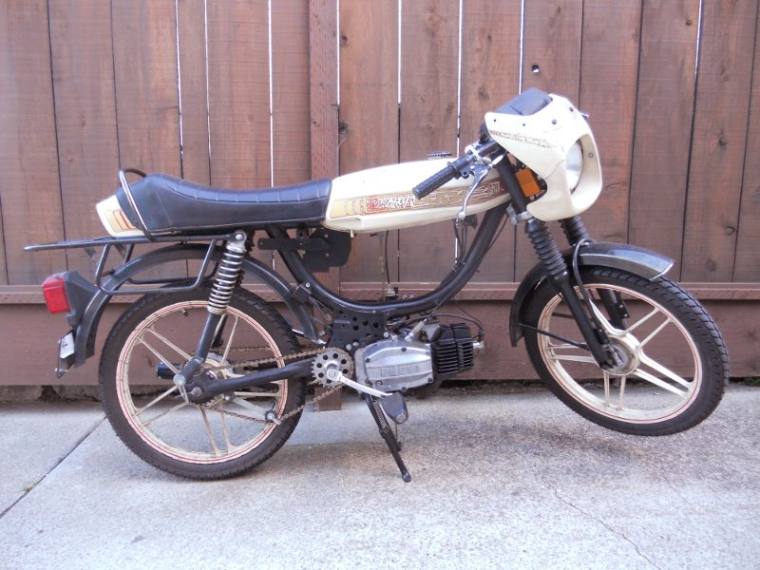
1981 · ZA50 two-speed, oil injection
The last Magnum. Only 500 were made, in white and red with a fairing, black chrome and a numbered Monza-style dash plate.
Photo: Uzetheforce, CC BY-SA 3.0
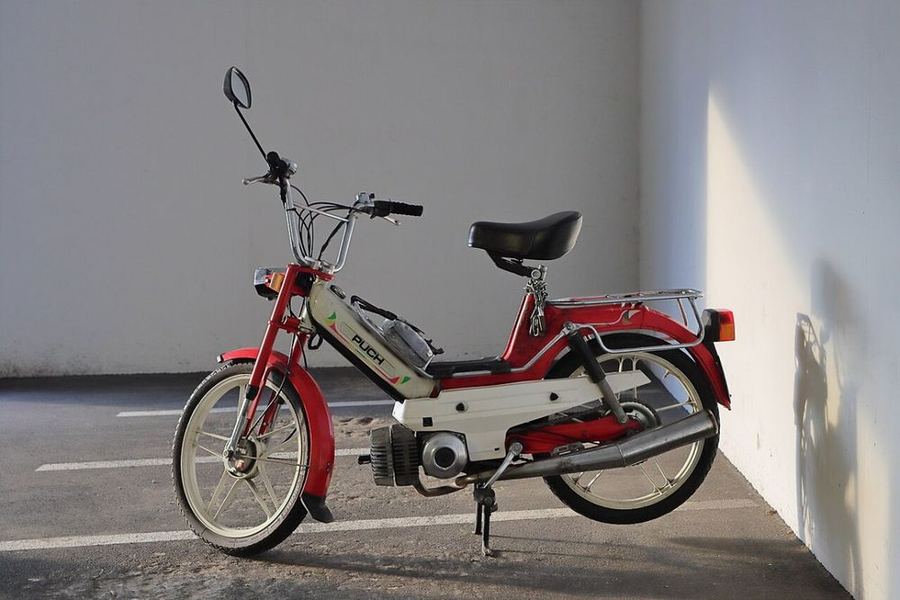
Late 1980s–1990s · E50 (LG1) or ZA50 (LG2)
The last evolution of the Maxi, sold as the LG1 and LG2 from 1991.
Photo: Christoph Waghubinger (Lewenstein), CC BY-SA 4.0
More Puch models and versions (no free photo yet. Got one? DM us)
- Maxi N Rigid frame, no speedometer, the "poor man's Maxi." US 1975–76
- Maxi LS / D Factory long seat for a passenger
- Maxi Luxe / Luxe II Hi-torque head and mudflaps; Luxe II with ZA50 two-speed. US 1977–78
- Maxi Nostalgia (Nostalgic) Black and gold with old-style Puch logos, 1976 only
- Maxi II ZA50 two-speed. US 1978–79
- Sport MKII Cross mags and ZA50 two-speed. US 1978–80
- Euro Maxi versions L, E, P2, GS (off-road), Plus, Super S, N Chopper, N Off Road, Casablanca (1972–73), Strada, Turbo Sport (four-speed foot shift), Mini Maxi
- Puch GN Hard-tail frame. US 1976–78
- Series B Wine color, trapezoid tank, CEV switches. 1980–81
- Newport A Maxi S with pinstripes and reflective whitewalls. US 1977–79 merch →
- Newport L Swoop decals, black covers, puffy seat
- Newport II ZA50 two-speed. 1980
- Magnum XK The base 1978–79 Magnum: red, spoke wheels, E50
- Magnum X Kickstart dirt bike with a 3.5 hp E50, the strongest automatic Puch 50. 1978–79
- Dart Step-through with a plastic tank and 14-inch wheels, called the Mini Maxi in Europe. Early-mid 1980s
- Austro-Daimler (AD) Porsche-designed, E50 or ZA50. 1984–86 merch →
- Korado Piaggio-era Puch with an updated E50. 1995
- Macho Kickstart E50, sold in Europe
- JCPenney Swinger 1 & 2 Cheaper Pinto line; the rigid blue Swinger 1 is now the rarest
- Murray US-built frames with a Puch E50, sold in department stores. 1979–82
- Bombardier The Maxi as sold in Canada
- Sears Allstate Puch-built Sears mopeds and motorcycles of the 1950s–60s
- X 30 / Condor Z50 two-speed manual, sold in Europe and Switzerland
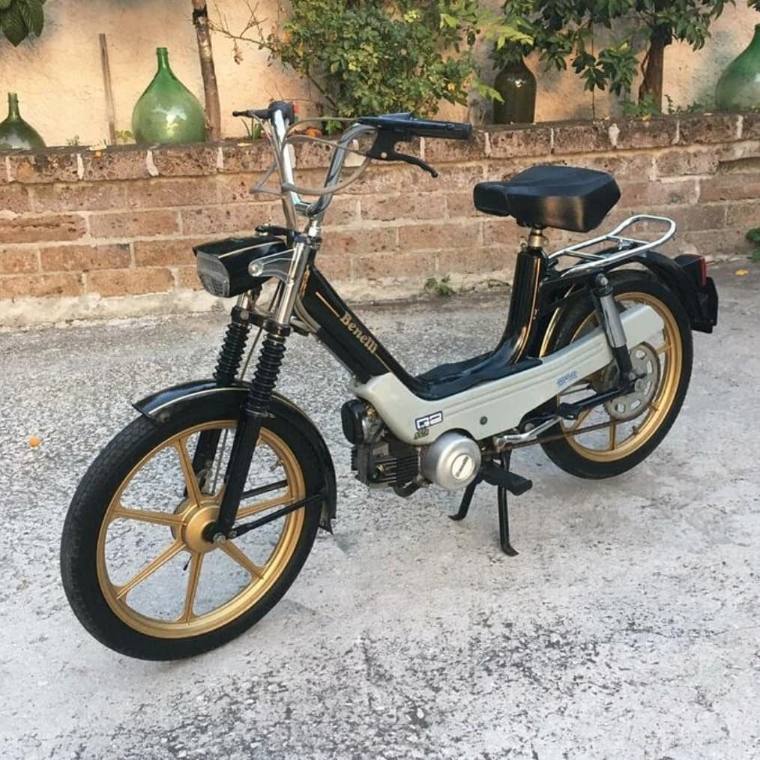
BenelliItaly
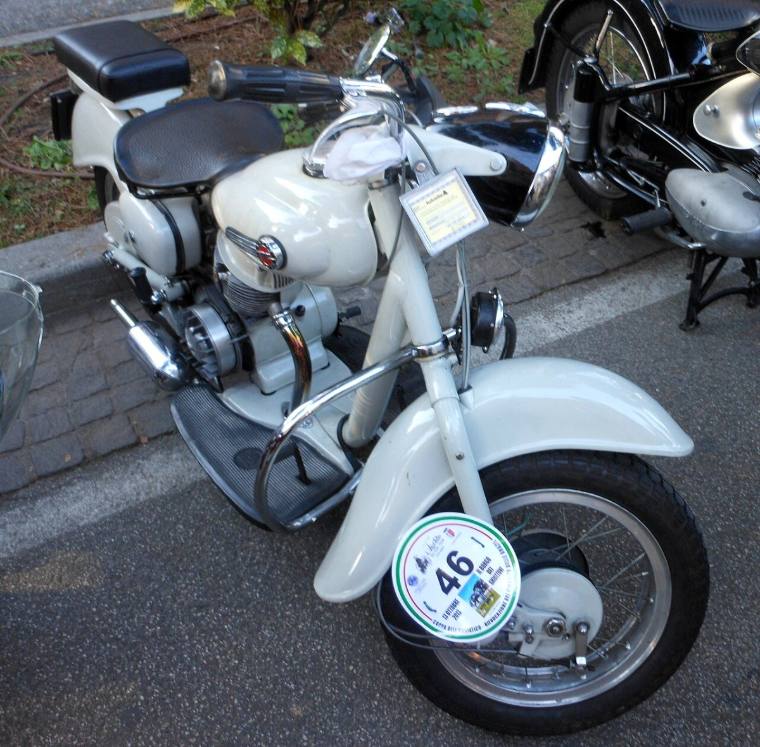
The Pesaro motorcycle maker built mopeds through the 1970s, including the best-selling Motorella. The US got the Blazer and the G2.
Motorella
1970–1978 · 49cc
Benelli's best seller, about 200,000 built. Also sold as a MotoBi.
Photo: Norbert Schnitzler, CC BY-SA 3.0
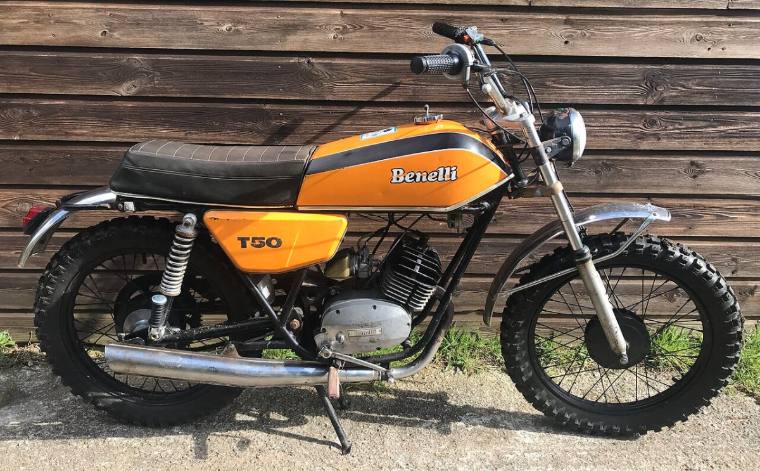
T50
Shown: 1977
A Benelli trail-style 50.
Photo: RicardoDonovan, CC BY-SA 4.0
G2
From 1978
The 'Gentlemen 2', in pedal, kickstart and deluxe Elle versions.
Photo: Laura Buononome, CC BY-SA 2.0
More Benelli models and versions (no free photo yet. Got one? DM us)
- Blazer One-speed. US 1977
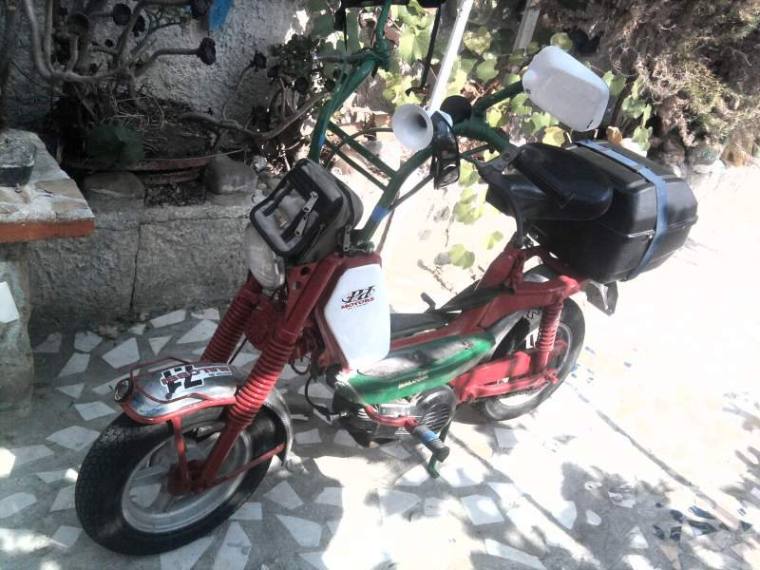
CimattiItaly
Founded in Bologna in 1937 by racing cyclist Marco Cimatti, the company added mopeds in 1950 and won the Italian 50cc trials title three years running (1966–68). In the US it sold the City Bike and the Gran Prix XL.
Mini Chic 50
Cimatti 50
A small Cimatti.
Photo: Baby Cucciola, CC BY 3.0
More Cimatti models and versions (no free photo yet. Got one? DM us)
- City Bike Minarelli V1. US 1975–79
- Gran Prix XL Minarelli V1, top tank. US 1978–80
Columbia was an American bicycle maker that sold Sachs-engined mopeds in the US boom years: the Commuter, Medallion, Imperial, Mopet and Open Road.
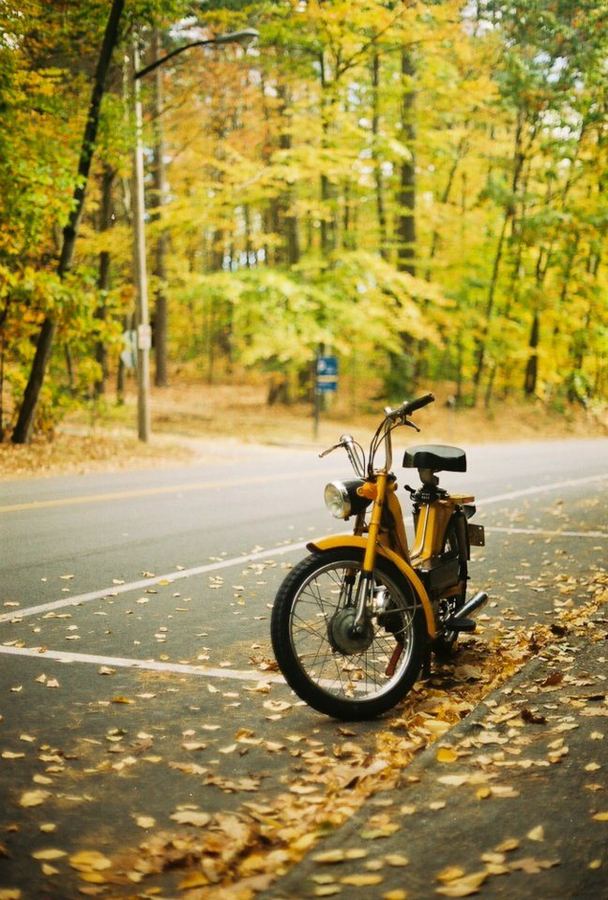
1970s–1980s · 47cc Sachs 505/1A
One of the first mopeds assembled in America, sold in pressed-steel and tube-frame versions.
Photo: Fredmeissner, CC BY-SA 3.0
More Columbia models and versions (no free photo yet. Got one? DM us)
- Medallion Sachs 505/1A, top tank. US 1978–80
- Imperial / Mopet / Open Road Sachs or Solo engines. US 1977–80
Derbi takes its name from DERivados de BIcicleta. The Antorcha sold over 500,000, and the Variant line covered everything from the SL commuter to the TT trail bike. The C5 Diablo was the US dirt-bike moped.
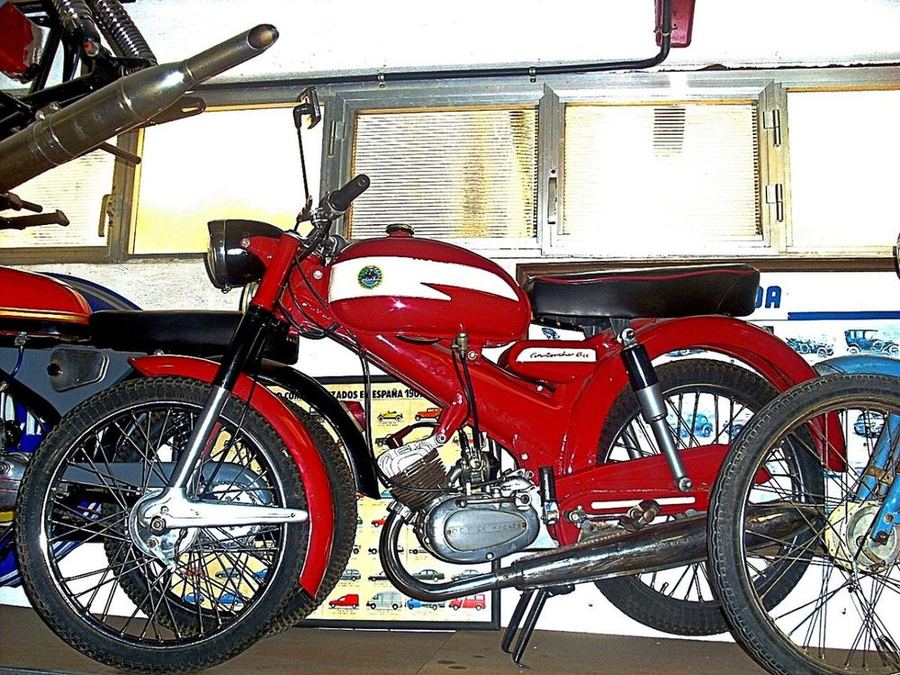
1965–c.1980 · 49cc two-stroke
More than 500,000 built in all versions. Along Spain's Mediterranean coast people call it the "paleta."
Photo: Txemari (Argazki)., CC0
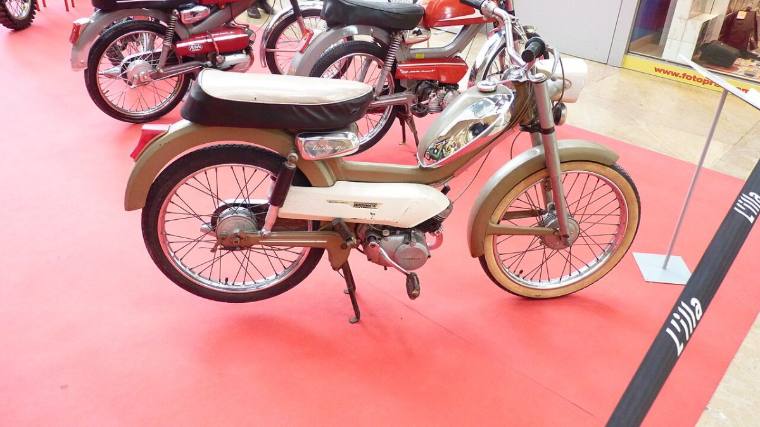
Shown: 1967 · 49cc
A 60s Derbi.
Photo: Montesita, CC BY-SA 3.0
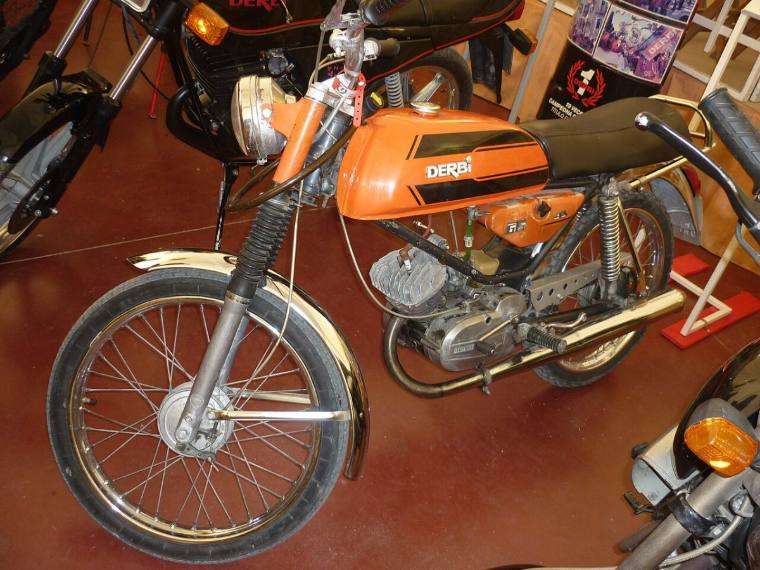
Shown: 1974 · 49cc
A 70s Derbi sport moped.
Photo: Peprovira, CC BY-SA 3.0
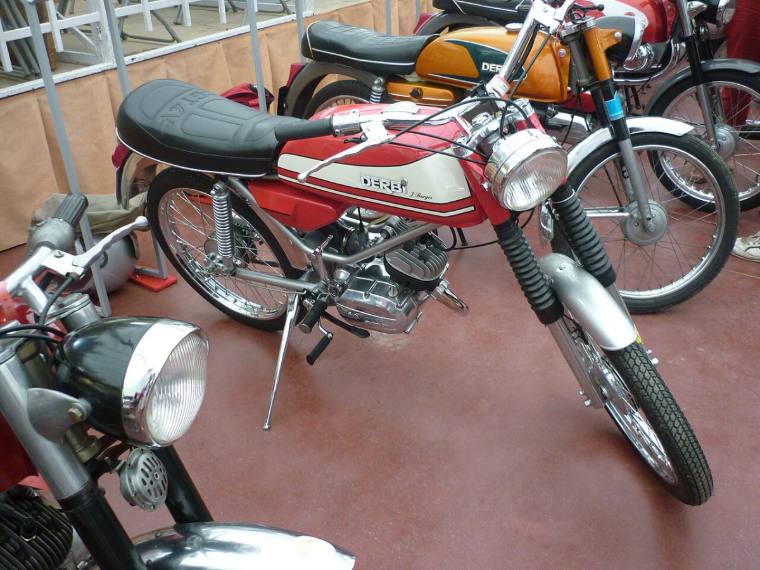
Shown: 1975 · 49cc
A 70s Derbi sport moped.
Photo: Peprovira, CC BY-SA 3.0
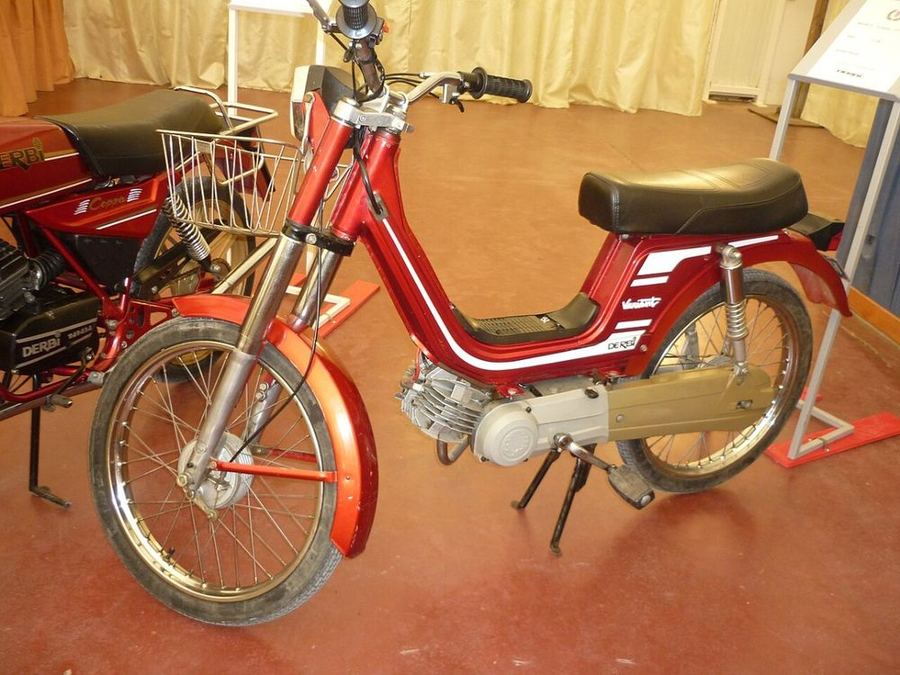
Shown: 1978 · 49cc two-stroke
Derbi's everyday step-through, one of the Spanish maker's best-known mopeds.
Photo: Peprovira, CC BY-SA 3.0
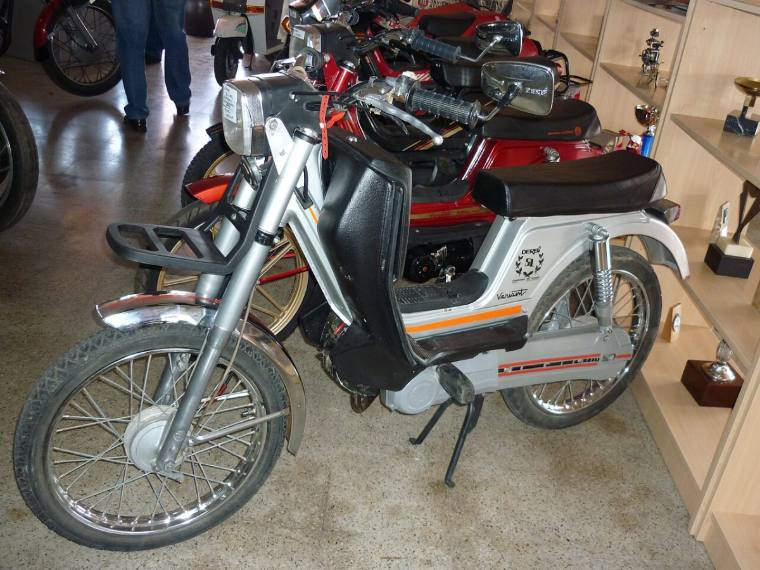
US 1976–86 · Derbi variator
The heavy-duty Variant commuter.
Photo: Peprovira, CC BY-SA 3.0
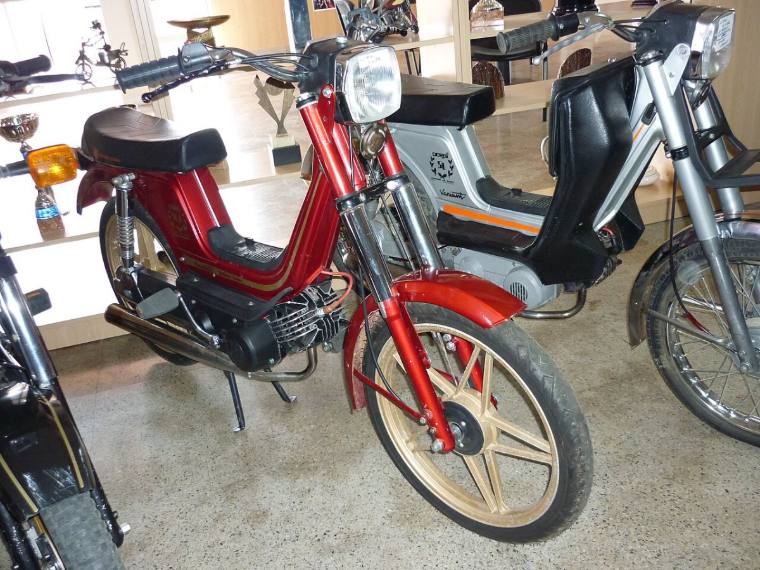
US 1977–86 · Derbi variator
The SLE version of the Variant.
Photo: Peprovira, CC BY-SA 3.0
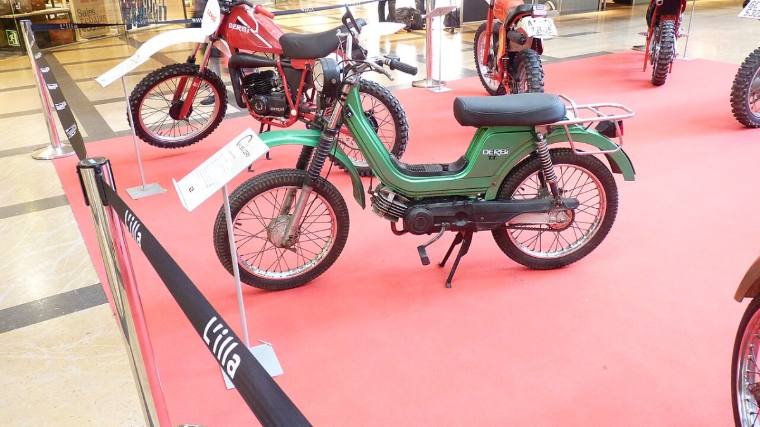
US 1977–85 · trail model
The trail Variant.
Photo: Montesita, CC BY-SA 3.0
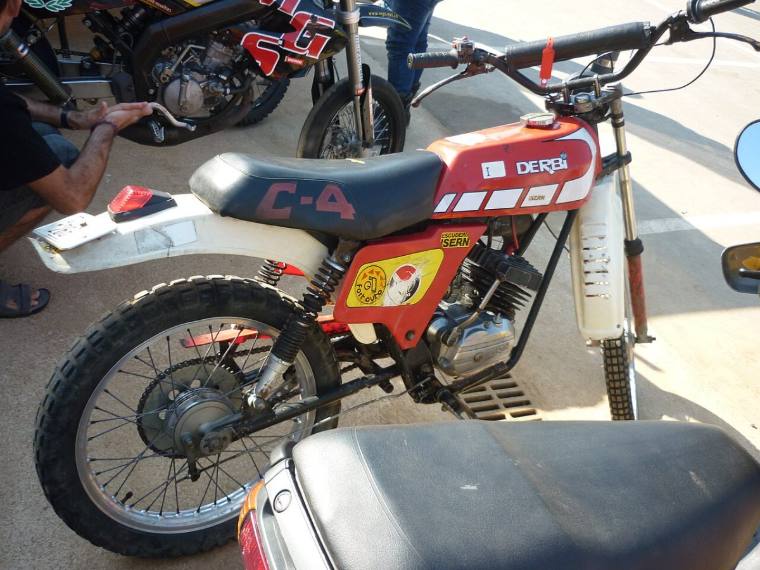
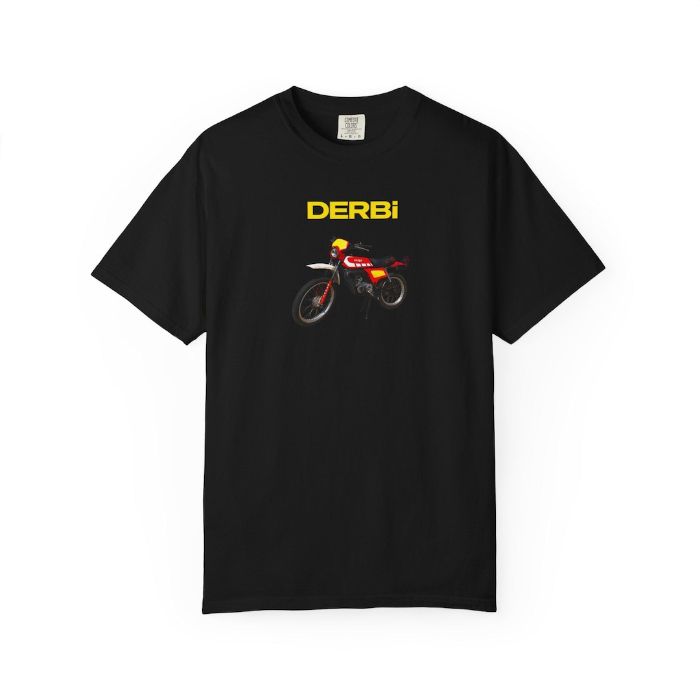
US 1978–80 · dirt-bike moped
Derbi's dirt-bike moped, renamed the RD50 in 1981. Shown: a 1978 Diablo.
Photo: Peprovira, CC BY-SA 3.0
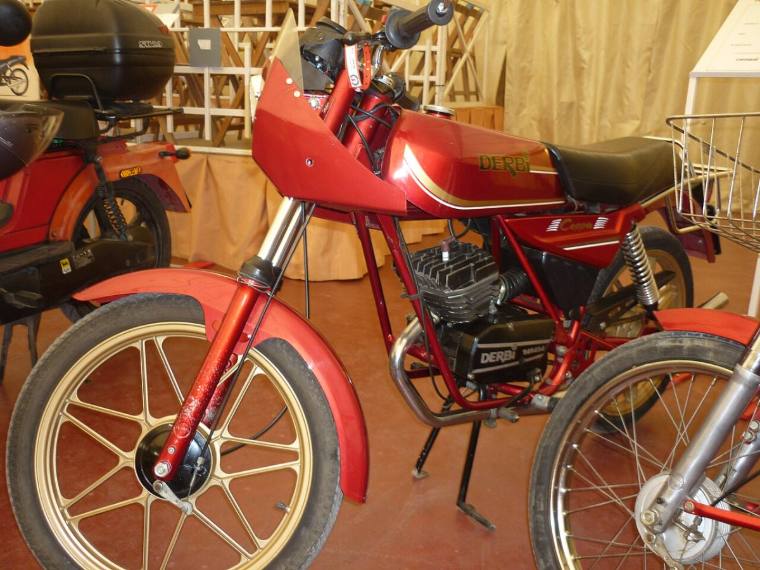
Shown: 1979
A late-70s Derbi.
Photo: Peprovira, CC BY-SA 3.0
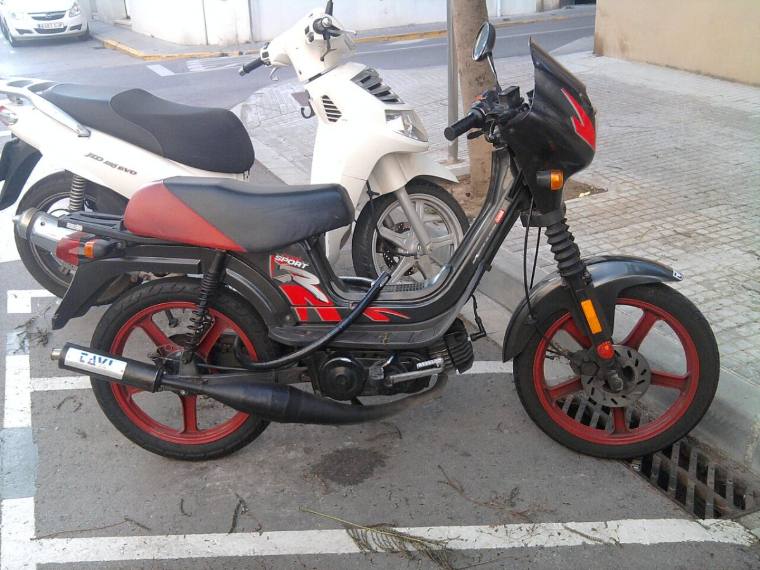
Shown: 1980
A sporty Variant.
Photo: Peprovira, CC BY-SA 3.0
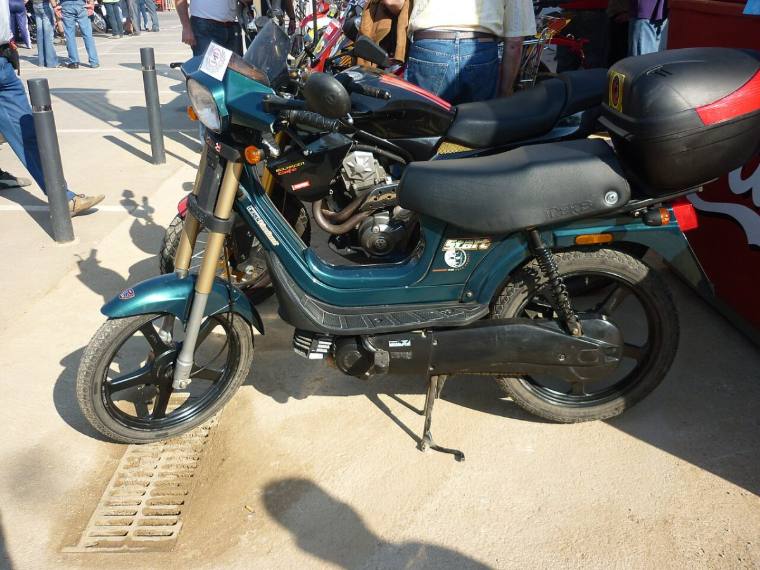
Shown: 1984
An 80s Variant.
Photo: Peprovira, CC BY-SA 3.0
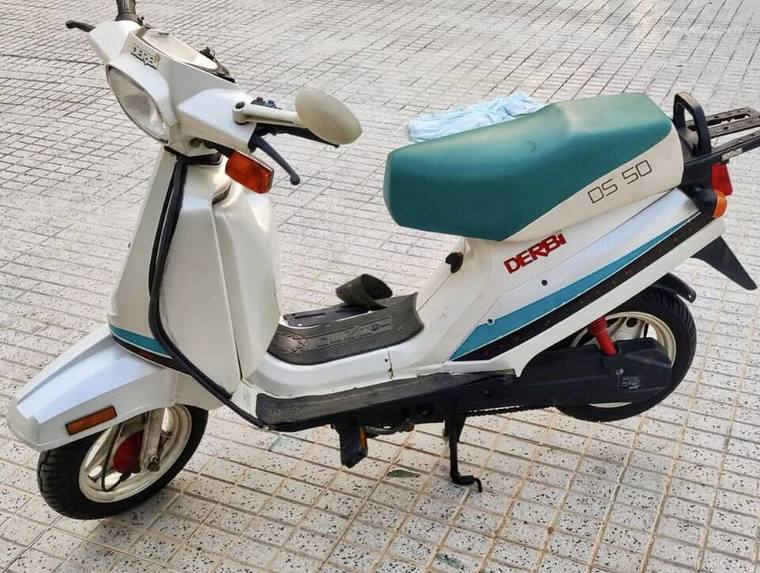
US 1987–89
Derbi's moped-scooter, sold in the US at the end of the 80s.
Photo: Laura Buononome, CC BY-SA 2.0
More Derbi models and versions (no free photo yet. Got one? DM us)
- Laguna / Sport Laguna US 1978–80
- RD50 The renamed C5 dirt-bike moped. US 1981–88
DKWGermany
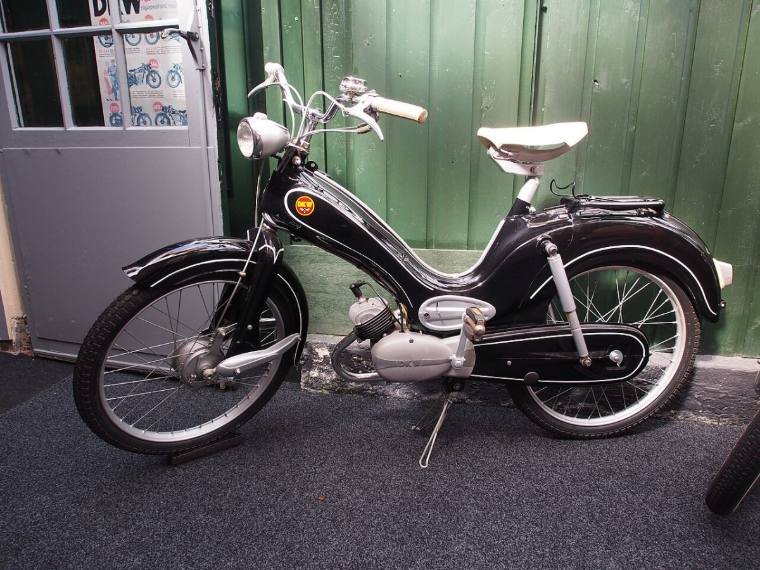
DKW, part of Auto Union, launched the Hummel moped in 1956. It was one of the first mopeds with a three-speed gearbox.
Hummel
From 1956 · three-speed
One of the first mopeds with three gears.
Photo: Alf van Beem, CC0
Hummel Super
1958–1960
Moped and mokick versions on the same frame.
Photo: Alf van Beem, CC0
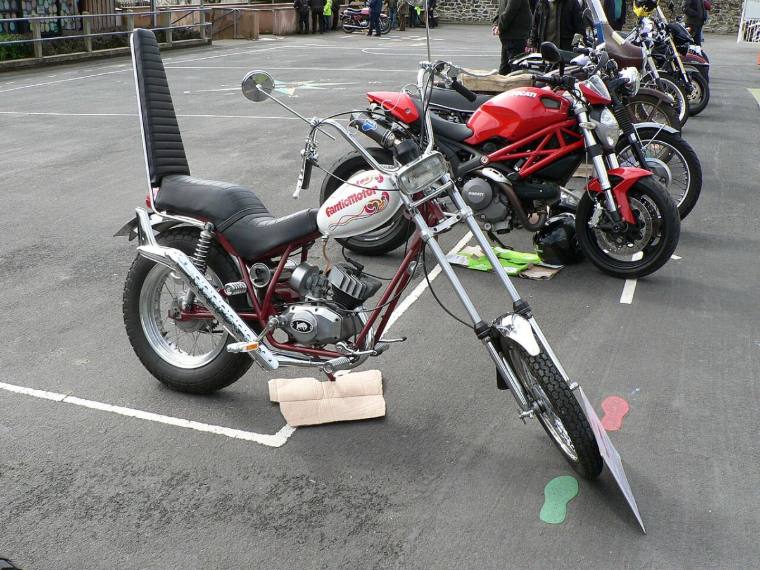
FanticItaly
Fantic Motor was founded in 1968 in Barzago and became famous off-road, winning three trials world titles. Its US mopeds were the Lei and Super Lei, and it also built the Concord bikes sold in America.
Chopper
Shown: 1972
Fantic's chopper-style moped.
Photo: Andydevon, CC BY-SA 4.0
Issimo
Fantic moped
A step-through Fantic.
Photo: FTIC50, CC BY-SA 4.0
More Fantic models and versions (no free photo yet. Got one? DM us)
- Lei / Super Lei Minarelli V1. US 1977–80
- Concord Freedom / Invader / Shadow / XKE Fantic-built, Minarelli V1. US 1979–84
FlandriaBelgium
Belgium's Flandria built bicycles and mopeds. In the US it sold the 101, 102 Saint Tropez and 104 (1976–79), plus bikes under the Bermuda name.
Record
Flandria sport moped
A Flandria sport moped.
Photo: Jcb-caz-11, CC BY-SA 4.0
More Flandria models and versions (no free photo yet. Got one? DM us)
- 101 / 102 Saint Tropez / 104 Flandria one-speed. US 1976–79
Garelli's Mosquito clip-on engine (1946–1960) sold around 2 million. Mopeds like the Gulp, Katia, Eureka, VIP and Gary followed, with the Monza GT and Rally Sport imported to the US.
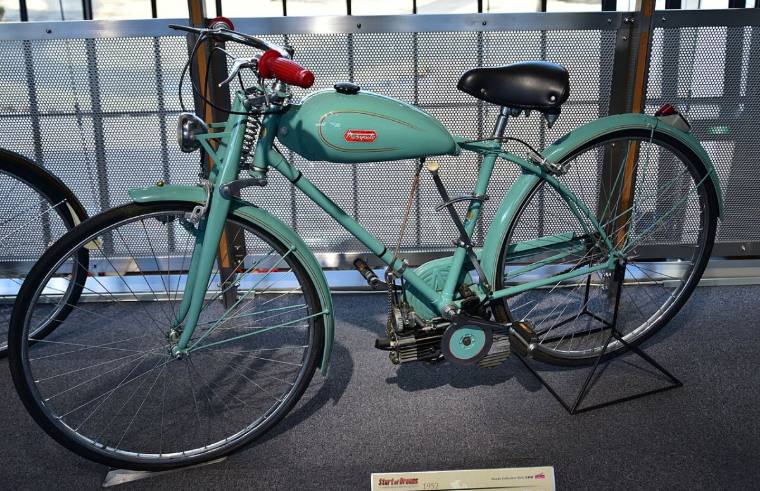
1946–1960 · bicycle clip-on engine
About 2 million built, the most popular bicycle engine of its kind in Europe.
Photo: Rikita, CC BY-SA 4.0
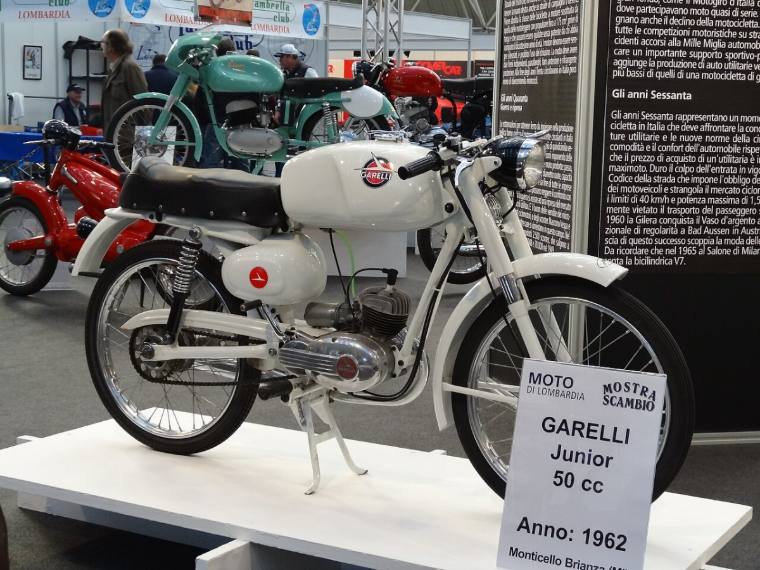
Shown: 1962 · 50cc
An early-60s Garelli 50.
Photo: Klaus Nahr, CC BY-SA 2.0
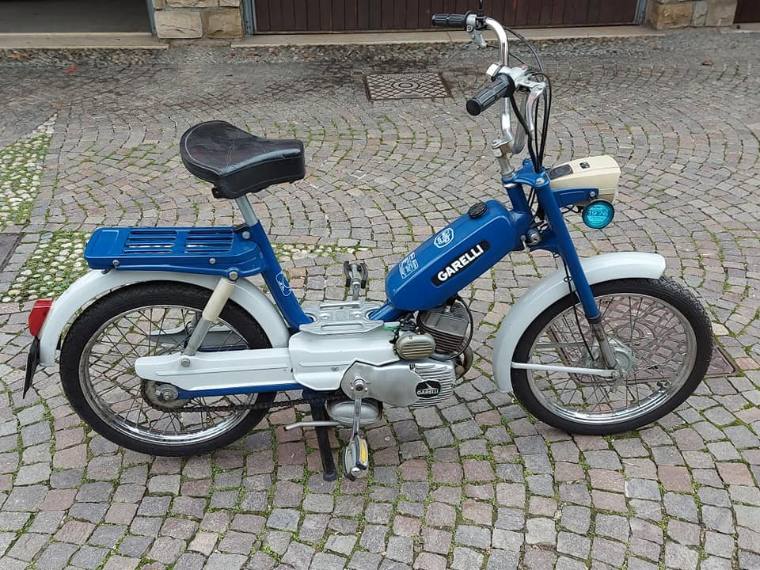
1967–1978
One of Garelli's most successful mopeds, built in many versions.
Photo: Gilerius450, CC BY-SA 4.0
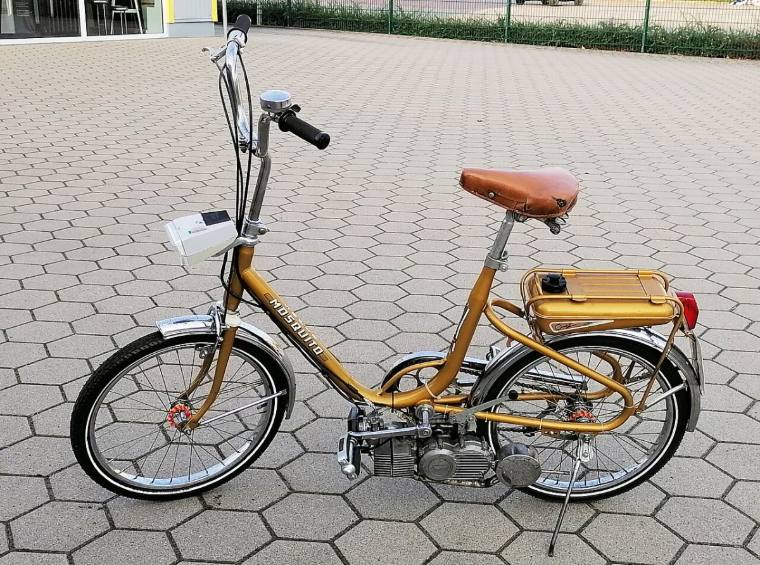
Shown: 1969
A late-60s Garelli.
Photo: Frank Schwichtenberg, CC BY 4.0
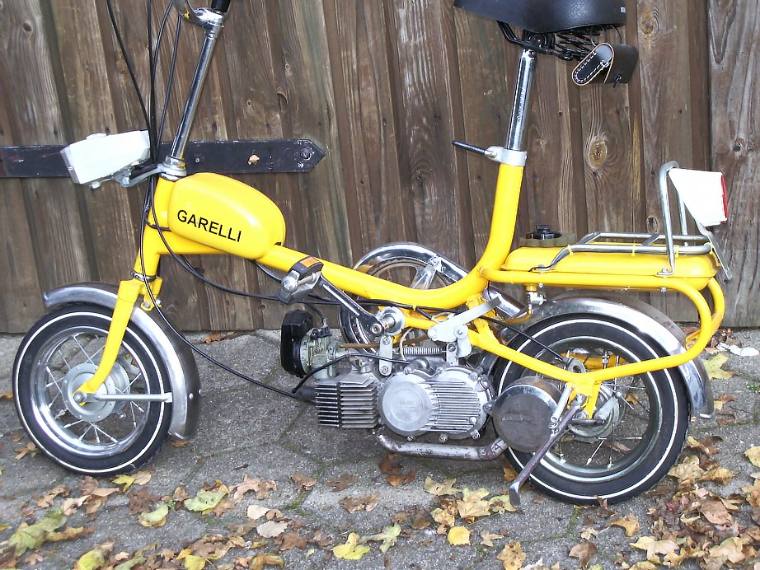
Shown: 1972
A Garelli city moped.
Photo: Huhu at German Wikipedia, Public domain
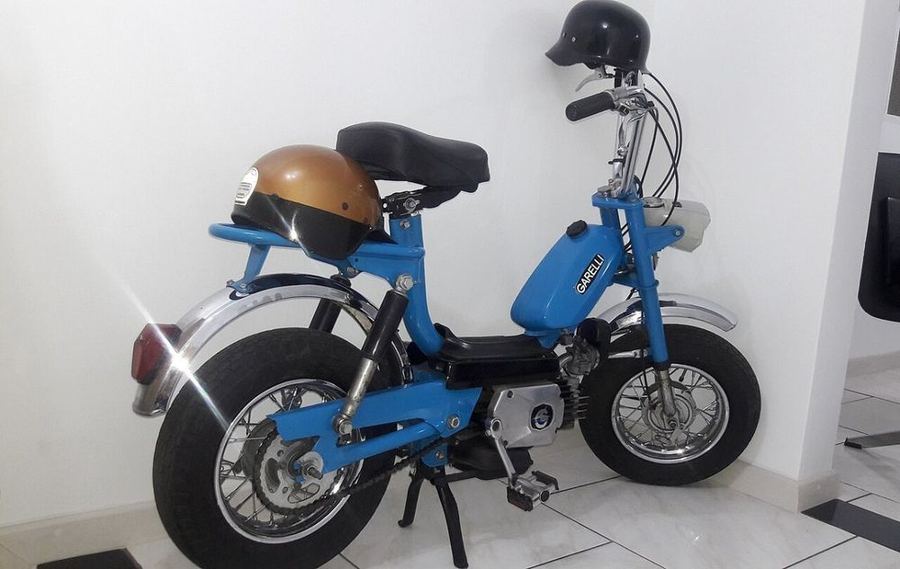
1973–1991 · Horizontal two-stroke from the Eureka
Little 10-inch wheels made it a city bike. Garelli built it longer than any other model, and in 1974 an electric Katia became Italy's first production electric moped.
Photo: https://pxhere.com/en/photographer/2406699, CC0
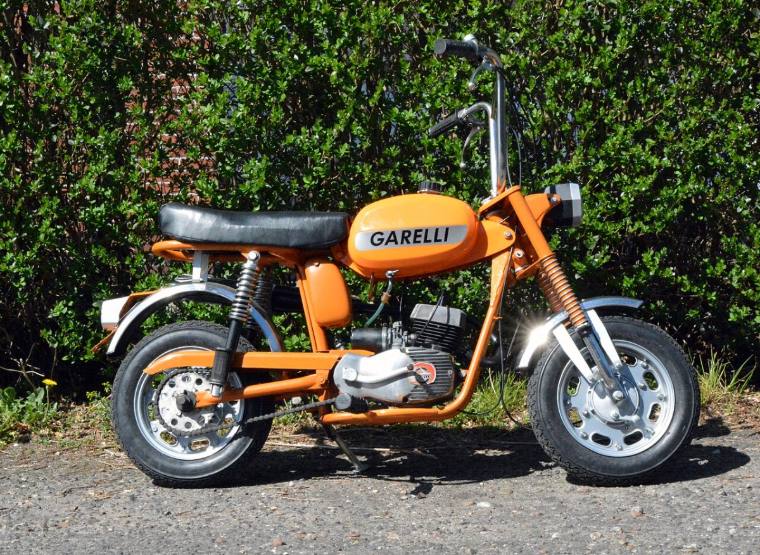
1973–1974
A compact mini-mokick that grew out of Garelli's Mini-Mokick.
Photo: Frank Schwichtenberg, CC BY 4.0
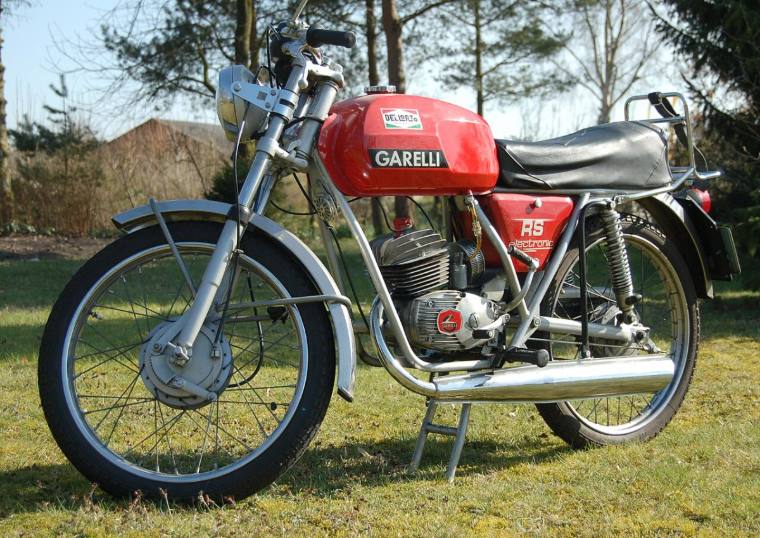
Shown: 1973
A 70s Garelli sport moped.
Photo: Huhu Uet, CC BY-SA 3.0
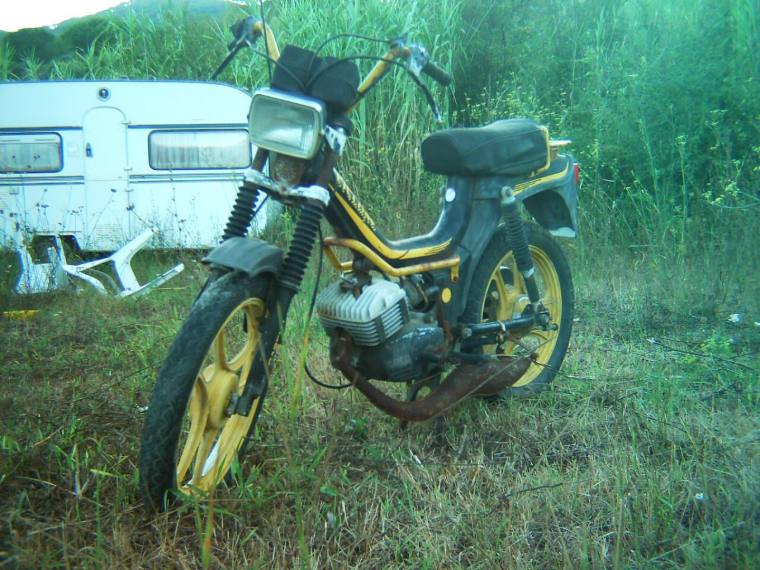
1977–1997
A tube-frame moped, later the Super Ciclone.
Photo: Jonny 1988 at Italian Wikipedia, Public domain
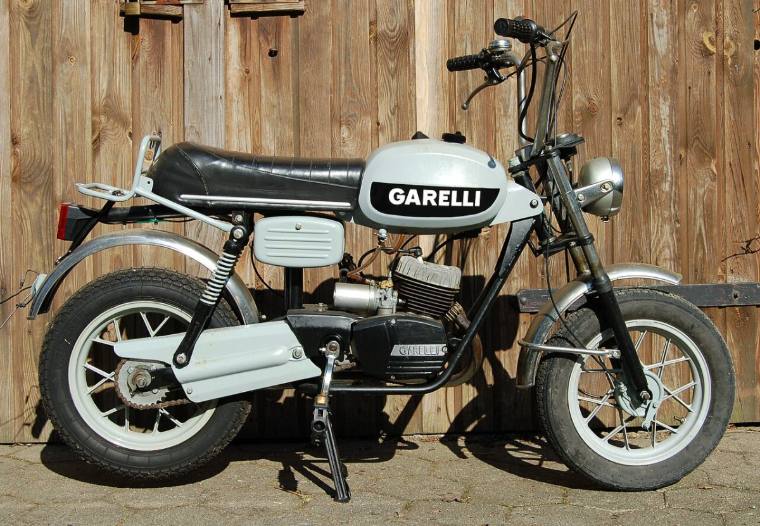
Shown: 1978
A late-70s Garelli.
Photo: Huhu Uet, CC BY-SA 3.0
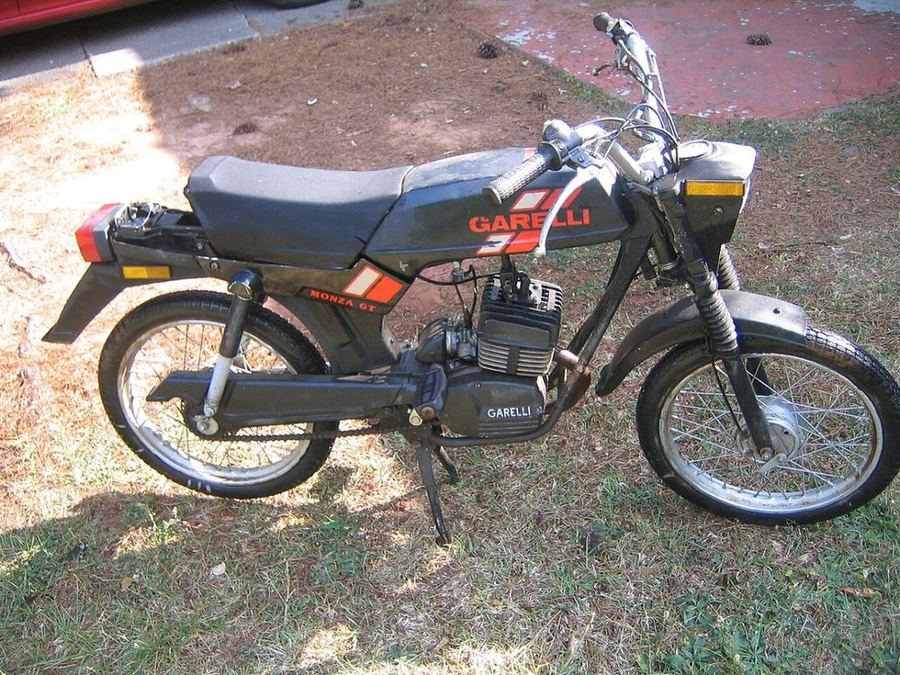
Imported to the US · Vertical Monza engine
The one Garelli model that made it to American showrooms under its own name.
Photo: John Goetzinger, CC BY-SA 2.0
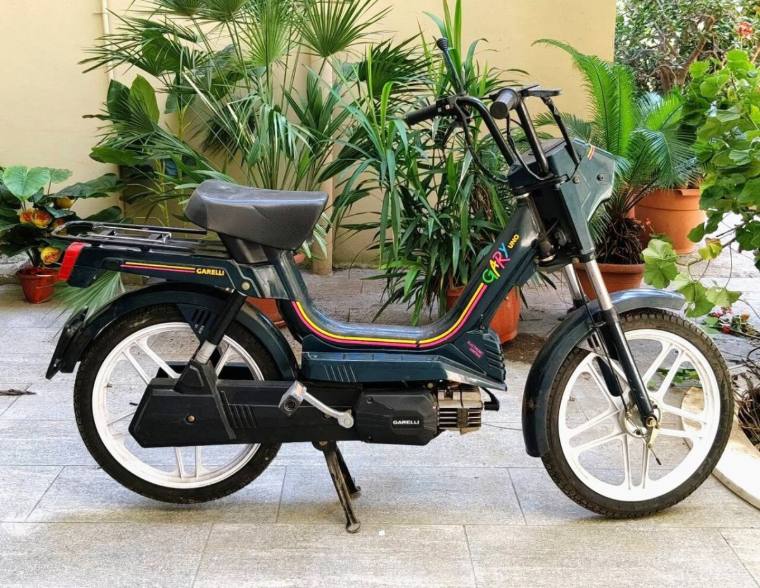
1987–1991
Developed from the Basic. Uno = one-speed, Due = two-speed.
Photo: Guzzista76, CC BY-SA 4.0
More Garelli models and versions (no free photo yet. Got one? DM us)
- Eureka / Eureka Flex Horizontal-cylinder mofa. 1972–79 in Europe, US 1974–76
- Sport / Gran Sport / Gran Sport LTD One-speed horizontal engine. US 1977–84
- Rally Sport One-speed horizontal cylinder. US 1977–86
- VIP Two-speed vertical cylinder. 1978–91
- Gulpmatic Two-speed. US 1977–78
- Monza Step-through two-speed. US 1981–84
- Basic One-speed. 1981–87
GileraItaly
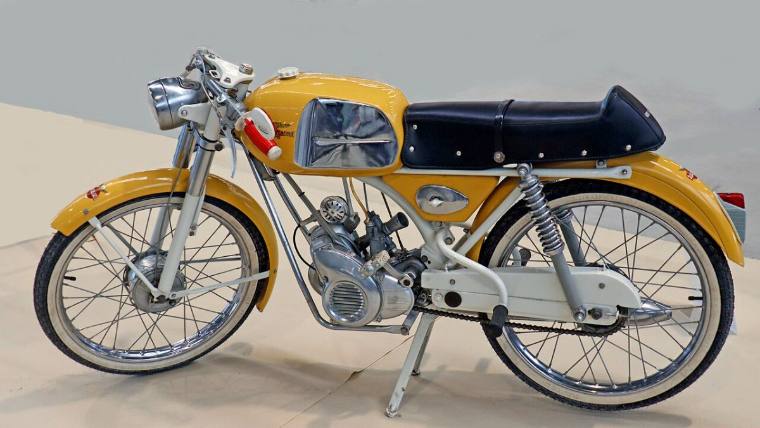
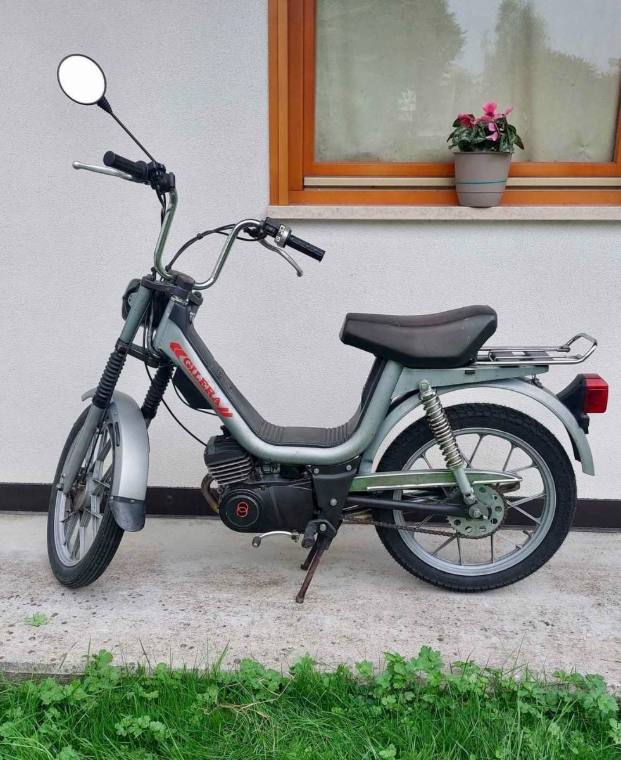
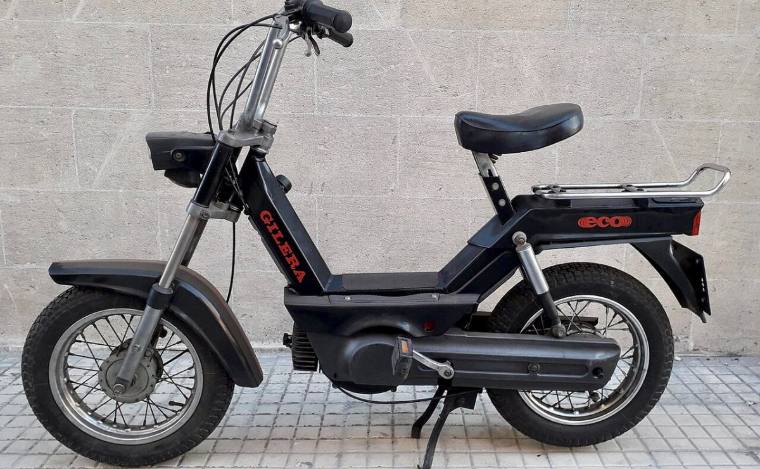
Part of the Piaggio group from 1969, Gilera built mopeds like the CB1 and the Eco, which shared the Bravo's drivetrain.
CB1
1975–1989
Gilera's long-running moped.
Photo: Sporty76, CC BY-SA 4.0
Eco / EC1 / Città
1979–1989 · Bravo drivetrain
Designed by Paolo Martin. Called EC1 in Germany and Città elsewhere.
Photo: Ijet50, CC BY-SA 4.0
Gitane / TestiItaly
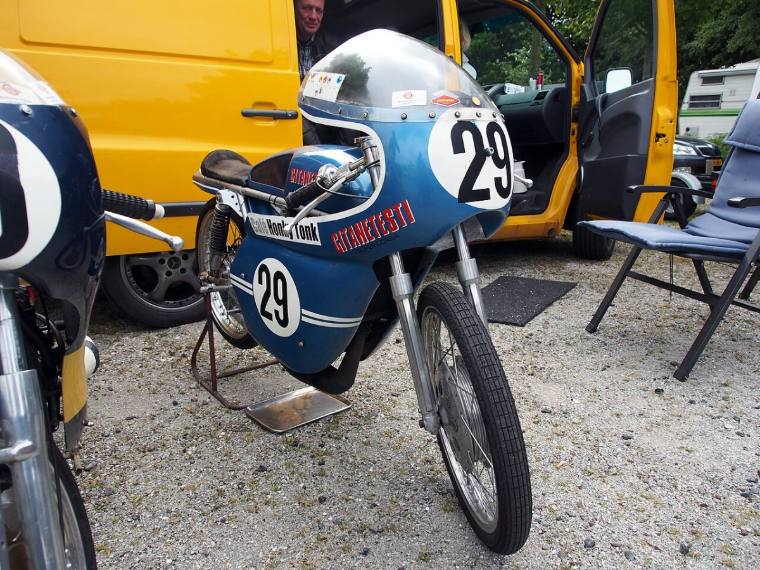
US Gitane mopeds (1976–79) were built in Italy by Testi with Minarelli V1 engines: the Cricket, Confort, Sport and CL200. Testi also built hot little sport and race mopeds.
Testi Super Corsa
Race-prepped Testi
A Testi race moped.
Photo: Alf van Beem, CC0
More Gitane / Testi models and versions (no free photo yet. Got one? DM us)
- Cricket Minarelli V1, tube frame. US 1976–77
- Confort / Confort Luxe Minarelli V1. US 1976–79
- Sport / CL200 Minarelli V1. US 1976–78
HelkamaFinland
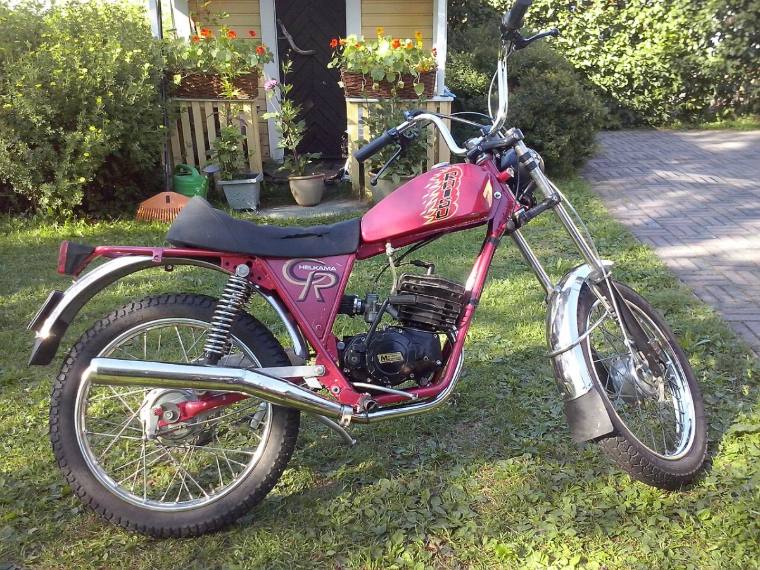
Helkama is a Finnish family company over 120 years old. Its Raisu moped came out in the 1970s and sold until the AX replaced it in the late 80s.
Raisu
1970s–late 1980s
Helkama's long-running moped.
Photo: Esa Tuominen from Oulu, Finland, CC BY 2.0
Nuremberg's Hercules was run by Fichtel & Sachs from 1958. The Prima mofa line ran for decades, and in the US the same Sachs-engined bikes were sold as Sachs Balboa, Westlake, Prima, Seville and Suburban.
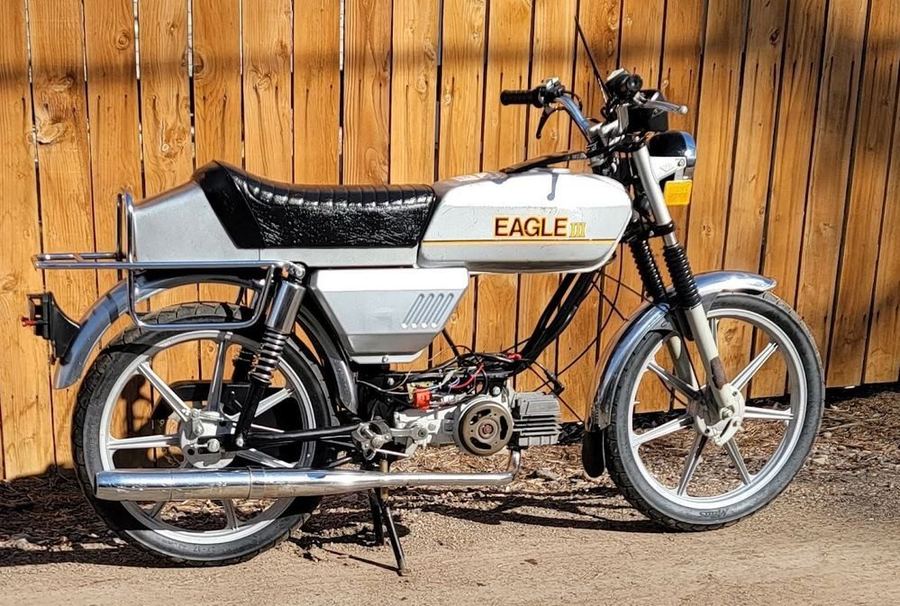
1982 · Sachs
Built anonymously by Hercules for Bombardier and sold mostly around the Great Lakes.
Full history →From the Moped Motel fleet
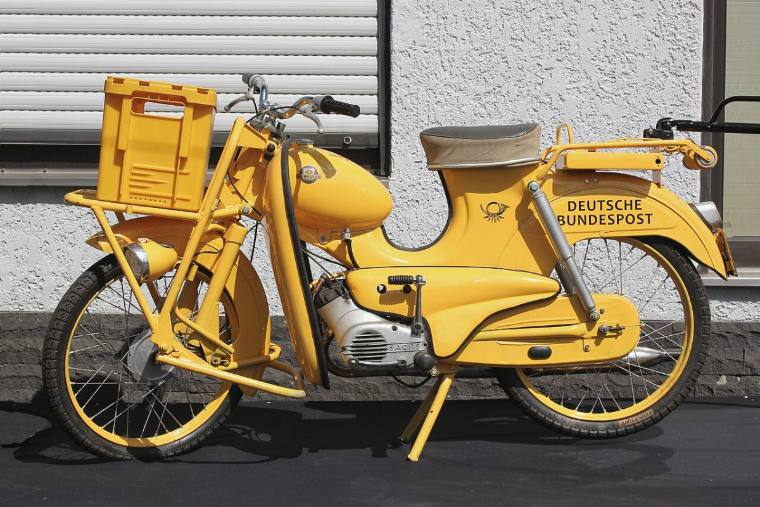
Shown: Deutsche Bundespost
A cargo moped, shown here in German post office yellow.
Photo: Lothar Spurzem, CC BY-SA 2.0 de
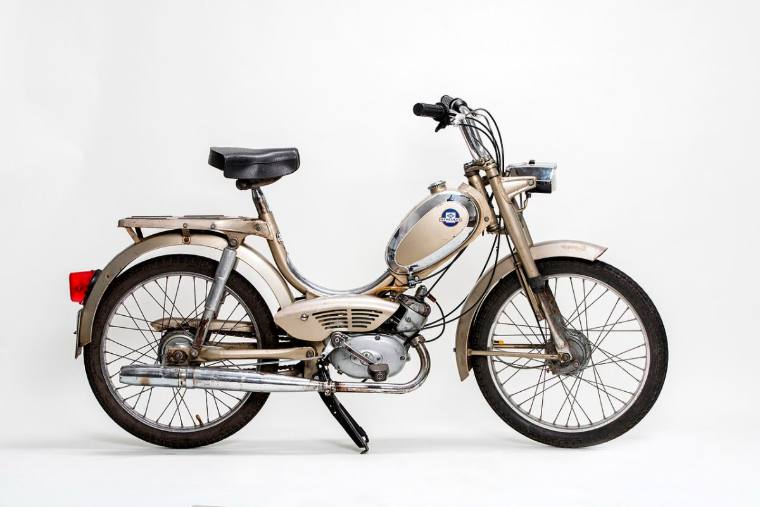
Hercules mofa
A classic Hercules mofa.
Photo: Timmey98 (Diskussion), CC BY-SA 3.0 de
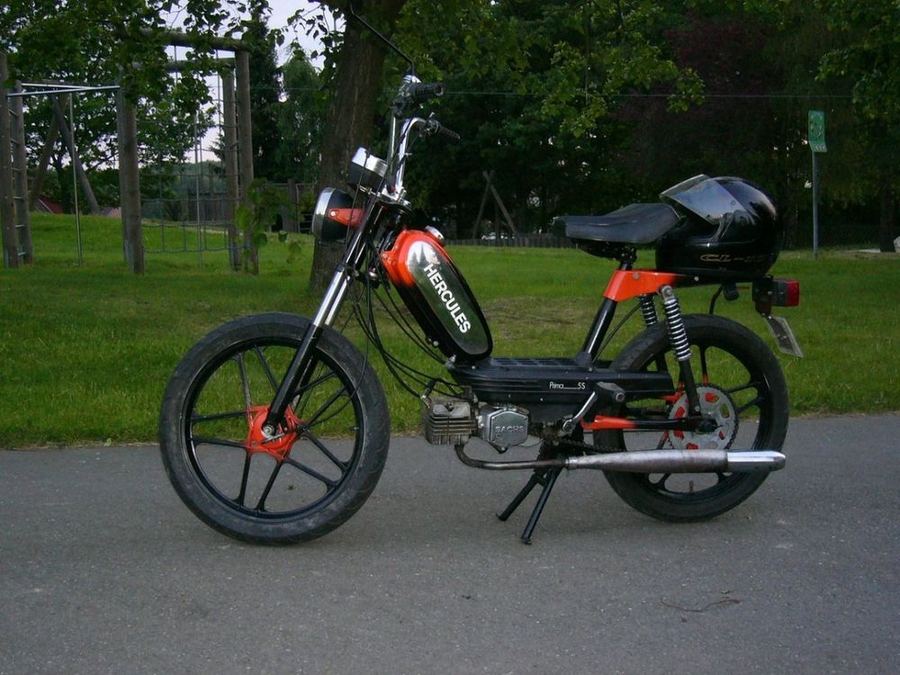
Mid-1970s–2005 · Fichtel & Sachs
Started as the M1 through M5, then became the Prima. Cheap, simple and a favorite for tuning; Sachs Bikes kept building it until 2005.
Photo: The-shaddow at German Wikipedia, Public domain
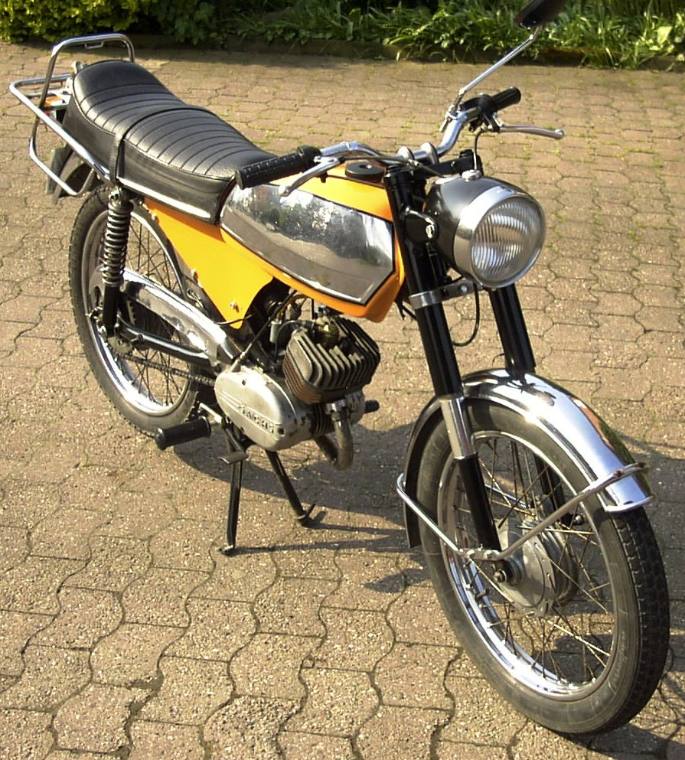
Shown: MK 4 M
A Hercules sport moped.
Photo: Niclas Röse at de.wikipedia, CC BY-SA 3.0
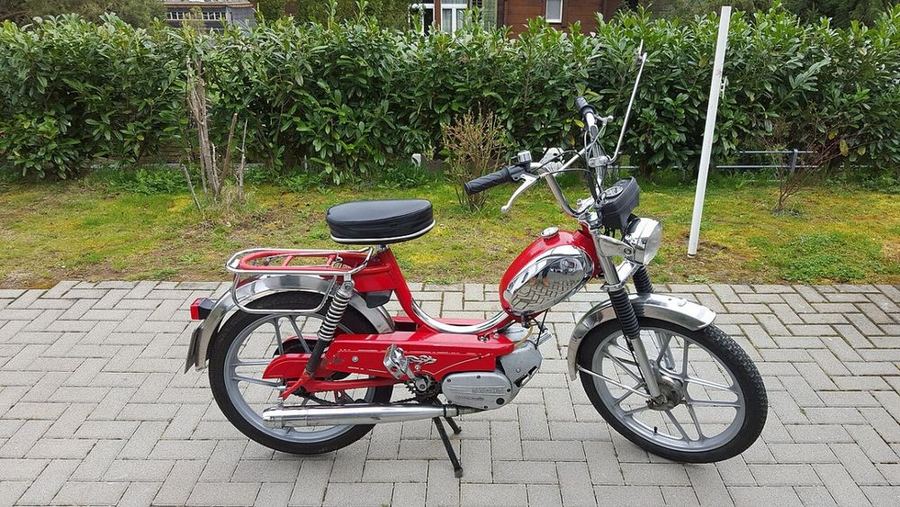
Sachs-badged · Fichtel & Sachs
Sold abroad under the Sachs name, which is why so many riders know Hercules bikes as Sachs.
Photo: Teutschmannaron14, CC BY-SA 4.0
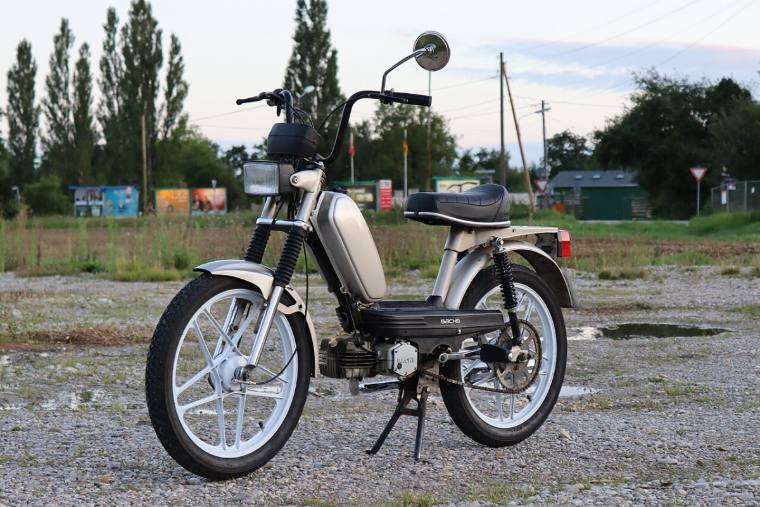
Shown: Sachs Prima 4
One of the numbered Prima mofas.
Photo: Tobias Daubitzer, CC BY-SA 4.0
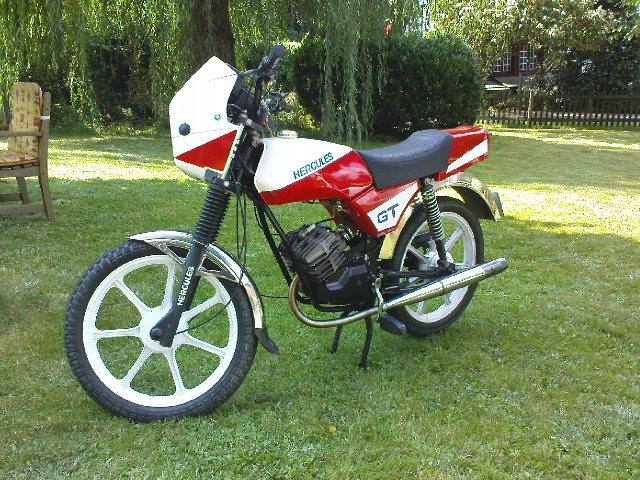
1985–1995 · Sachs, three-speed hand shift
Extra frame struts set it apart from the Pronto and Presto.
Photo: Raphael S. at German Wikipedia, Public domain
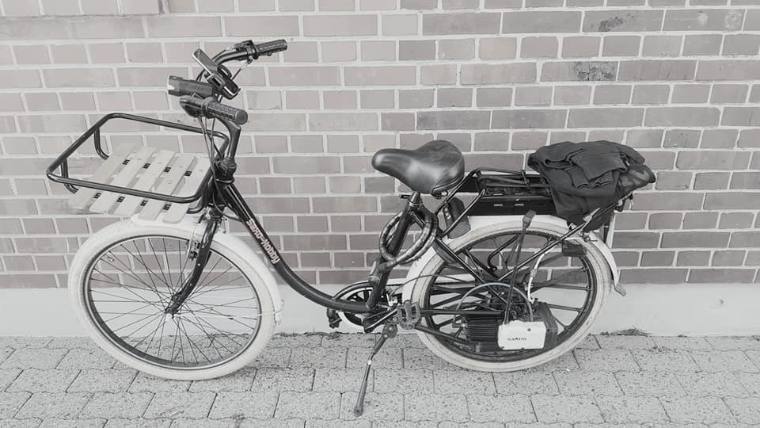
1987–2011 · 30cc clip-on
Sachs's bicycle engine, a name first used in 1938.
Photo: Saxo-Hobby.de, CC BY-SA 4.0
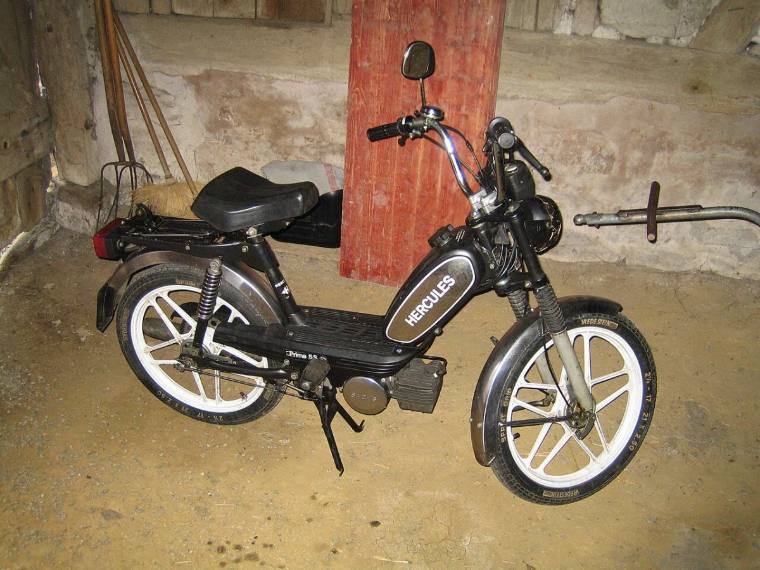
Shown: Prima 5S
A later Prima.
Photo: Benjamin Deuschle at German Wikipedia, Public domain
More Hercules / Sachs models and versions (no free photo yet. Got one? DM us)
- Sachs M1 / M2 Balboa 505/1A, foot brake; M2 with mags. US 1976–80
- Sachs P1 / P2 Westlake (Sundancer) 504/1A one-speed. US 1976–80
- Sachs Prima G3 505/1D, mags. US 1979–86
- Sachs Seville 505/1D with oil injection. US 1980–85
- Sachs Suburban 505/1D. US 1979–85
Honda sold mopeds and 'nopeds' (no pedals) in the US from the late 1960s Little Honda to the 80s Express, Hobbit and Spree. Many had European twins under different names: the US Hobbit is the European Camino.
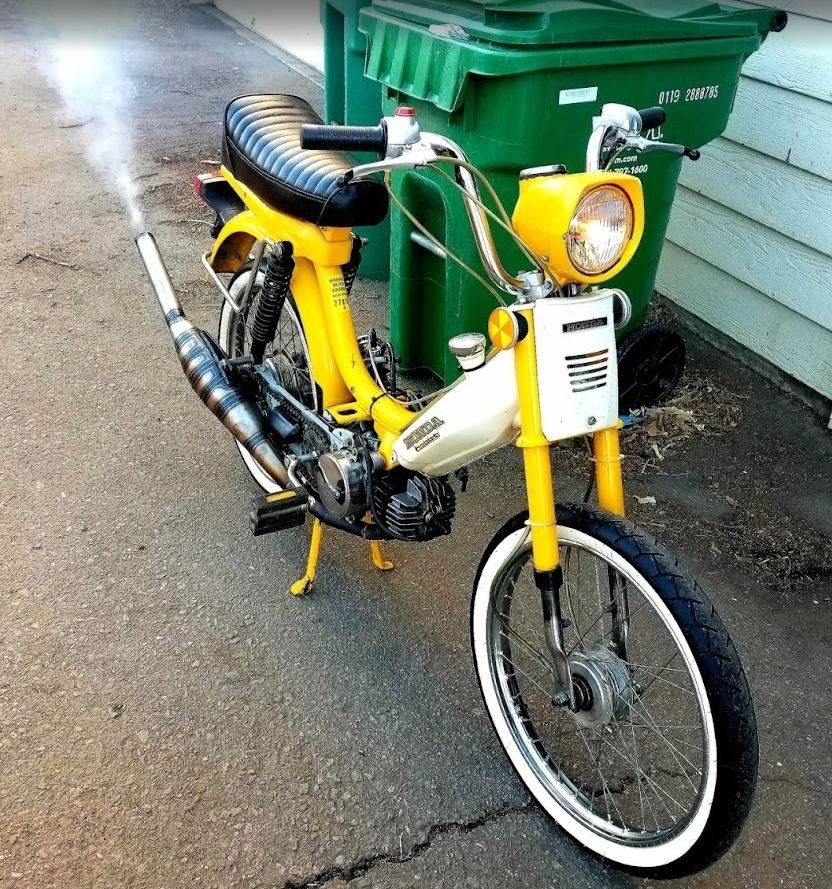
US 1978–1983 · 49cc two-stroke, auto oiling
Built in Belgium and sold in Europe as the Camino.
Full history →From the Moped Motel fleet
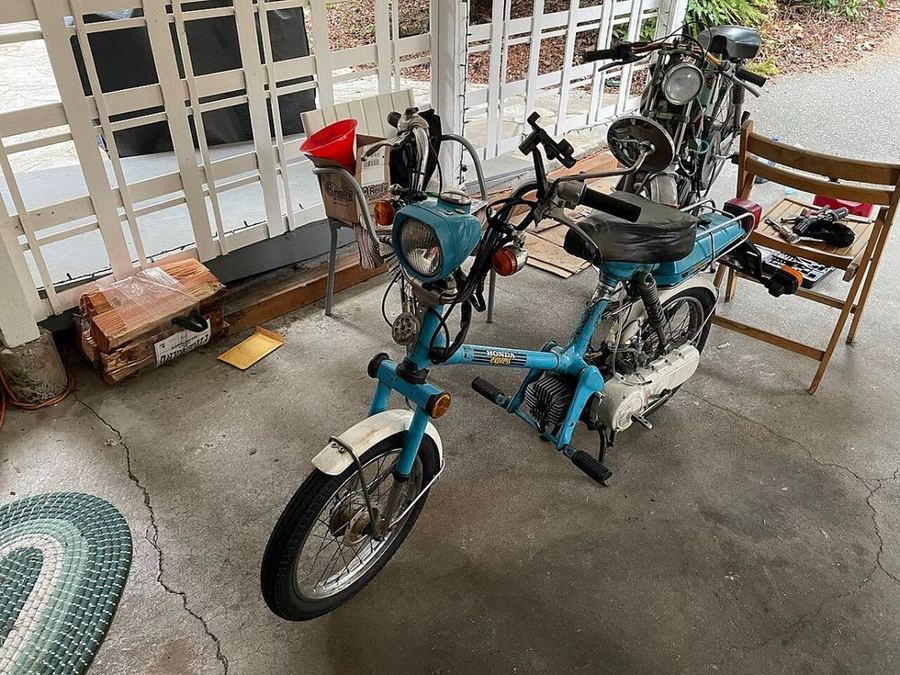
1977–1983 · 49cc two-stroke, automatic
Honda's answer to the 1973 oil crisis: simple, automatic and self-oiling.
Full history →Photo: ExpressNC80, CC BY-SA 4.0
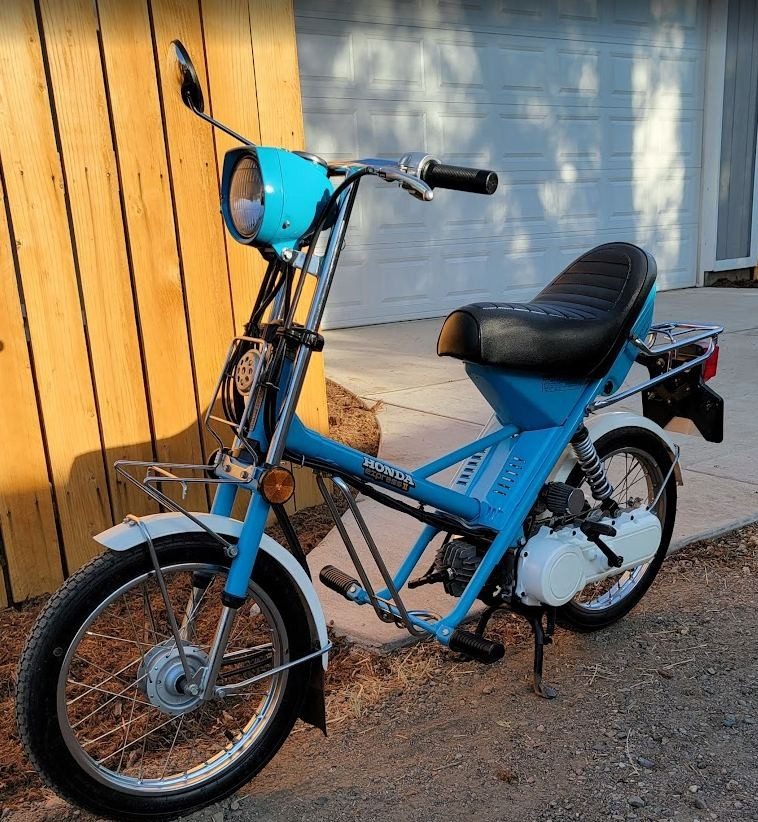
From 1979 · 49cc, two-speed from 1981
Redesigned frame and a bigger seat, then a two-speed automatic from 1981.
Full history →From the Moped Motel fleet
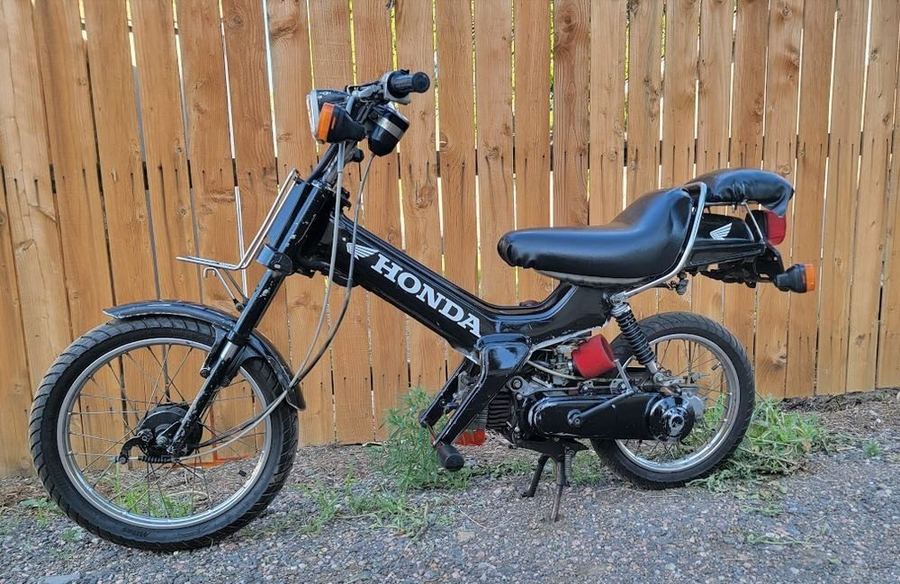
1982–1983 · 49cc two-stroke
The last and sleekest of the Express line.
Full history →From the Moped Motel fleet
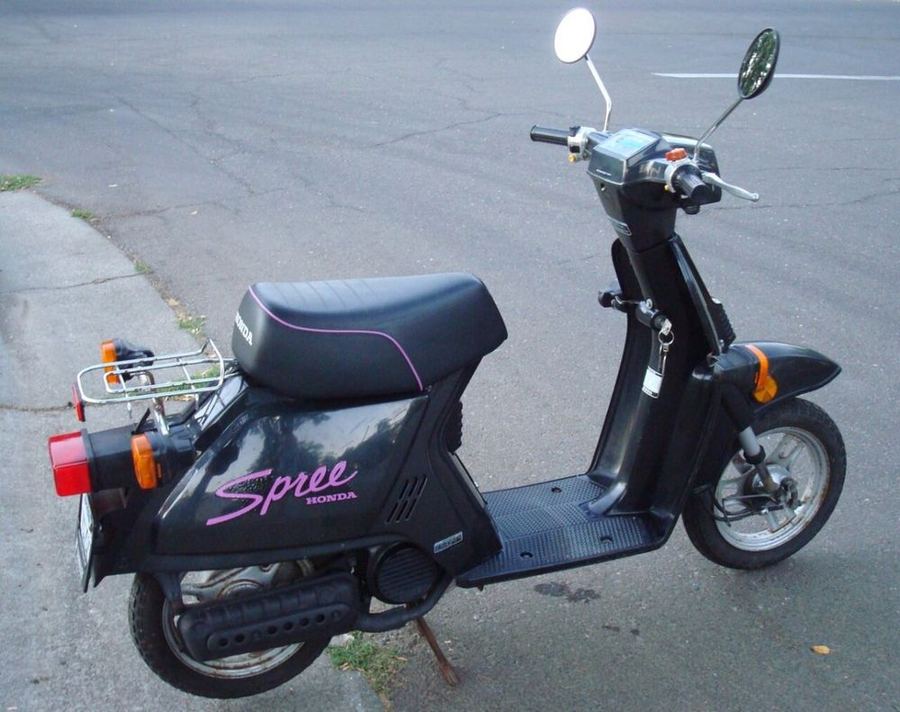
US 1984–1987 · 49cc two-stroke, belt drive
Honda's tiny 80s scooter, called the Nifty 50 in Europe.
Full history →Photo: Cbwallace at English Wikipedia, Public domain
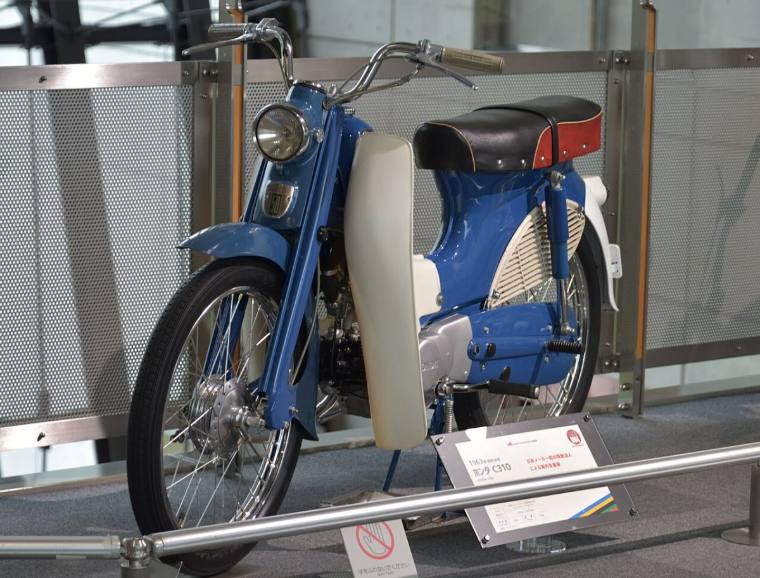
1960s · four-stroke
A Super Cub–style moped from Honda's early European range.
Photo: Rikita, CC BY-SA 4.0
1965–1970 · 49cc four-stroke
A pedal moped with a four-stroke that did about 35 mph. Its engine was later copied for the Indian AMI-50.
Photo: Eagleash, CC BY-SA 4.0
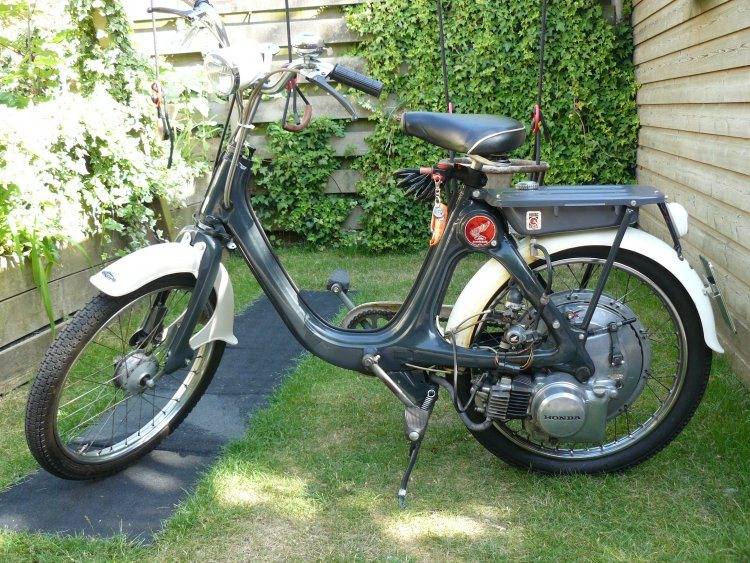
1966–1968 · 49cc four-stroke
Honda's last motor-wheel moped: the engine and drive sit in the rear hub.
Photo: Tjeemig, Public domain
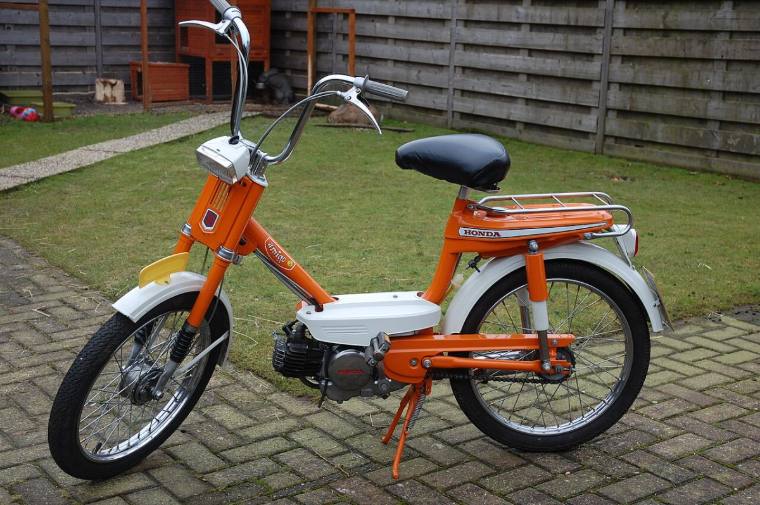
From 1969 · 49cc four-stroke
Part of the PF50 series. Same engine and look as the Novio, but the tank sits under the rack.
Photo: Ronald van der Ploeg, CC BY-SA 3.0
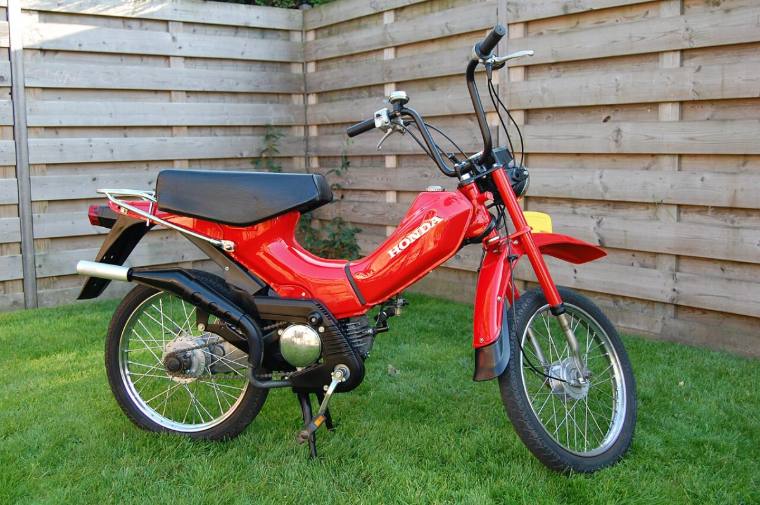
From 1970 · 49cc two-stroke
A popular Honda moped in the Netherlands and Germany in the 70s and 80s, with an off-road version too.
Photo: Ronald van der Ploeg, CC BY-SA 3.0
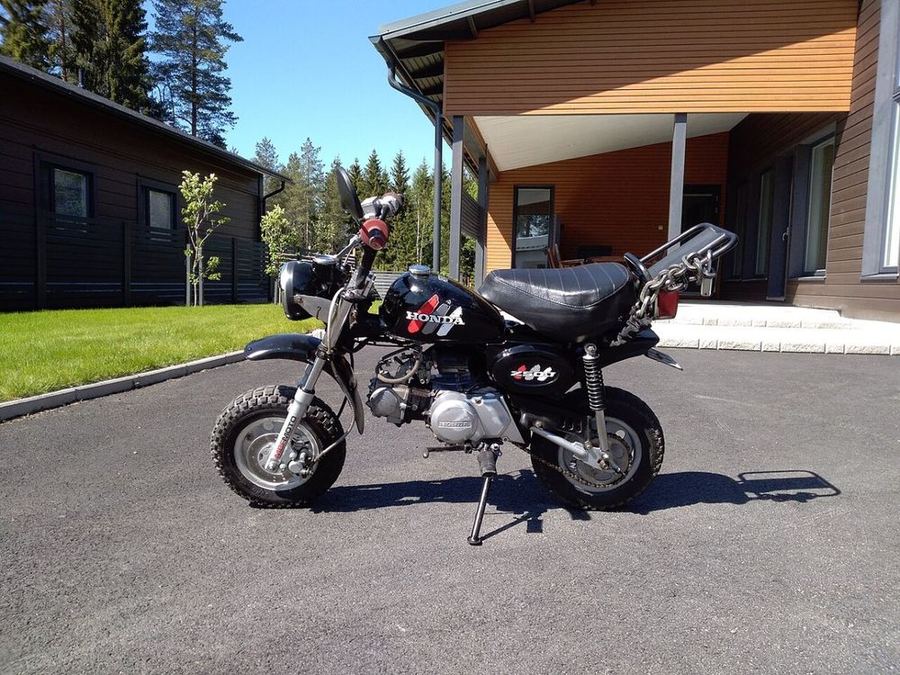
1973–1999 · 49cc four-stroke
The mini bike Honda kept building for Europe and Japan long after the US Z50A was dropped in 1978.
Photo: Smi126, CC BY-SA 4.0
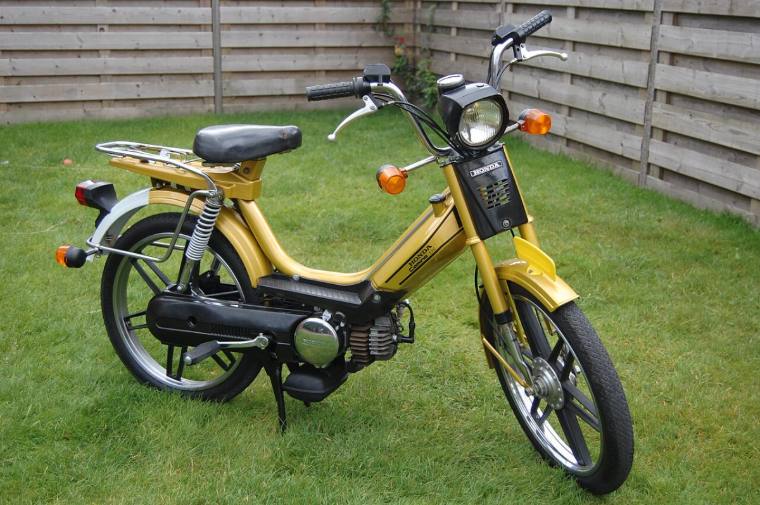
Late 1970s–1980s · PA50
The European name for the Hobbit. Germany's post office used them as service bikes.
Photo: Ronald van der Ploeg, CC BY-SA 3.0
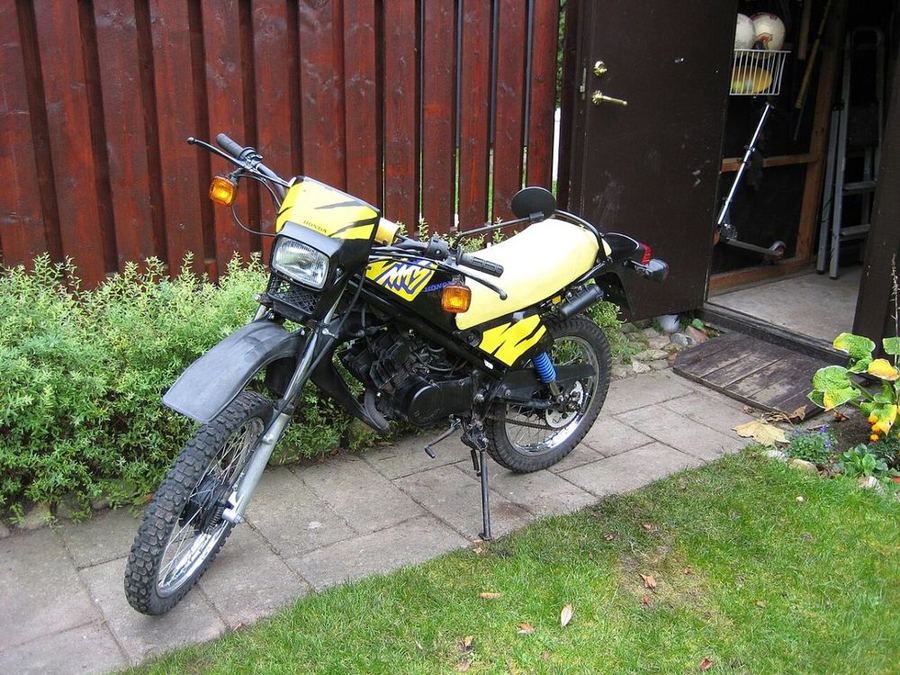
1979–2000 · Two-stroke, shared with the MB5
A dirt-bike-style 50 that was huge in Scandinavia and Benelux, and famously easy to tune.
Photo: Larsson99 at English Wikipedia, CC BY-SA 3.0
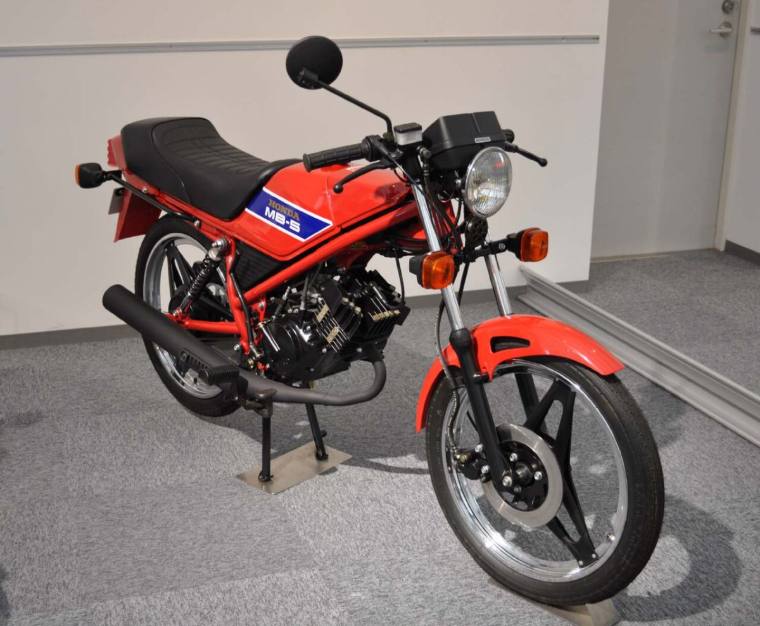
Shown: 1979 · 49cc two-stroke
A small sport bike that Honda grew into the 80cc MB-8 in 1981.
Photo: Rikita, CC BY-SA 3.0
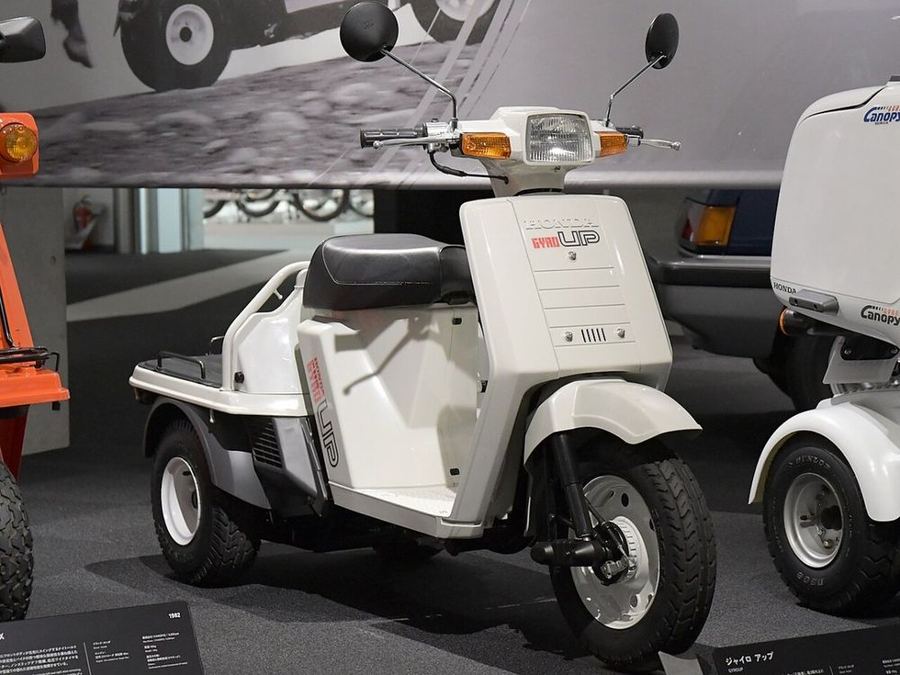
1982–today · 49cc two-stroke, later four-stroke
A tilting three-wheeler built for Japanese delivery riders. The US got it only from 1984 to 1986.
Photo: Ypy31, CC0
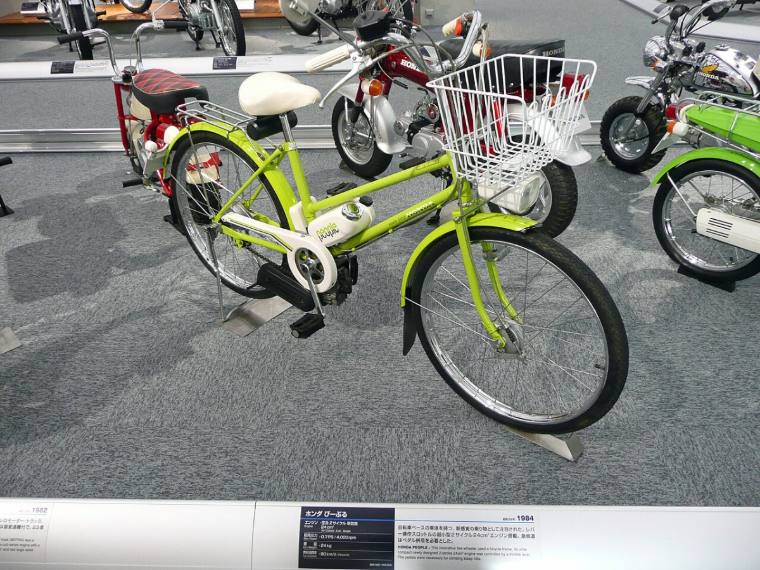
Shown: 1984 · Japan-market moped
A pedal moped Honda built for Japan.
Photo: PekePON, CC BY-SA 3.0
More Honda models and versions (no free photo yet. Got one? DM us)
- Express SR (NX50) CVT, 10-inch wheels. US 1981–82
- Novio Twin of the Amigo with the tank up front
- PM50E Two-stroke version of the Amigo
- PF50 Belgian-built moped with the PC50 engine. 1968–70
ItaljetItaly
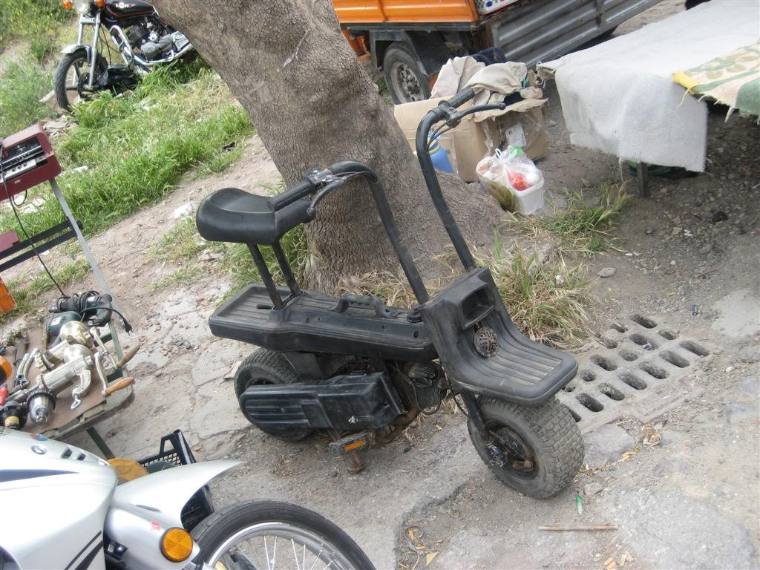
Italjet was founded in Bologna by Leopoldo Tartarini. In the US it sold folding mopeds: the Packaway and the Pack 2.
Pack 2
US 1978–80 · Vespa engine
A folding moped. The earlier Packaway used a Morini engine.
Photo: Ali Utku Selen, CC BY-SA 2.0
More Italjet models and versions (no free photo yet. Got one? DM us)
- Packaway Folding moped with a Morini MO-1. US 1977–79
The Babetta was built in Považská Bystrica and Kolárovo from 1970 and was usually sold abroad as a Jawa. The same works built the Pionýr line of small Jawa motorcycles.
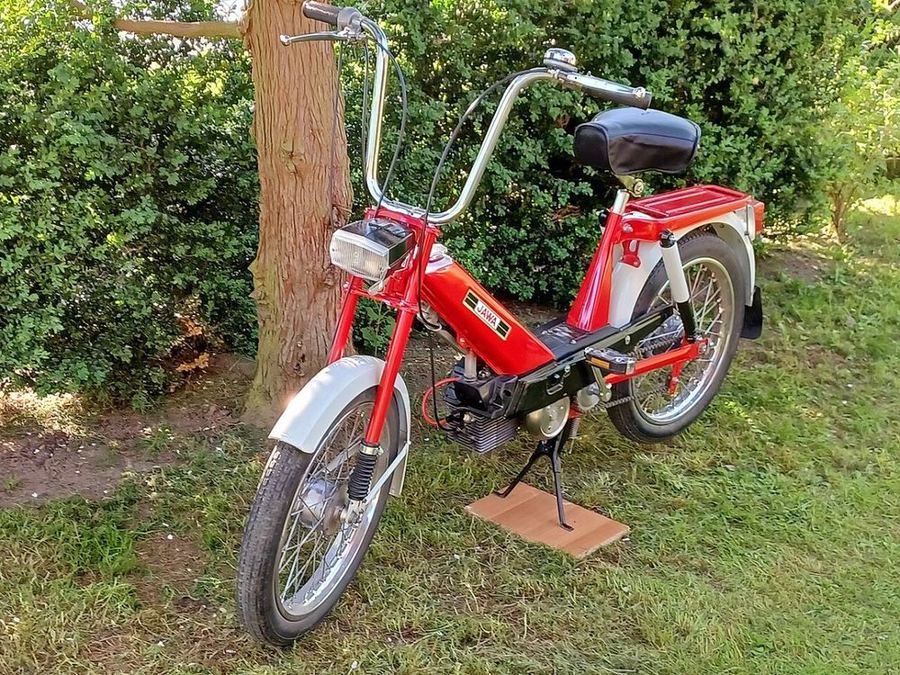
From 1970 · Two-stroke, contactless ignition
One of the first mopeds with transistorized electronic ignition.
Full history →Photo: Miroslav207, CC BY-SA 4.0
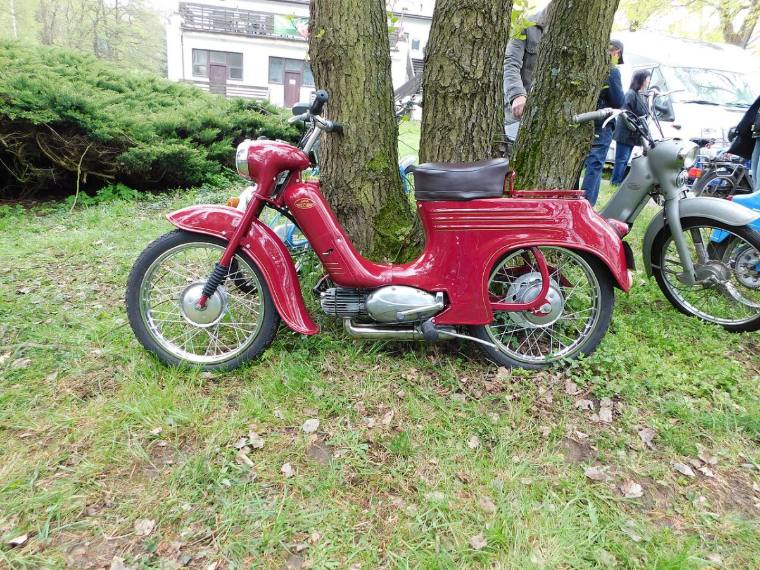
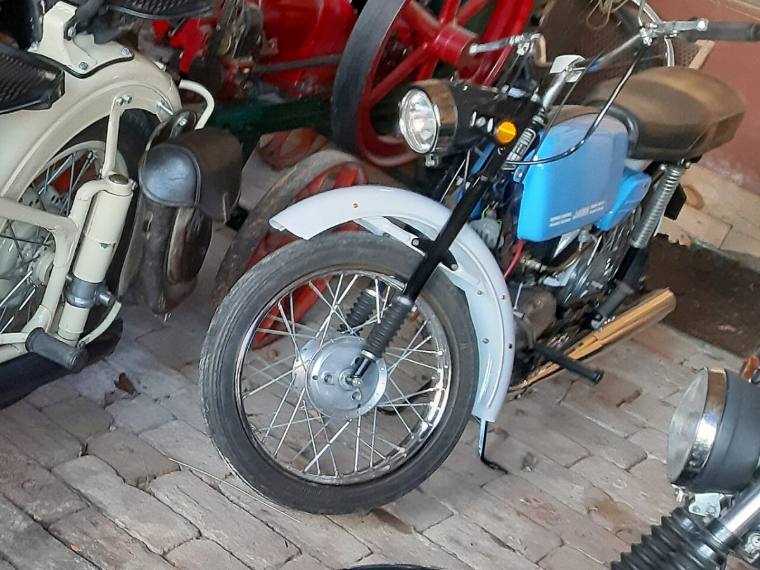
From 1958
Replaced the first Pionýr 550 in 1958.
Photo: Marek Koudelka, CC BY-SA 4.0
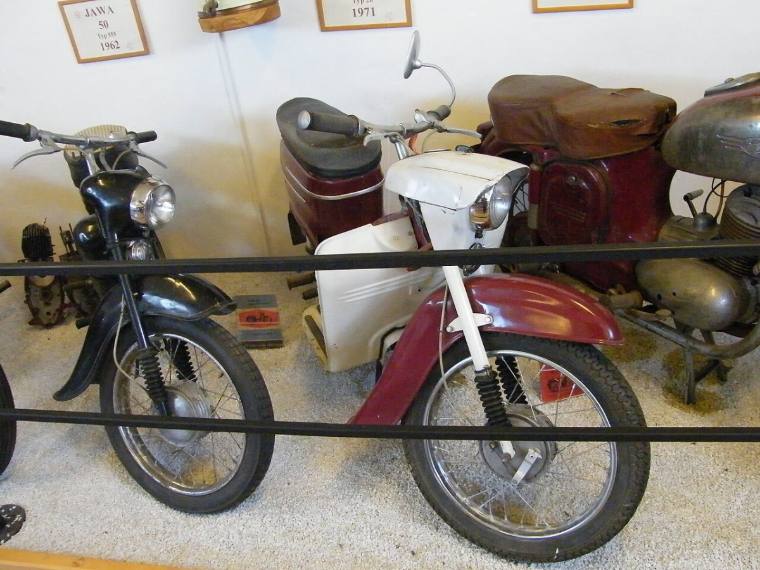
From 1966
Replaced the type 05 with more power.
Photo: Addvisor, CC BY-SA 4.0
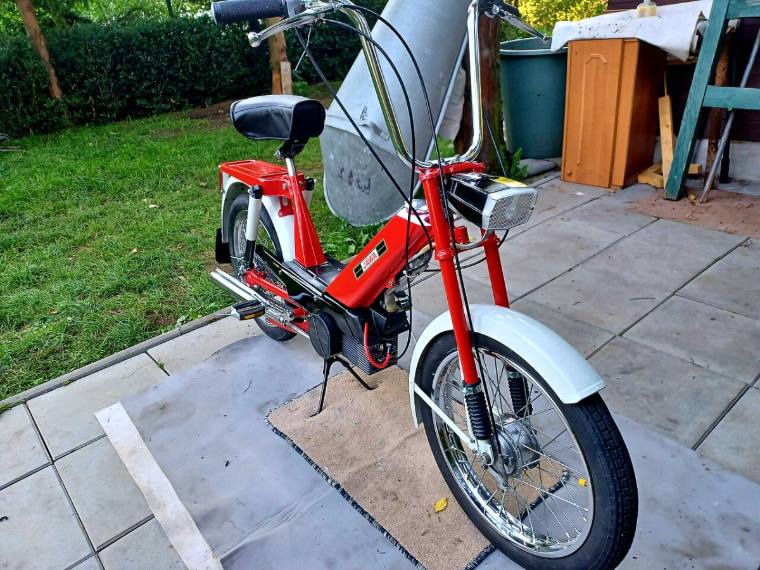
Until 1982
'Mustang' was the export name. Production ended in 1982 with no successor.
Photo: Addvisor, CC BY-SA 4.0
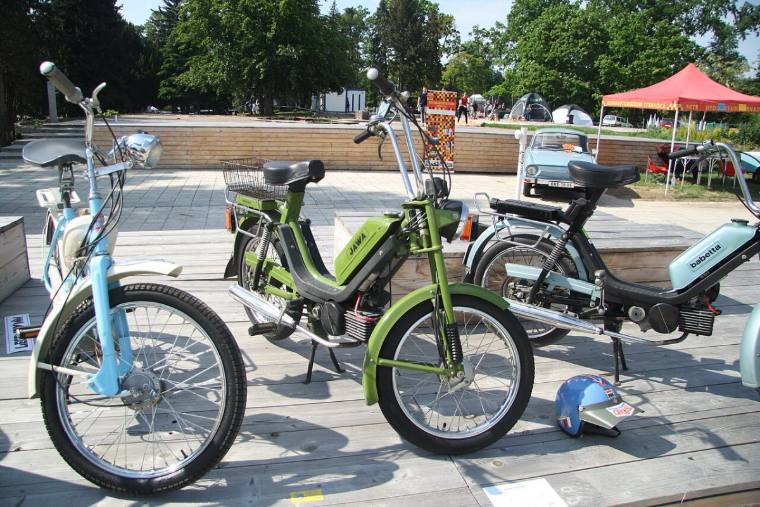
1975–1982 · with suspension
The Babetta with suspension.
Photo: Miroslav207, CC BY-SA 4.0
1983–1997 · one- and two-speed
New engines, sold abroad as Jawa until 1990.
Photo: Jiří Sedláček, CC BY-SA 4.0
More Jawa / Babetta models and versions (no free photo yet. Got one? DM us)
- Babetta 28 / 228 The first Babetta (1970): 19-inch wheels and the first electronic ignition on a moped
- Babetta 206 Rigid frame. 1970–74
- Jawa X20 / X25 / X30 20, 25 and 30 mph US versions. 1980s
- Jawa Sport / Supersport / Ultrasport US 1990s
Kinetic Engineering of Pune introduced the Luna moped, which sold well in India and was exported to the US, Argentina, Brazil and Sri Lanka.
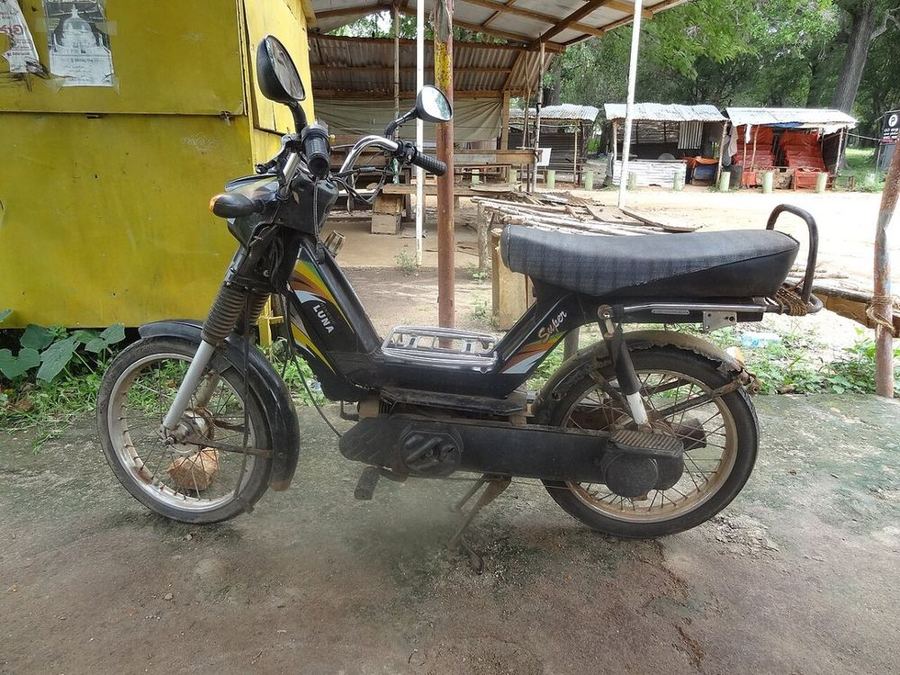
Exported worldwide · Ciao-style drivetrain
Kinetic's best seller at home, exported to the US, Brazil, Argentina and Sri Lanka.
Photo: Cherubino, CC BY-SA 3.0
Kreidler of Kornwestheim put the first 50cc moped on the market, the K 50 of 1951. Its Florett became one of Germany's most popular small bikes. The company closed in 1982.
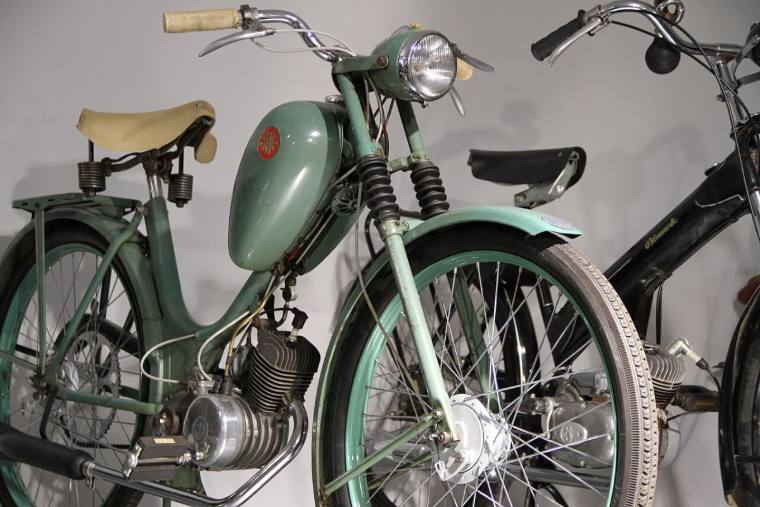
1951 · 50cc
The first 50cc moped on the market, and Kreidler's first.
Photo: pilot_micha from Bayern, CC BY 2.0
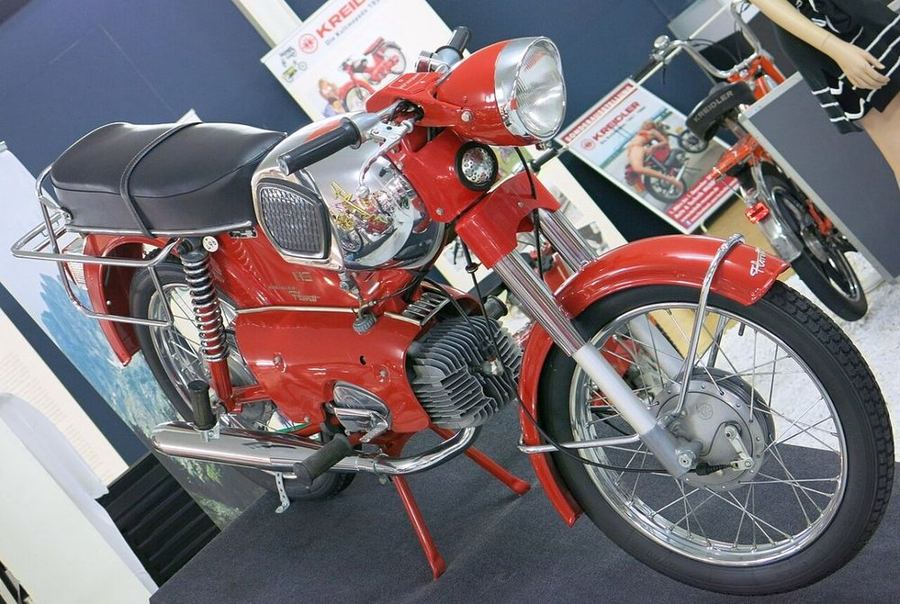
1967–1981 · 50cc two-stroke
Kreidler's fastest bike. More than 125,000 were built, and it was one of Germany's most popular 50s.
Photo: Beademung, CC BY-SA 3.0 de
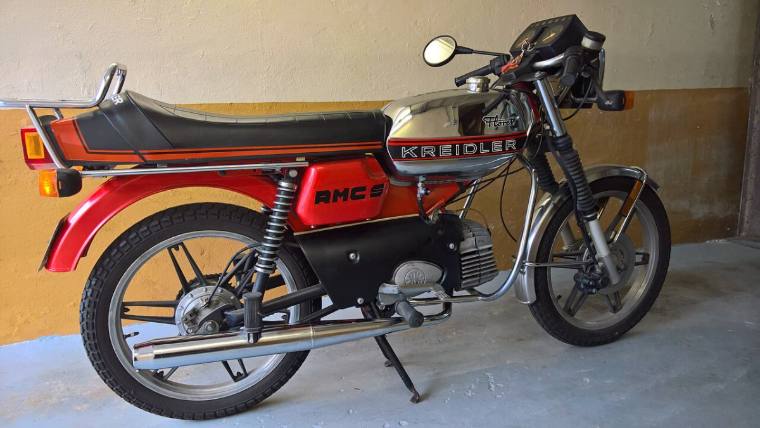
Shown: five-speed RMC
A later Florett.
Photo: Michl2008, CC BY-SA 4.0
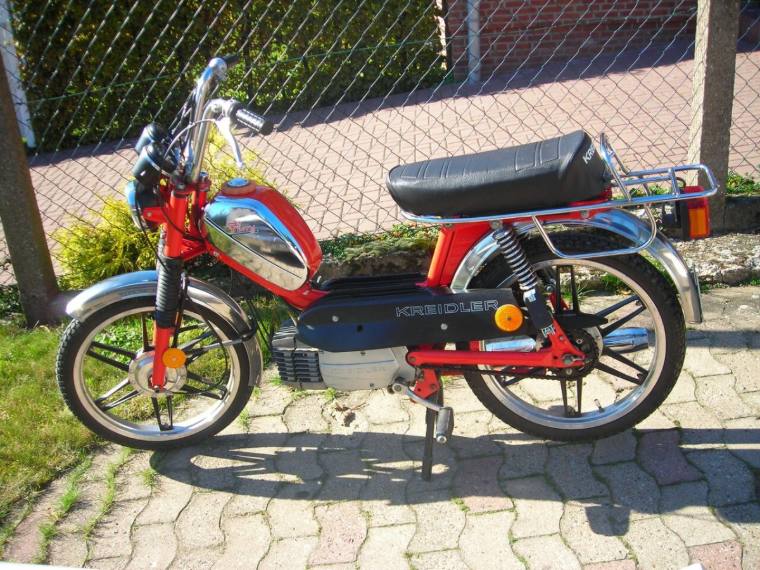
US 1976–80 · two-speed
The Flory replaced the Florett in the US; the MP-9 had spokes, the MP-19 mags. Shown: a 1981 MF23.
Photo: Scirocco Scala, CC BY-SA 4.0
More Kreidler models and versions (no free photo yet. Got one? DM us)
- MP-9 / MP-19 The US Flory with spoke or mag wheels. 1976–80
- Florett Super / TM / GT More Florett versions
LambrettaItaly
Innocenti's Lambretta was a scooter brand, but it also built mopeds: the Lambretta 48 and the one-speed Lambrettino, sold in the US as the Debramatic.
Lambretta 48
1955–1961
Innocenti's moped.
Photo: Marcusz97, CC BY-SA 3.0
Lambrettino
1965–1970 · one-speed
Sold in the US as the Debramatic.
Photo: Spike, CC BY 2.0
Malaguti built mopeds near Bologna, from the Fifty to off-road 50s like the Cavalcone. In the US it sold the Morini-engined Commuter.
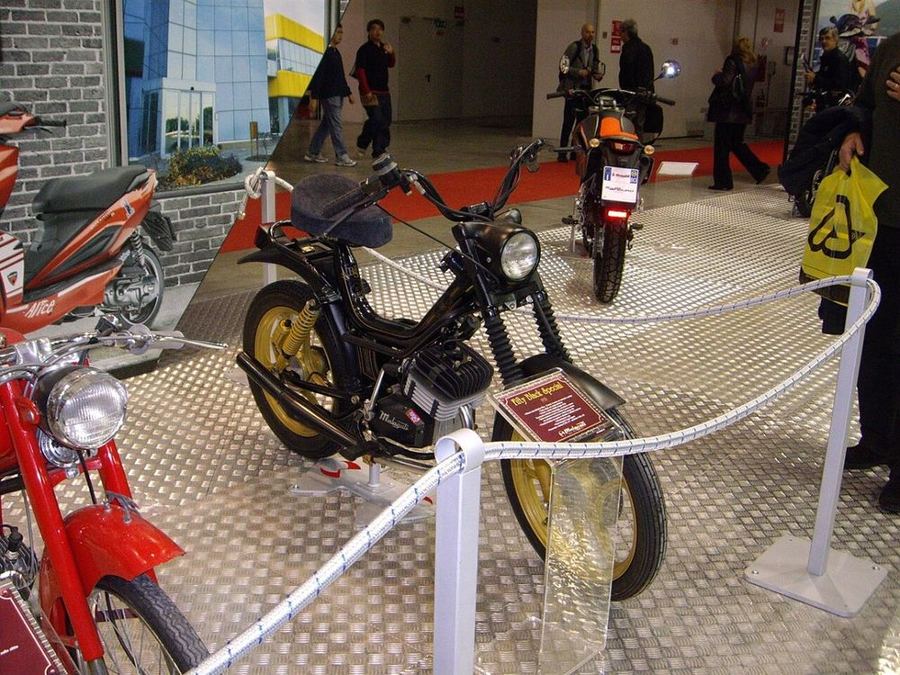
1974–1997 · Franco Morini
One of Malaguti's longest-running and most successful models, sold in more than a dozen versions.
Photo: Bkelafis, CC BY-SA 4.0
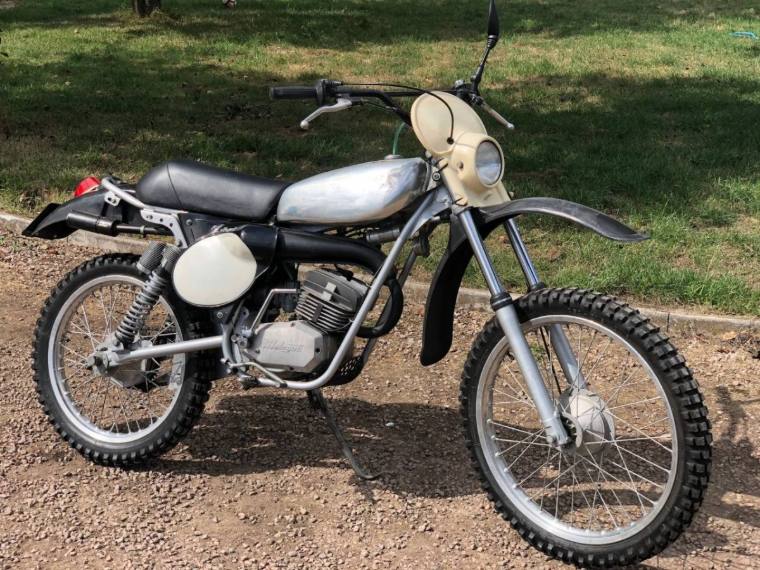
Off-road 50
Malaguti's off-road 50.
Photo: Laura Buononome, CC BY-SA 2.0
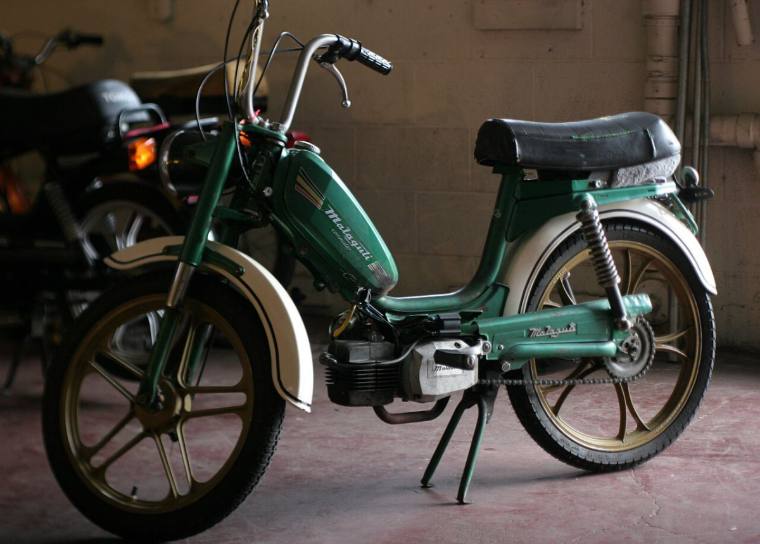
US 1976–83 · Morini engines
The MO1 one-speed, M1 reed and MO2 two-speed Commuters.
Photo: Wouldpkr T B, CC BY-SA 2.0
MontesaSpain
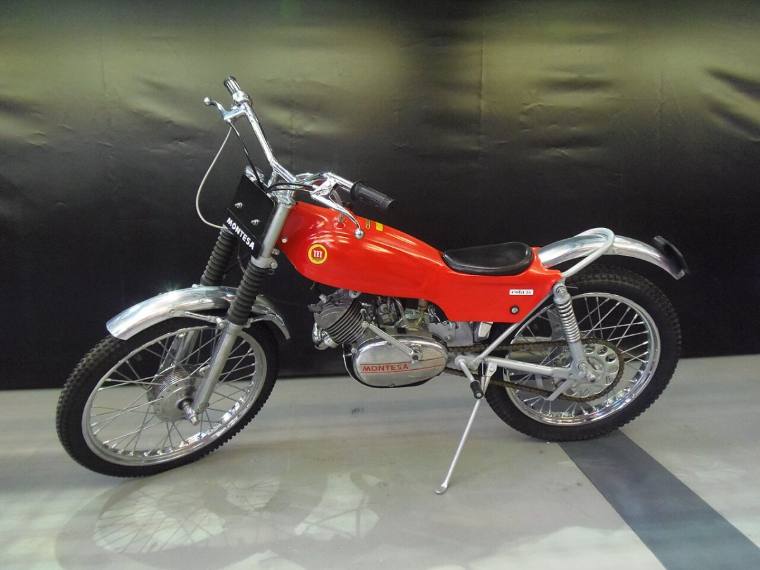
Barcelona's Montesa is a trials legend, and its Cota range went all the way down to a 49cc Cota 25.
Cota 25
Shown: 1974 · 49cc trials
The smallest Cota trials bike.
Photo: Peprovira, CC BY-SA 4.0
Moto GuzziItaly
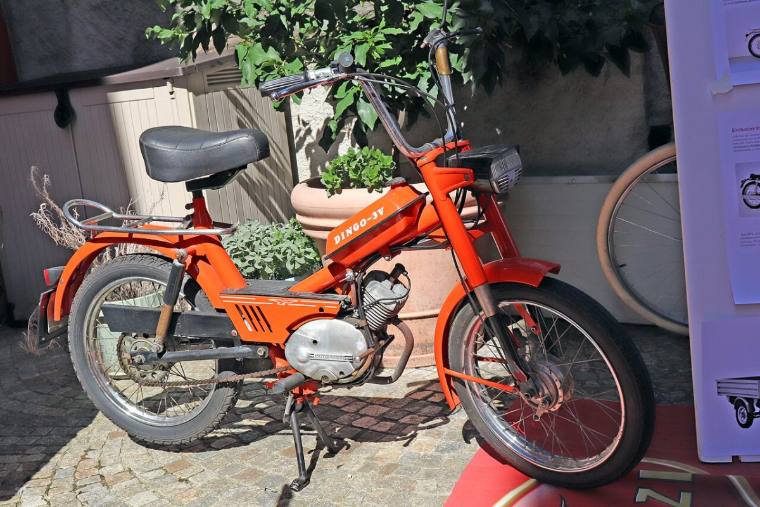
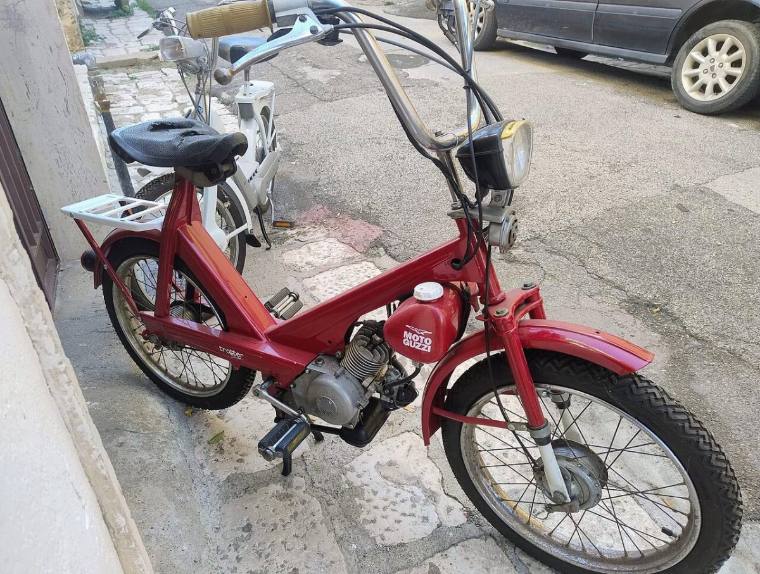
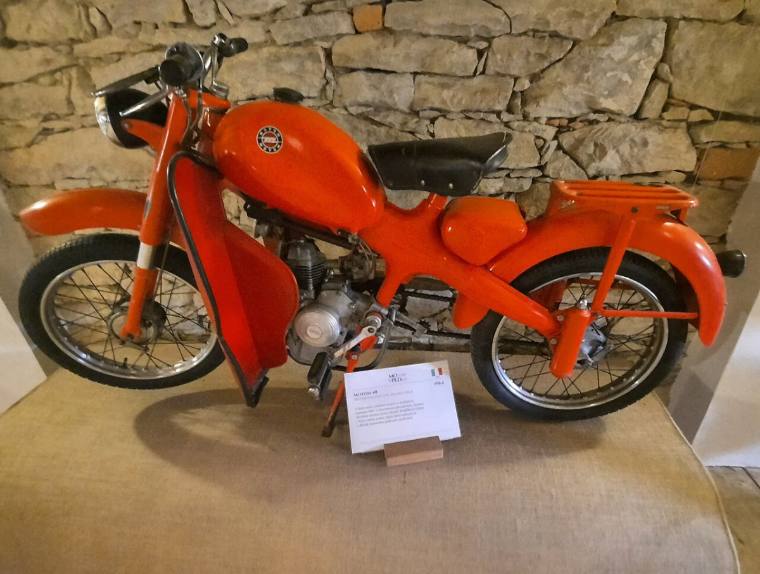
Better known for big V-twins, Moto Guzzi built 50cc mopeds in Mandello del Lario too, like the Dingo and Trotter.
Dingo
1963–1976
Built in many versions, replacing the Cardellino.
Photo: CheminduCret, CC0
Trotter
1966–1973
Guzzi's step-through moped.
Photo: Guzzista76, CC BY-SA 4.0
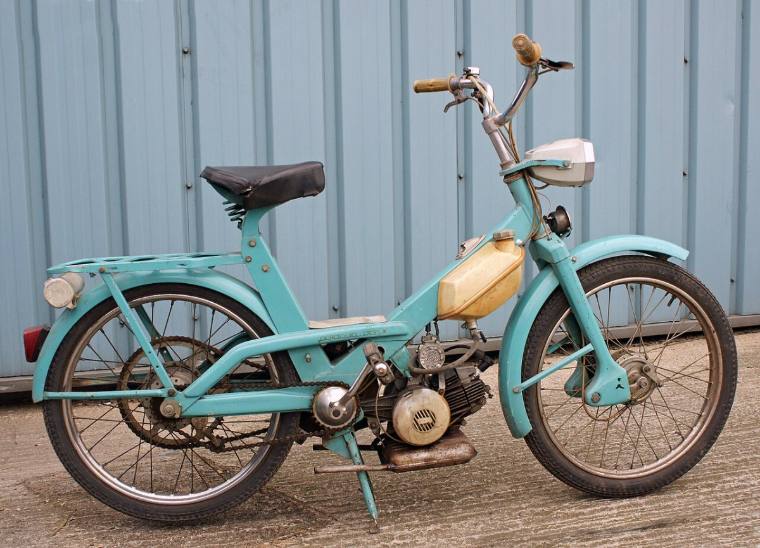
Motobécane built the Mobylette from 1949, with the belt-and-chain drive and a frame pressed from two steel halves that doubles as the gas tank. US imports ran from 1975, and the brand became MBK after 1985.
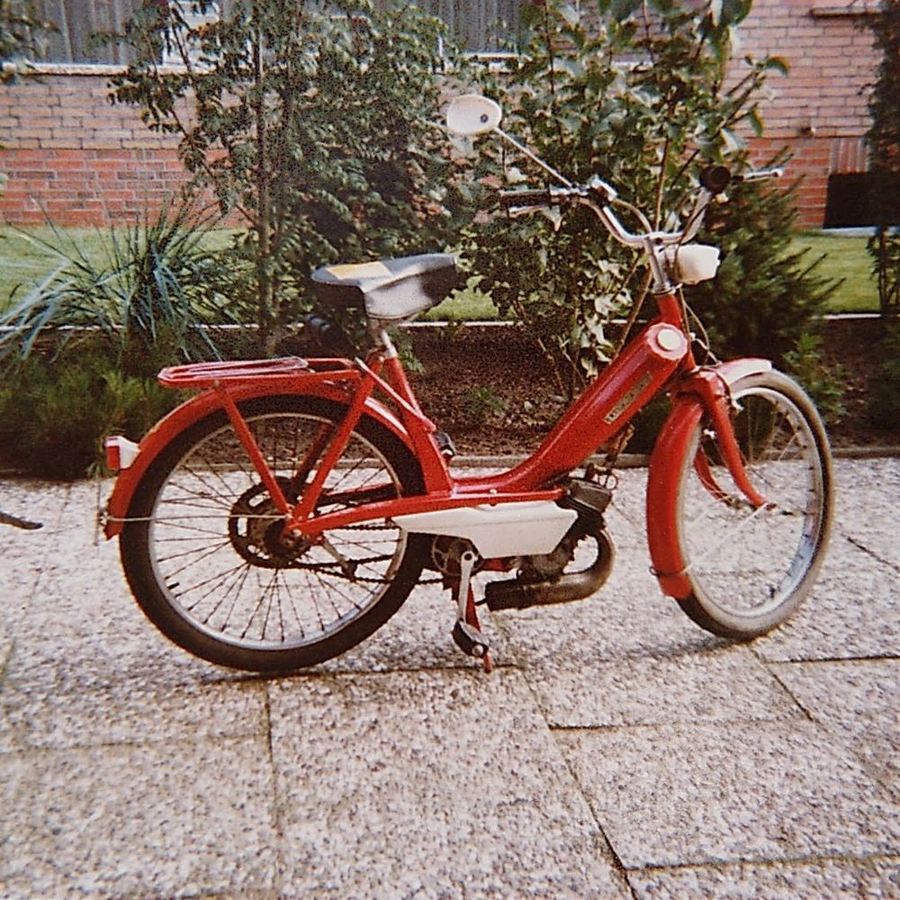
1949–1997 · 49cc two-stroke, variator on V models
Over 14 million Mobylettes built from 1949 to 1997. The variator 50V was sold in the US from 1974 to 1980.
Photo: Ulli 2mecs, CC BY-SA 4.0
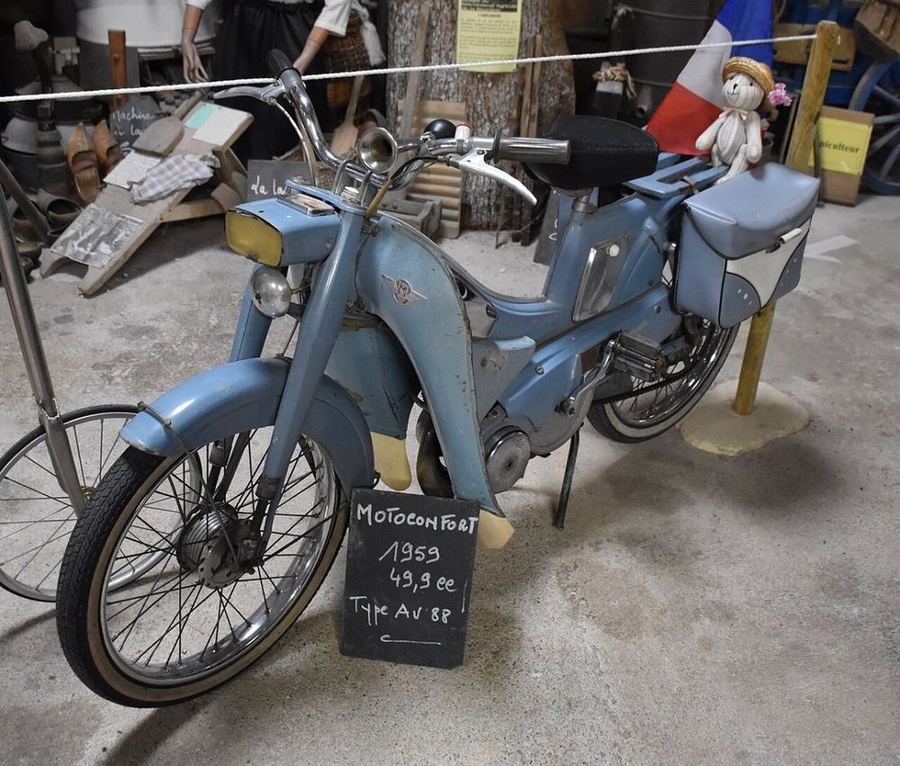
Shown: 1959 · 49cc two-stroke
A classic early Mobylette from the bike that made "mob" French slang for any moped.
Photo: Renhour48, CC0
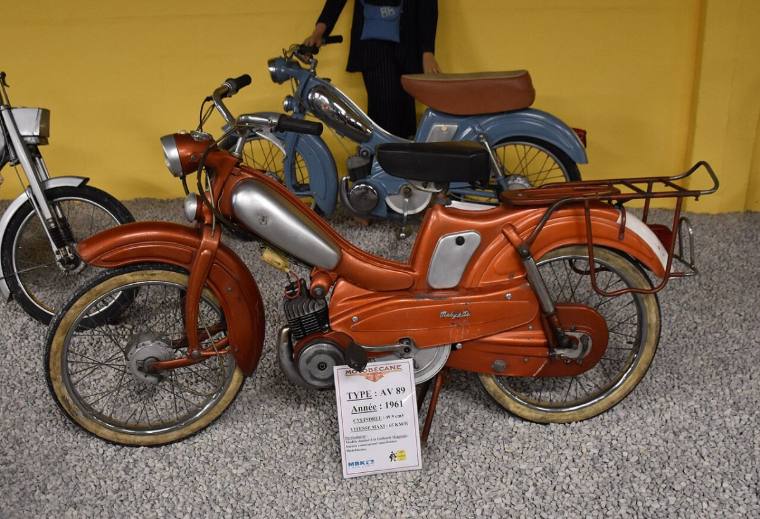
Shown: 1961
A Mobylette in Motobécane's own museum in Saint-Quentin.
Photo: René Hourdry, CC BY-SA 4.0
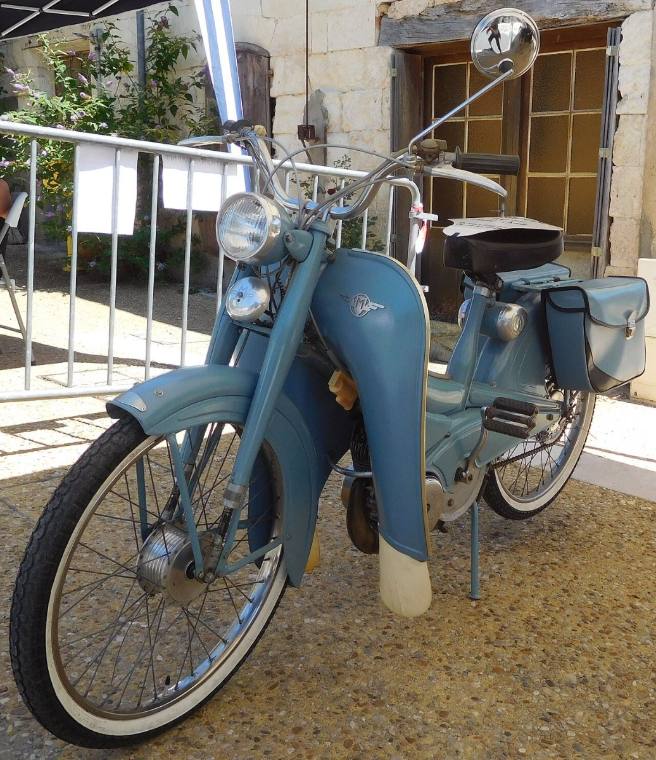
Shown: 1962
An early-60s Mobylette with enclosed bodywork.
Photo: Cjp24, CC BY-SA 4.0
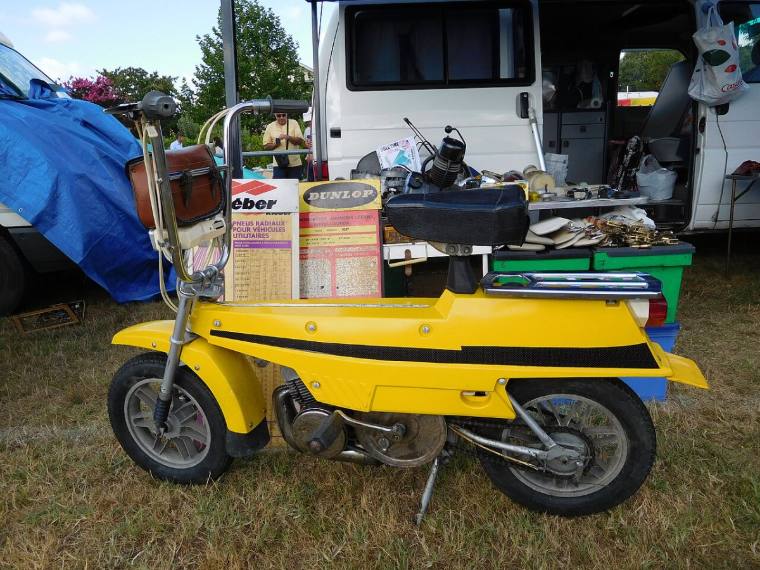
Shown: Mobyx
Motobécane's mini-bike-style moped.
Photo: Cjp24, CC BY-SA 4.0
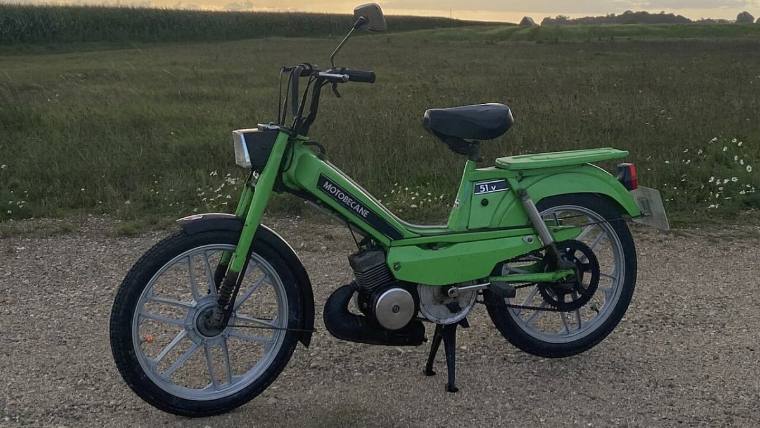
1978–2002 · AV10 reed-valve engine
Grew out of the type 50 with the stronger AV10 engine. It became the MBK 51 after 1985.
Photo: Sebouboune, CC BY-SA 4.0
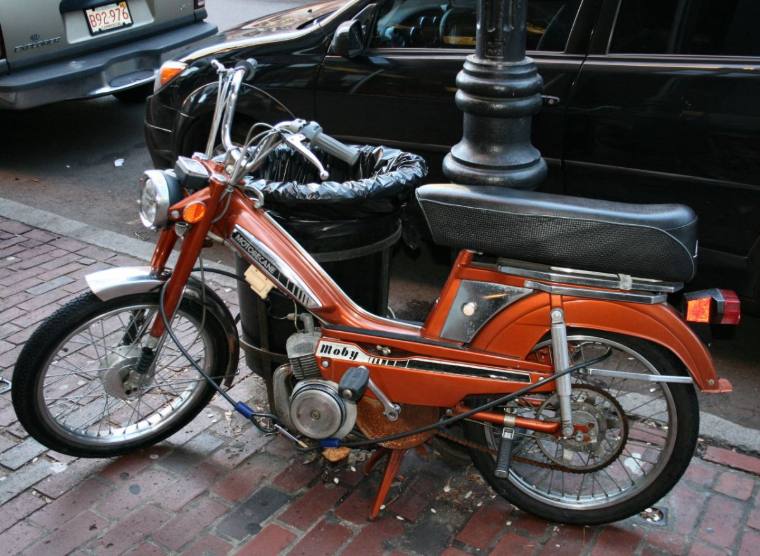
US 1980 · CVT
A 1980 US name for the 50 VL.
Photo: Bree, CC BY-SA 2.0
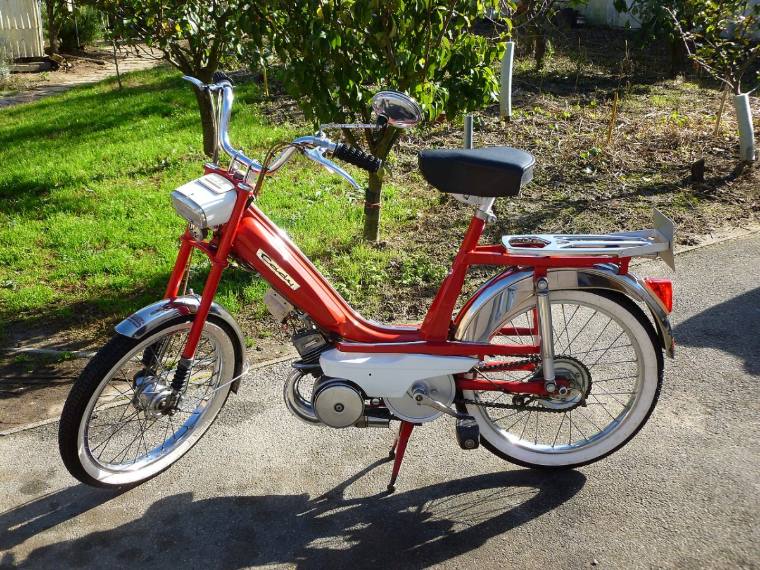
Europe only
A Mobylette with the clutch and magneto both on the left side.
Photo: Steeven Decomble, CC BY-SA 3.0
More Motobécane models and versions (no free photo yet. Got one? DM us)
- 40 / 40T / 40TL / 40TS One-speed. US 1975–79
- 50 L / 50 S One-speed, full suspension. US 1976–77
- 50 V / 50 VL Variator (CVT), solo or long seat. US 1976–80
- 50 VLA CVT with mags
- 50 VLX CVT, solo seat, off-road
- Model 7 One-speed, hard tail. 1977–79
- Le Moped A 50 VLA with extras in black and gold. 1980
- Traveler Same as the 40 TS. 1980
- Sebring Italian-built with a Morini engine. 1978–79
MotomItaly
Milan's Motom built small four-stroke mopeds, unusual when almost everyone else used two-strokes.
Motom 48
48cc four-stroke, three-speed
A four-stroke moped with an X-frame.
Photo: Addvisor, CC BY 4.0
Delfino
1952–1957
A Motom with enclosed bodywork.
Photo: Midnight bird, CC BY-SA 3.0
Motron sold Italian, Minarelli-engined mopeds in the US: the Classic, Medalist and Sprint (1978–79), then the Fairway with a Minarelli variator (1980–81).
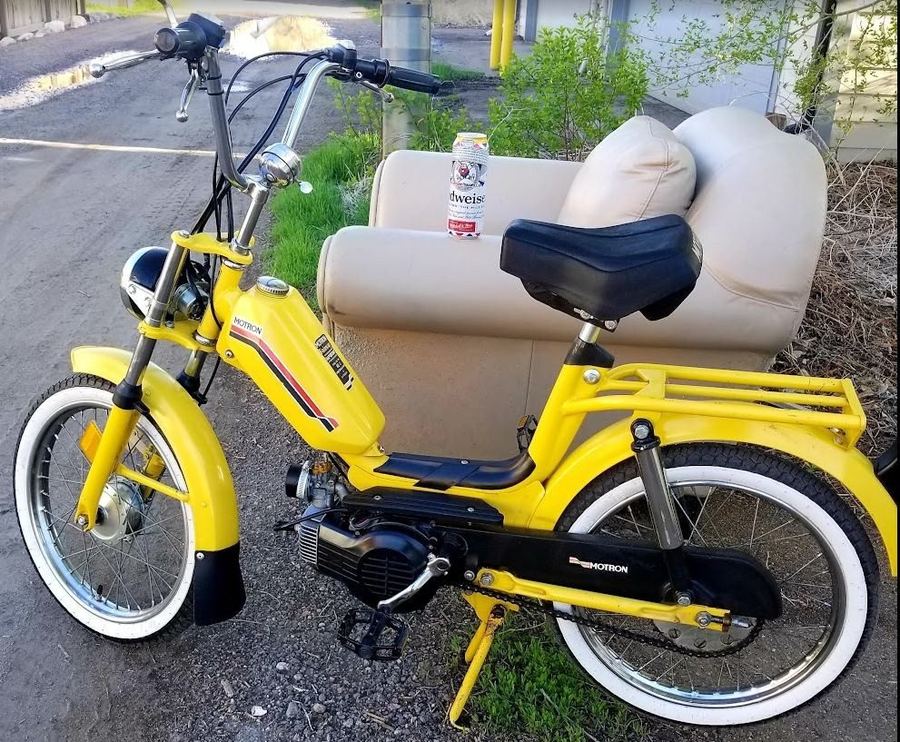
Shown: 1980 · Minarelli V1 automatic
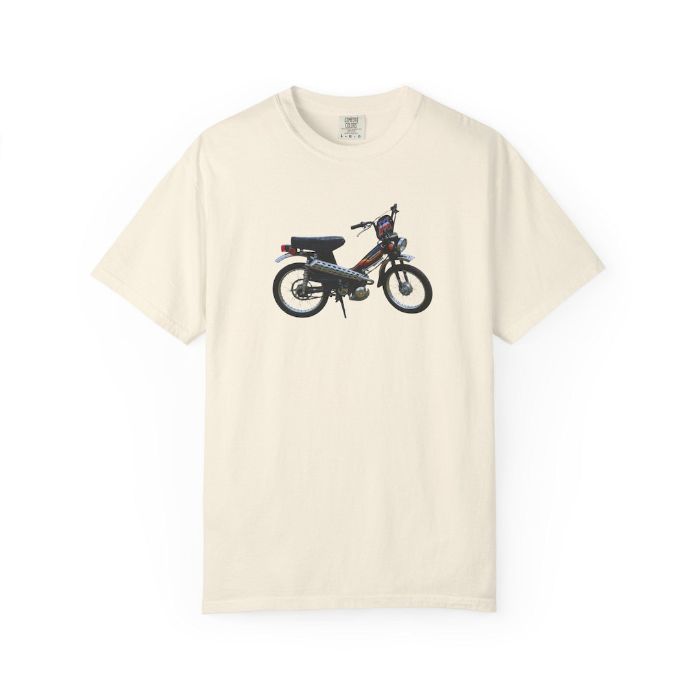
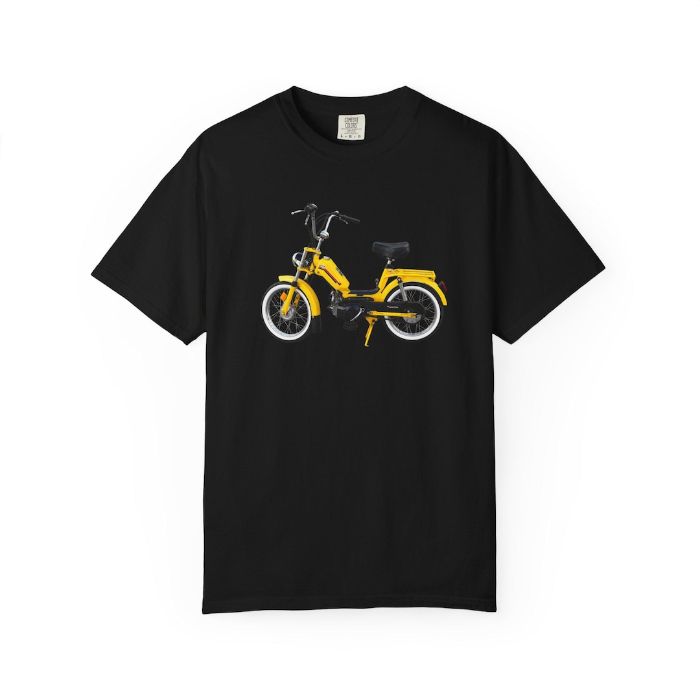
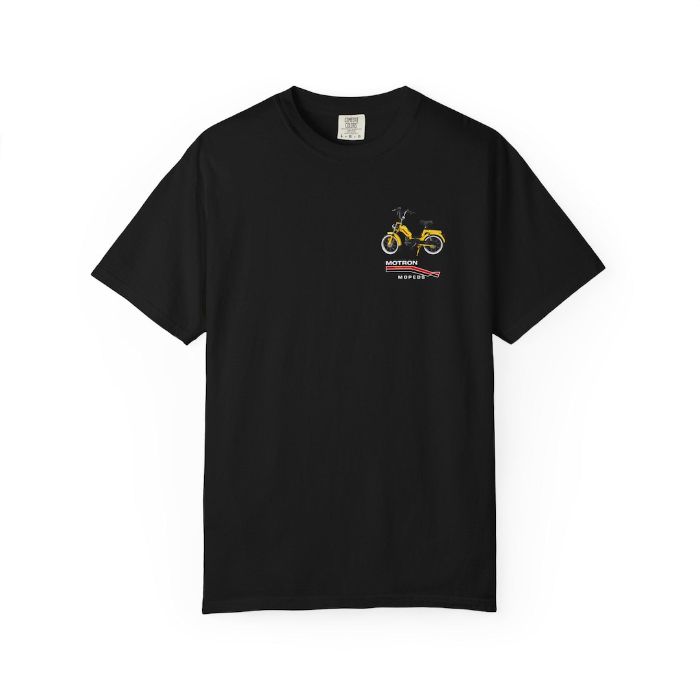
Italian, from Modena. Our 1980 Motron is the bike behind our Motron shirts.
From the Moped Motel fleet
More Motron models and versions (no free photo yet. Got one? DM us)
- Classic Minarelli V1, long seat. US 1978–79
- Medalist Minarelli V1, solo seat. US 1978–79
- Sprint The bare-bones Medalist. US 1978–79
NegriniItaly
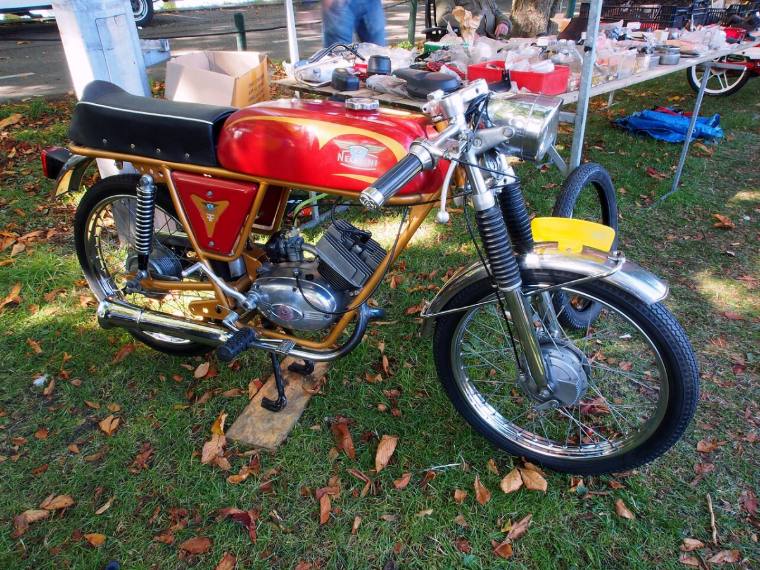
Negrini built Morini-engined mopeds. In the US they sold as the Gazelle, Harvard, MX Sport and KPN City Cross (1977–82).
Negrini sport moped
Morini-engined
A Negrini with a sport tank.
Photo: AlfvanBeem, CC0
More Negrini models and versions (no free photo yet. Got one? DM us)
- Gazelle / II / III Morini MO1, MO2, M1. US 1977–82
- Harvard / Harvard II US 1979–80
- MX Sport I–III Top tank. US 1977–82
- KPN City Cross US 1980
NSUGermany
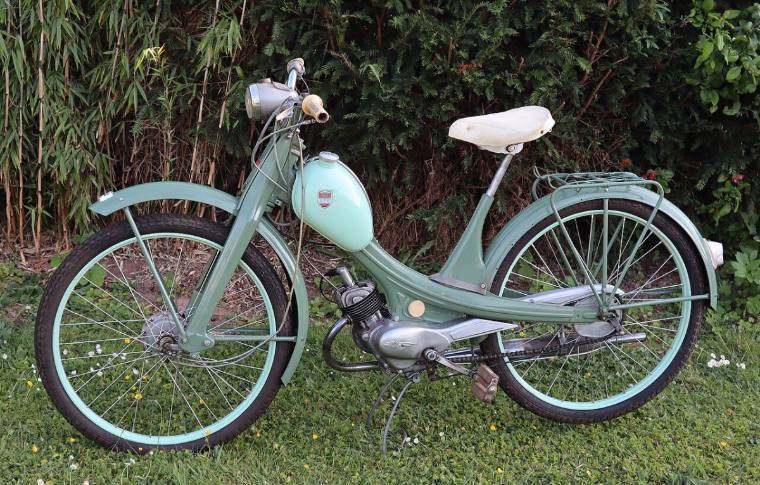
NSU's Quickly was one of the bikes that put postwar Germany on wheels.
Quickly
1953–1966
Shown at the 1953 IFMA show and built in huge numbers.
Photo: Palauenc05, CC BY-SA 4.0
Peugeot's mopeds run from the 1950s BB through the 101, 102 and 103. The 103 launched in 1971 and is still built today. The US got the 102 SPB, 103 LS, LVS, SP and the top-tank TSM.
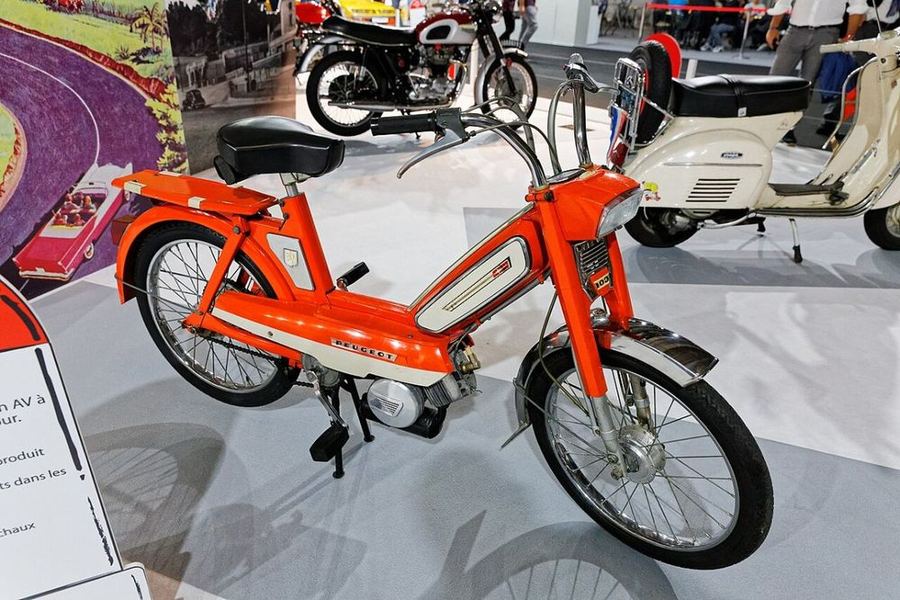
1971–today · 50cc two-stroke, variator
Over 3 million sold, the best-selling 50cc two-stroke ever.
Full history →Photo: Thesupermat, CC BY-SA 4.0
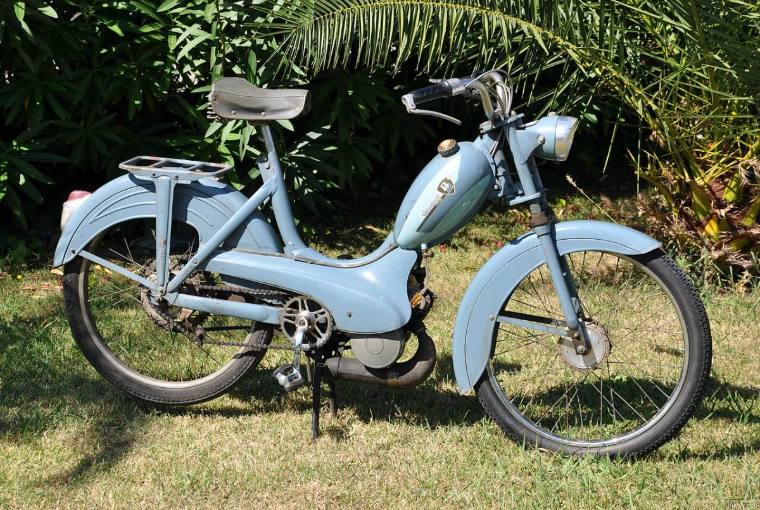
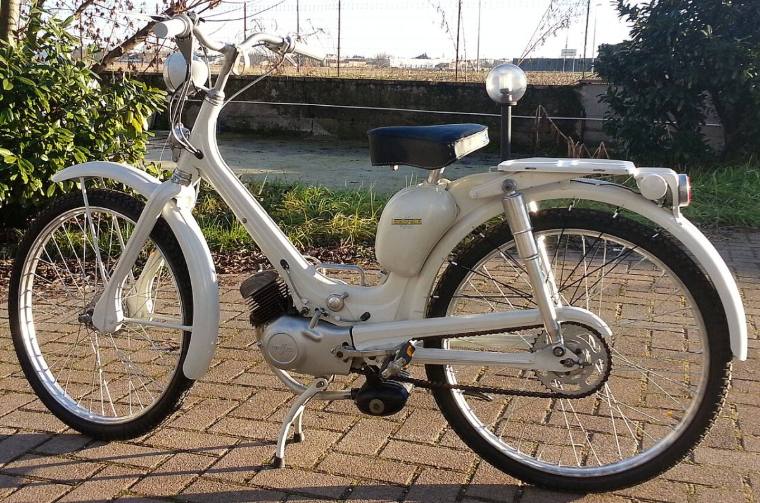
1956–1971
The 1950s Peugeot moped that the 101 and 102 replaced.
Photo: Palauenc05, CC BY-SA 3.0
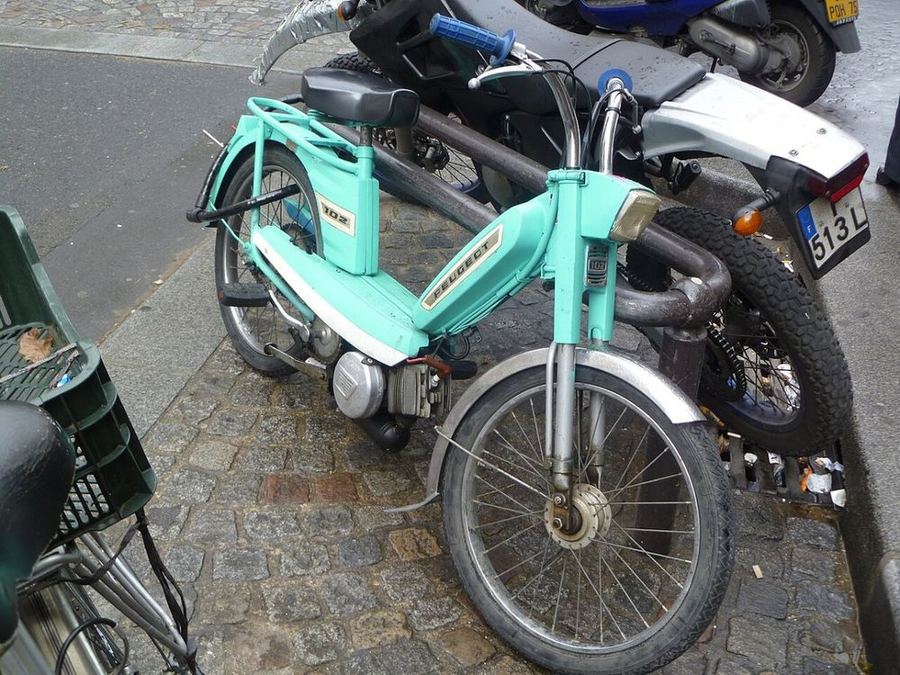
1967–mid-1980s · 49.9cc two-stroke, no variator
The budget workhorse that ran alongside the 103 for more than ten years.
Photo: Andrew Duthie, CC BY-SA 2.0
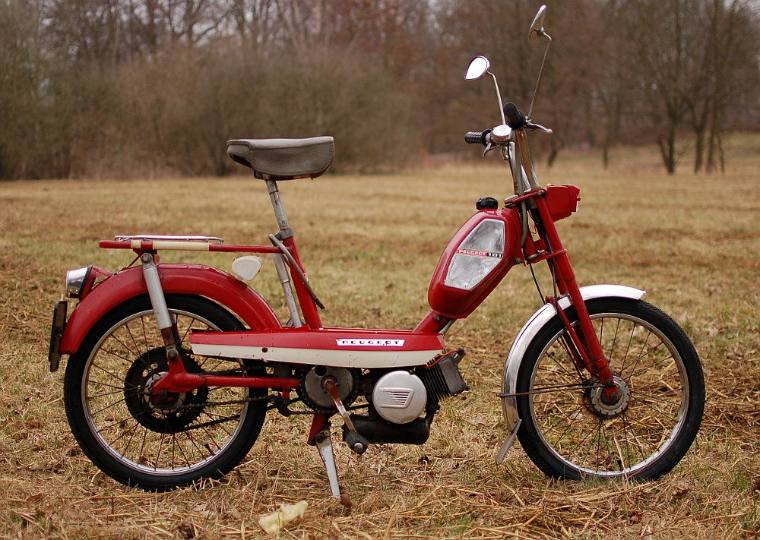
From 1967 · belt drive, automatic clutch
Launched with the 102. It has nearly the same bike with a slightly softer engine.
Photo: Creator: Kai Wüstermann, CC BY-SA 3.0
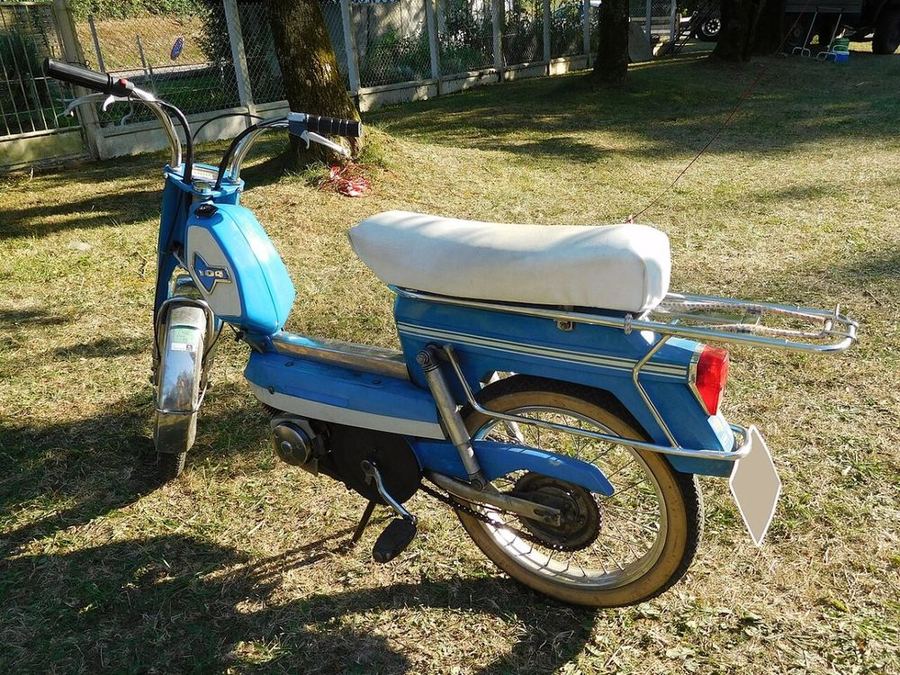
From 1971 · Reed-valve two-stroke
Plastic bodywork, a 3.7-liter tank and about 45 kg. It introduced the engine the 103 made famous.
Photo: Cjp24, CC BY-SA 4.0
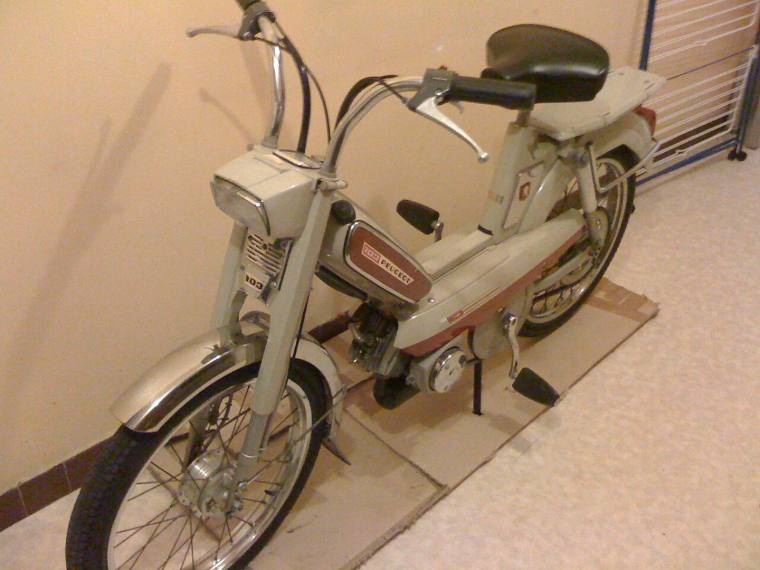
Shown: 1974
An early 103.
Photo: Gempluse Guemy Didier, Public domain
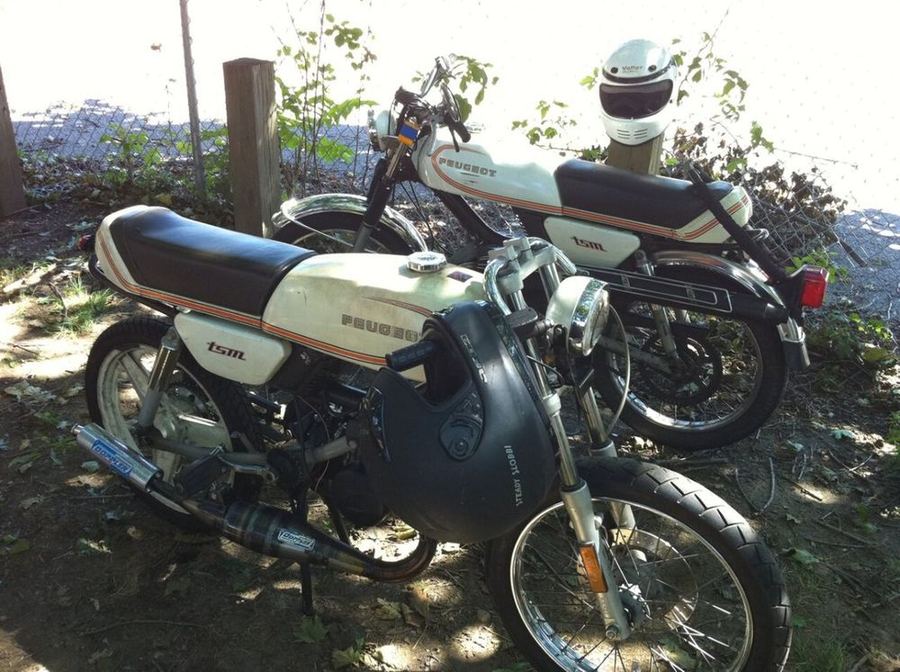
US: TSM, U2, U3 · Two-stroke
A popular top-tank Peugeot sold in the US in three speed classes.
Photo: jyllish, CC BY-SA 2.0
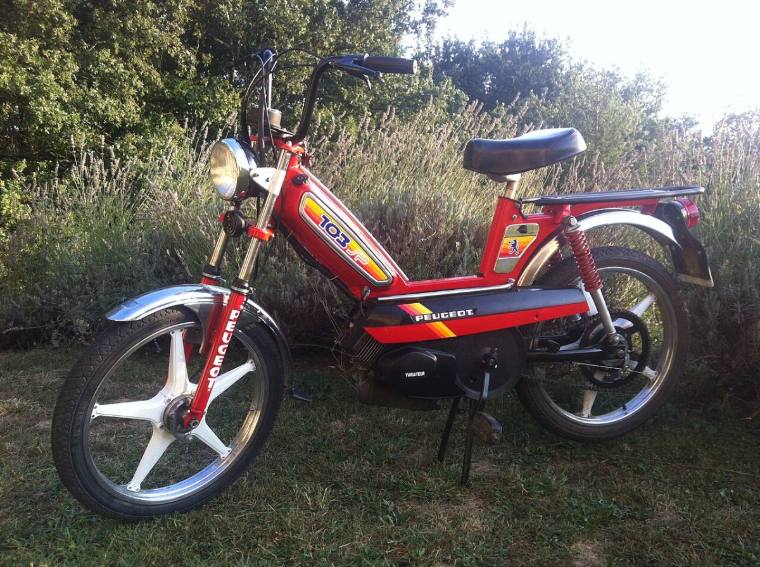
US 1978–82 · CVT reed engine
The sporty 103 with a variator. The US also got the SPB and SPR.
Photo: Duke le palois, CC BY-SA 3.0
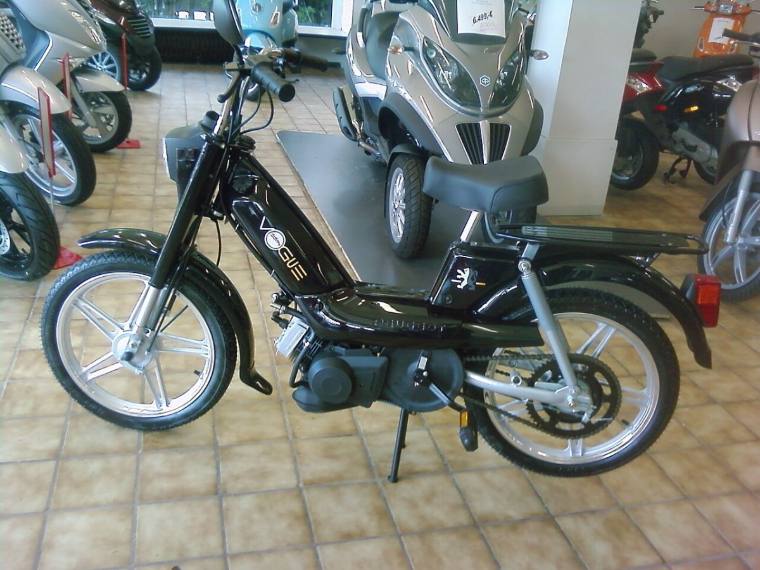
Europe only · one-speed or CVT
A step-through Peugeot sold in Europe.
Photo: Velomo, CC BY-SA 3.0
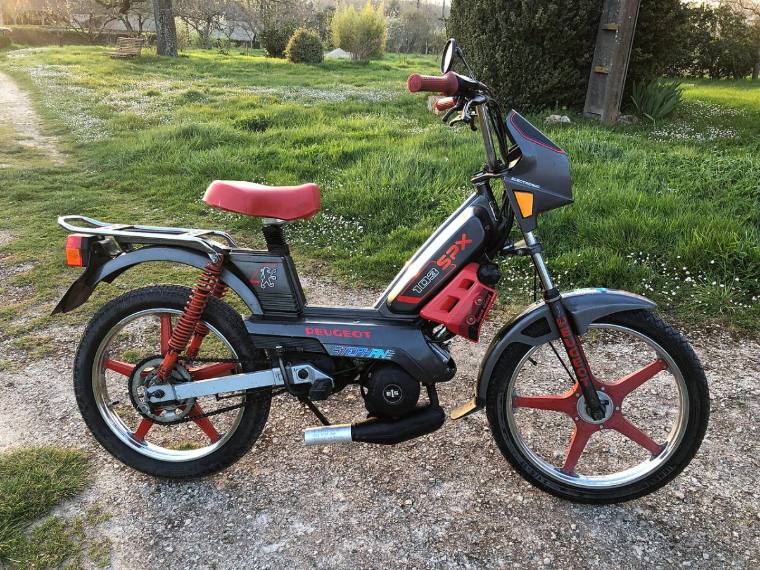
Shown: 1988
The late-80s sport 103, shown in original first-series trim.
Photo: Jean-Noël Marchi, CC0
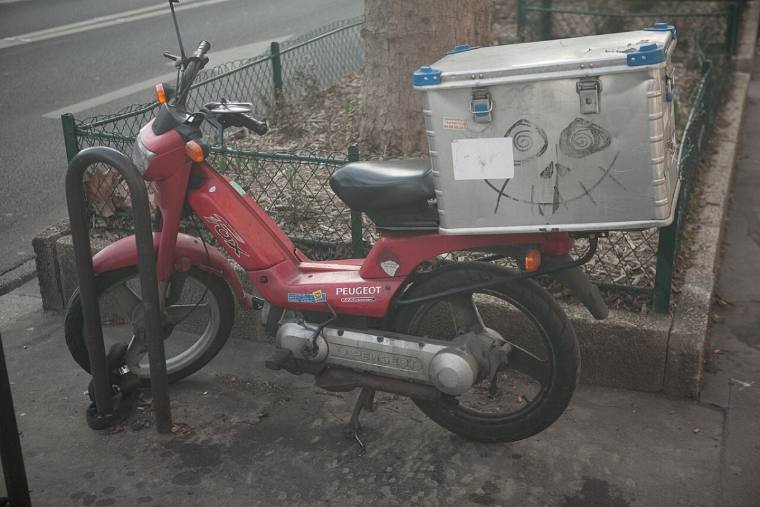
Small-wheel Peugeot
A compact, small-wheel Peugeot moped.
Photo: Jared eberhardt, CC BY-SA 2.0
More Peugeot models and versions (no free photo yet. Got one? DM us)
- 102 SPB One-speed. US 1979–82
- 103 LS One-speed reed engine. US 1976–82
- 103 LVS CVT reed engine. US 1976–82
- 103 SPB / SPR CVT reed engine. US 1978–82
- TSE Top tank, Europe only
- Centri "Cent trois" = 103
Simson of Suhl built the GDR's mopeds, from the SR1 and SR2 through the 'bird series' (Spatz, Star, Sperber, Habicht, Schwalbe) to the S50, S51 and S53.
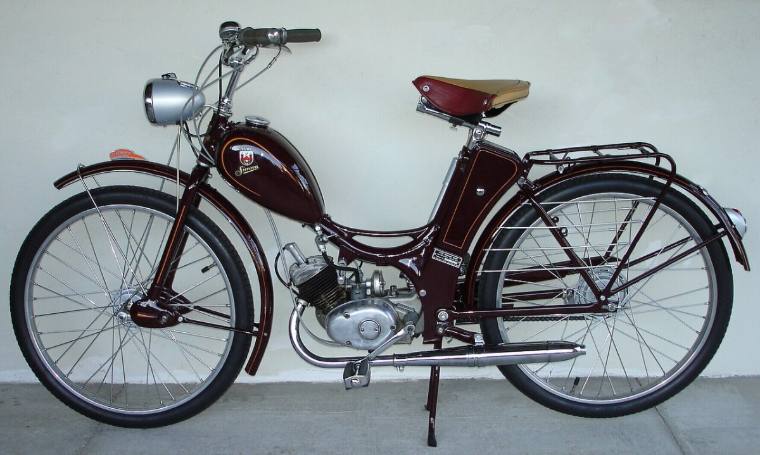
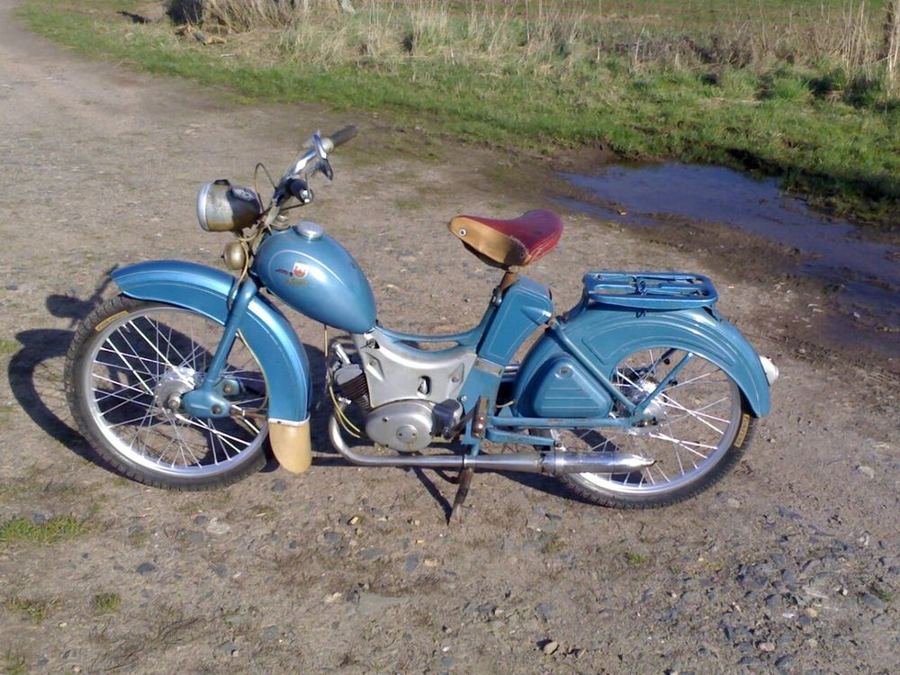
1955–1957 · 152,000 built
Simson's first moped. The R is for Rheinmetall, who built the engine.
Photo: Wolfgang030640, CC BY-SA 4.0
From 1957 · Two-stroke
Over 900,000 built with the SR2E, and some were even exported to the US.
Photo: Mario Rothenberg, CC BY-SA 3.0
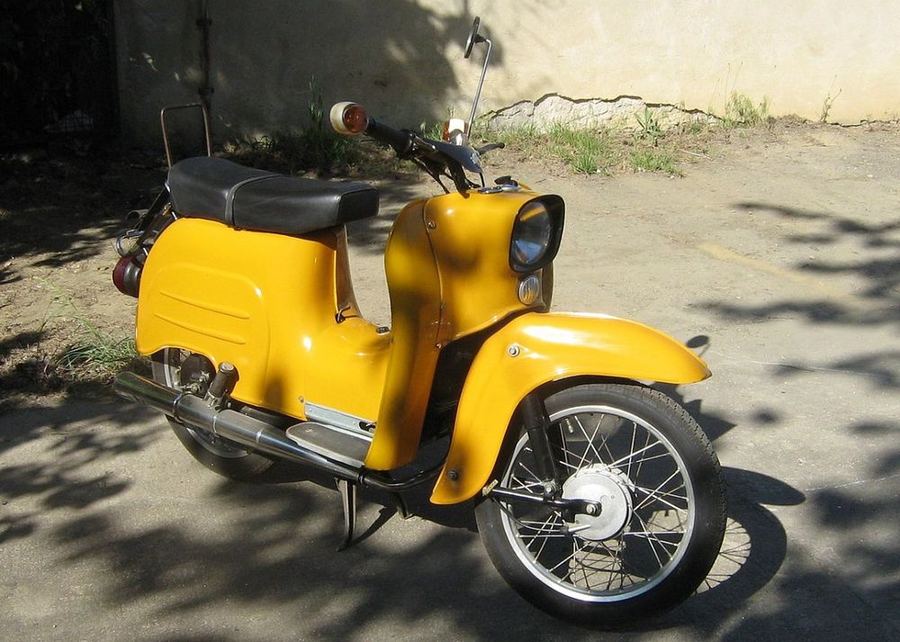
From 1964 · 50cc two-stroke
The little scooter of East Germany. More than a million were built.
Photo: Metal-star at German Wikipedia, Public domain
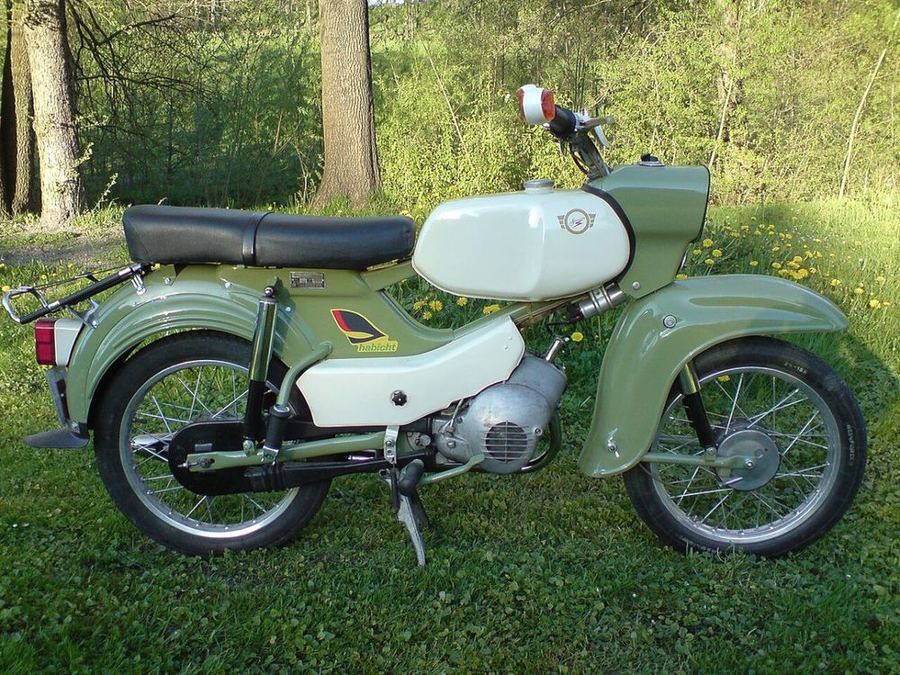
Bird series · 50cc two-stroke
The last of Simson's bird-named models.
Photo: Martin Jorgel (de:Benutzer:Manatwork90), Public domain
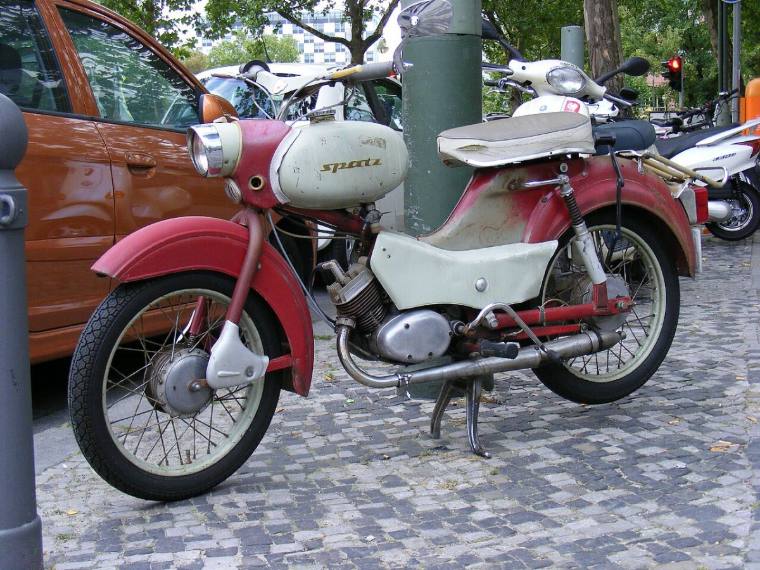
Bird series
The base model of the bird series, successor to the SR2E.
Photo: Felix O, CC BY-SA 2.0
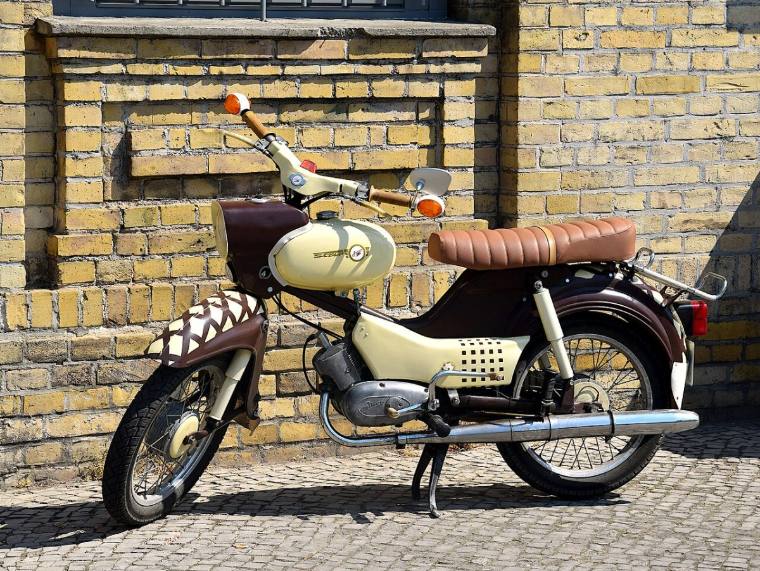
1964–1975
A two-seat bird-series bike.
Photo: Singlespeedfahrer, CC0
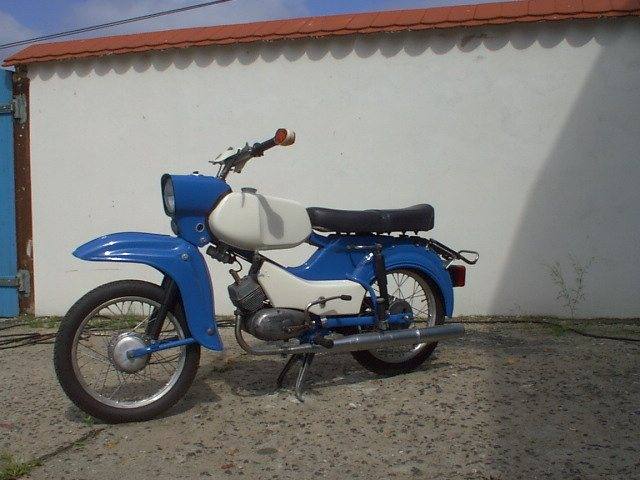
Bird series
The most powerful bike in the bird series.
Photo: selbst fotografiert, Public domain
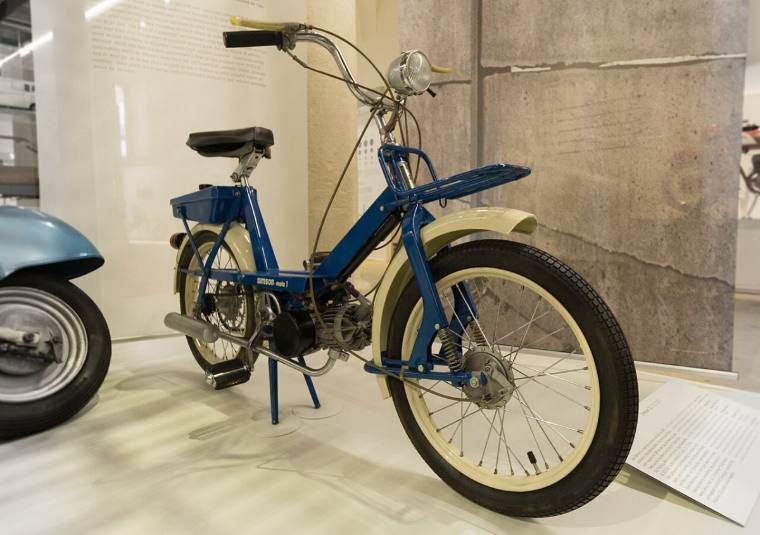
One-speed · 30 km/h
Built like a mofa, but its 30 km/h top speed put it in a different class.
Photo: ubahnverleih, CC0
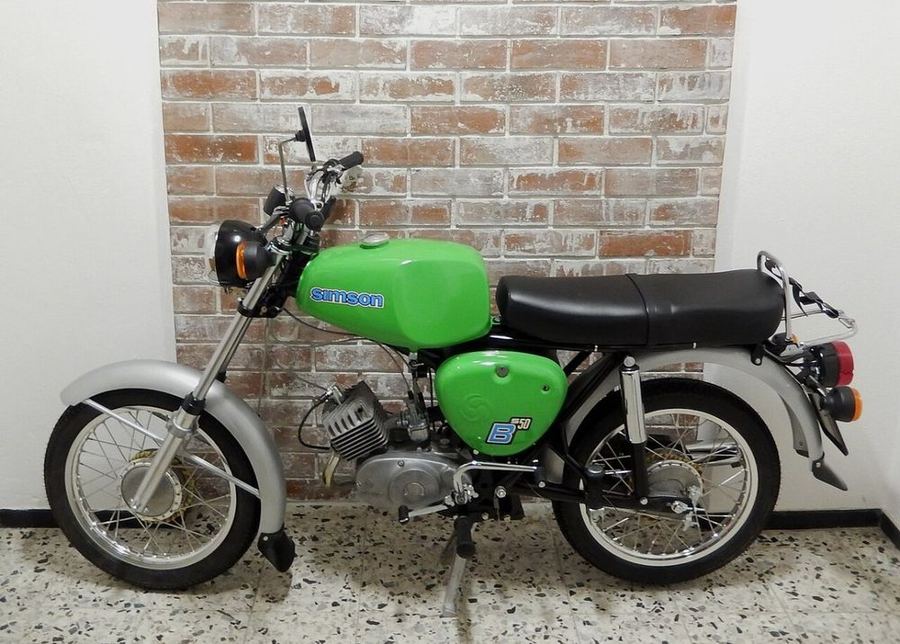
1975–1980 · 50cc two-stroke
A clean-sheet design that replaced the bird series.
Photo: Max schwalbe, CC BY-SA 4.0
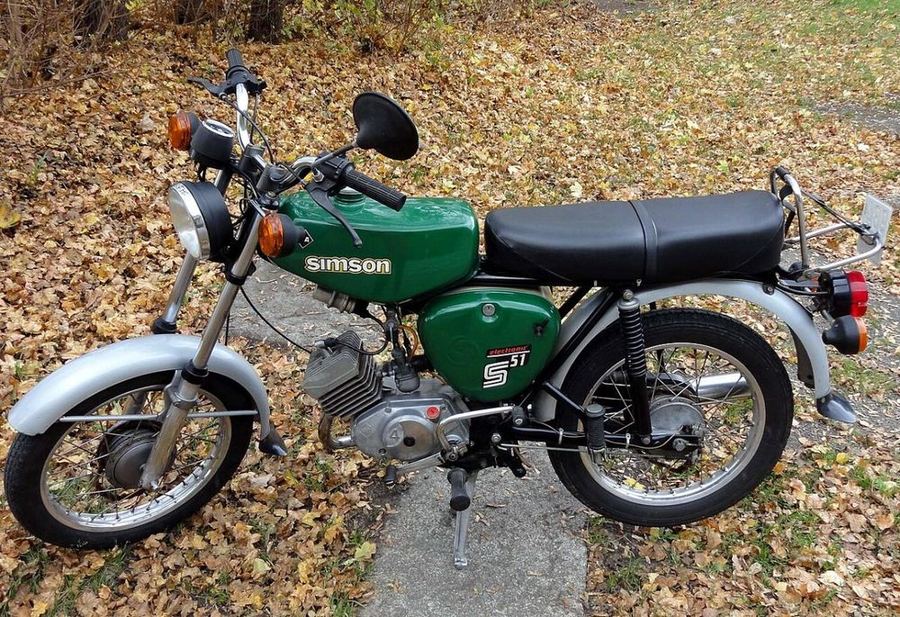
1980–1990 · 50cc two-stroke
Together with the S50, over 1.6 million built, the most-produced small motorbike in Germany.
Photo: Max schwalbe, CC BY-SA 4.0
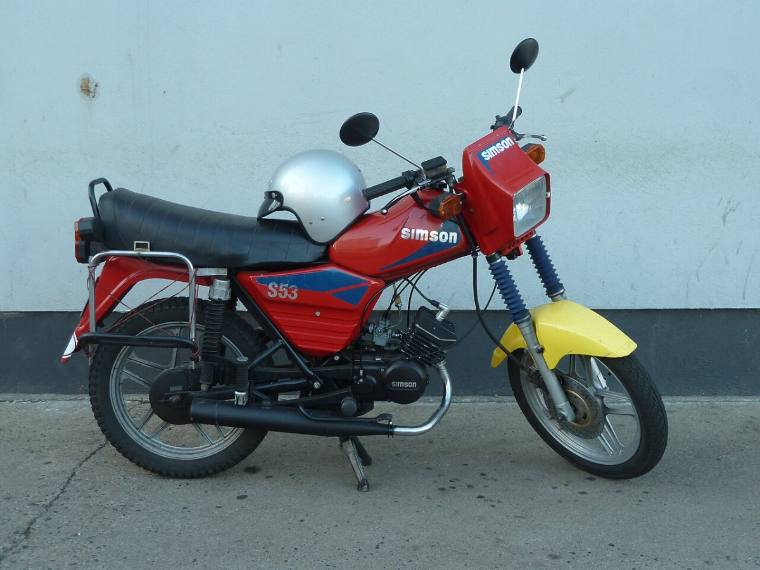
From 1990
The last Simson designed in the GDR, replacing the S51.
Photo: Xaver X. Dreißig, CC BY 3.0
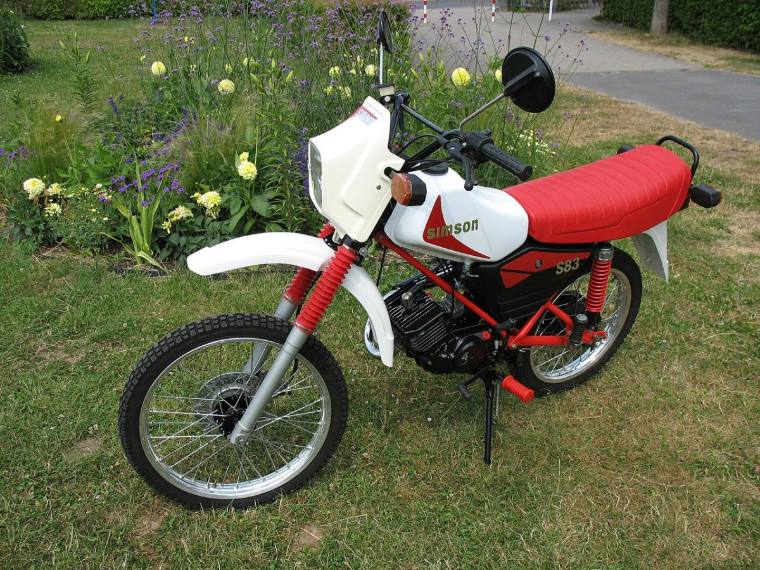
From 1990 · 70cc
The 70cc light-motorcycle version, built on the S53.
Photo: Max schwalbe, CC BY-SA 4.0
SoliferFinland
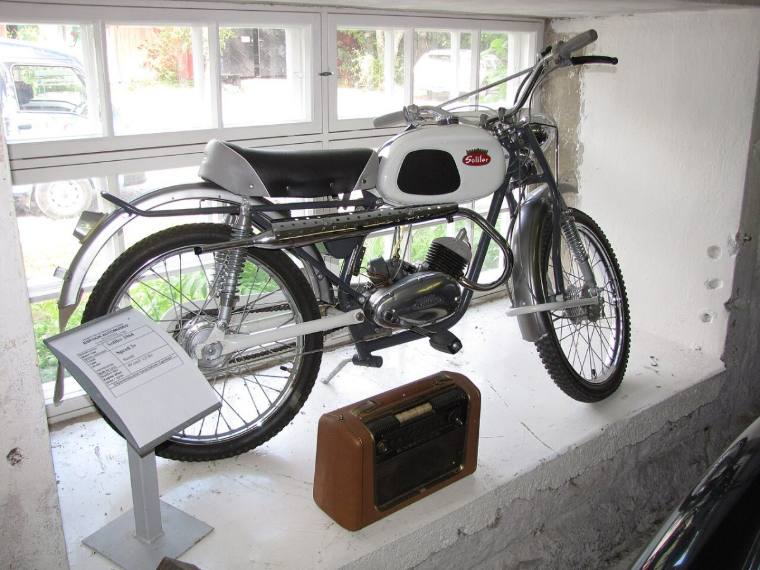
Finland's Solifer built bicycles, caravans, boats and mopeds. Its best-known mopeds are the SM and the Export.
Speed
Shown: 1964 three-speed
A Finnish sport moped.
Photo: MKFI, Public domain
SpartaNetherlands
Apeldoorn's Sparta (founded 1917) was the biggest motorcycle maker in the postwar Netherlands. In the US it sold the Sachs-engined Buddy and Deluxe (1977–80).
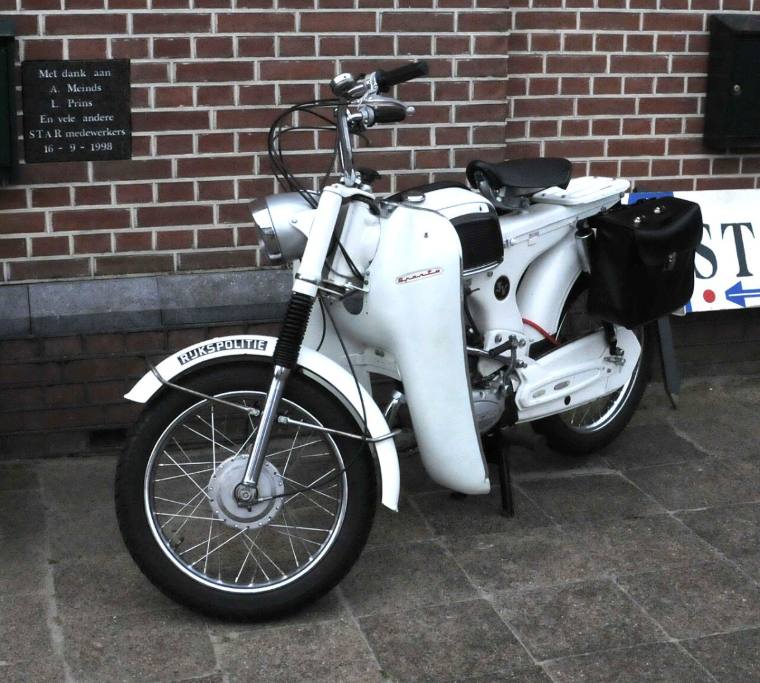
Sparta 3V
Shown: Dutch police bike
A Sparta in Dutch Rijkspolitie service.
Photo: Spoorjan, CC BY-SA 3.0
More Sparta models and versions (no free photo yet. Got one? DM us)
- Buddy / Deluxe Sachs 504/1A. US 1977–80
Suzuki's road to motorcycles started with motorized bicycles: the Power Free of 1952 and the Diamond Free that followed. In the US it sold the FA50 Shuttle and the FZ50.
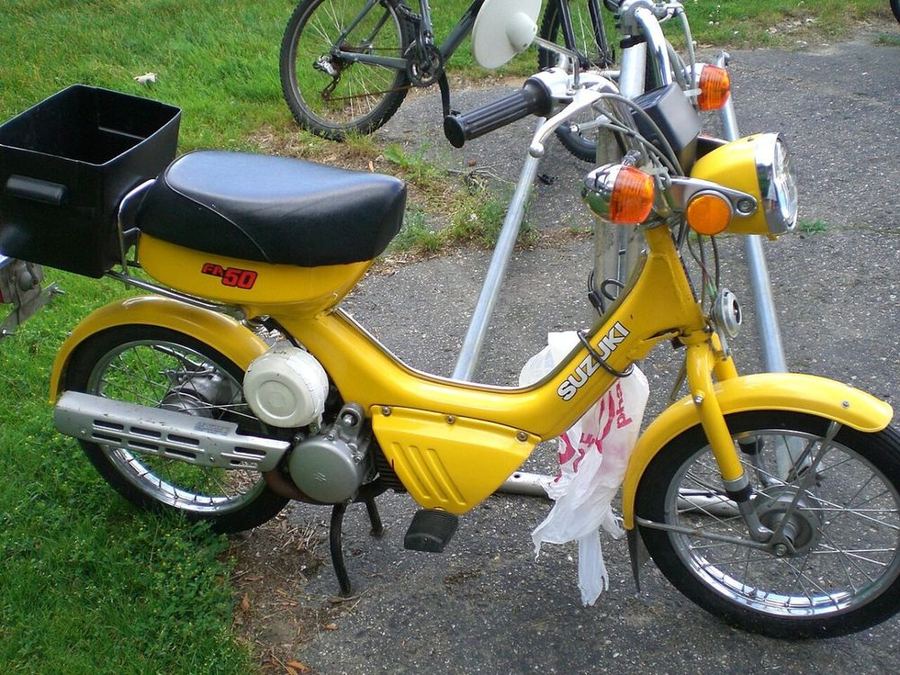
1980–1991 · 49cc two-stroke, oil injection
A 101-pound noped with a fully enclosed, oil-bathed chain.
Full history →Photo: Meghan, CC BY-SA 2.0
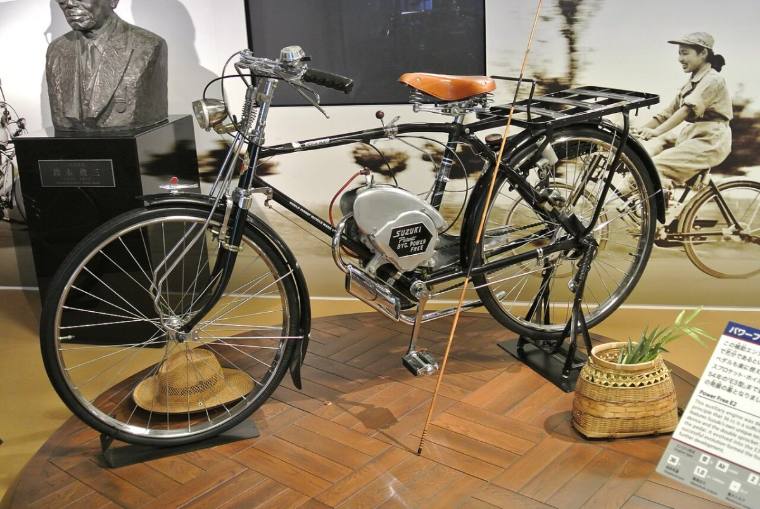
1952 · motorized bicycle
Suzuki's first powered two-wheeler.
Photo: Rainmaker47, CC BY-SA 3.0
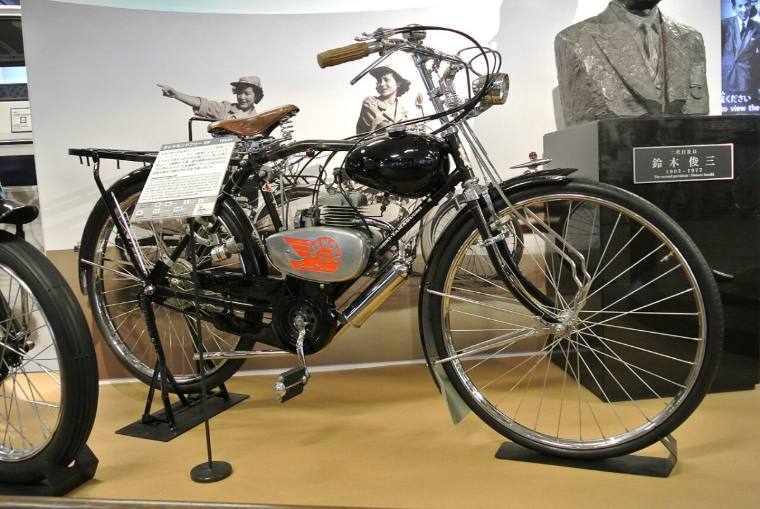
1953 · motorized bicycle
The bigger follow-up to the Power Free.
Photo: Rainmaker47, CC BY-SA 3.0
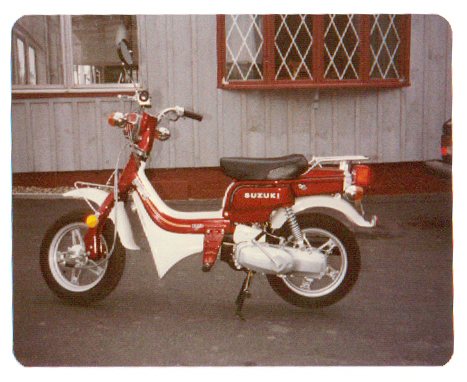
1978–1983 · 49cc two-stroke, two-speed automatic
Called the "Suzy" in the UK and the Youdy in Japan. Kick-started, no pedals.
Photo: Elizabeth M, CC BY 2.0
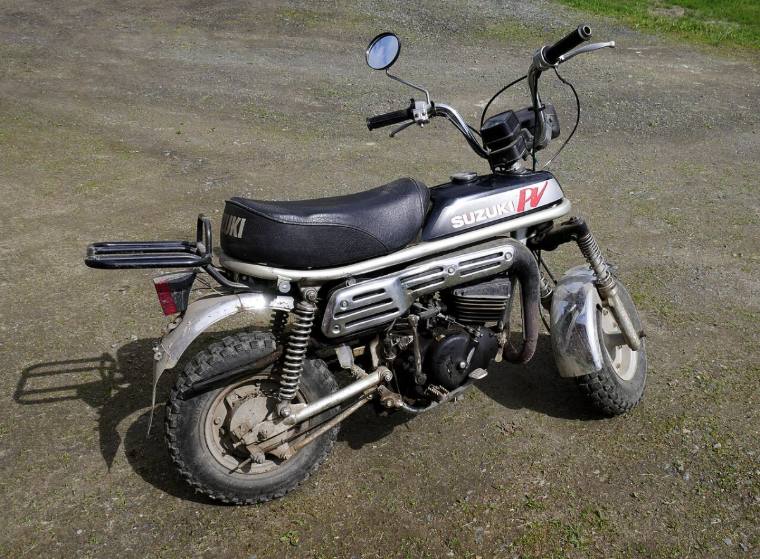
Shown: 1990
A small Suzuki moped.
Photo: Santeri Viinamäki, CC BY-SA 4.0
More Suzuki models and versions (no free photo yet. Got one? DM us)
- FA50X / FA50MX 27 mph and 19.5 mph versions of the Shuttle
- FS50X Two-speed automatic. US 1981–83
Founded in Koper in 1948, Tomos started building mopeds under a Puch license in 1954 and sold them in the US from 1976 to 2014. The A3, A35 and A55 engines powered everything from the Bullet to the Streetmate.
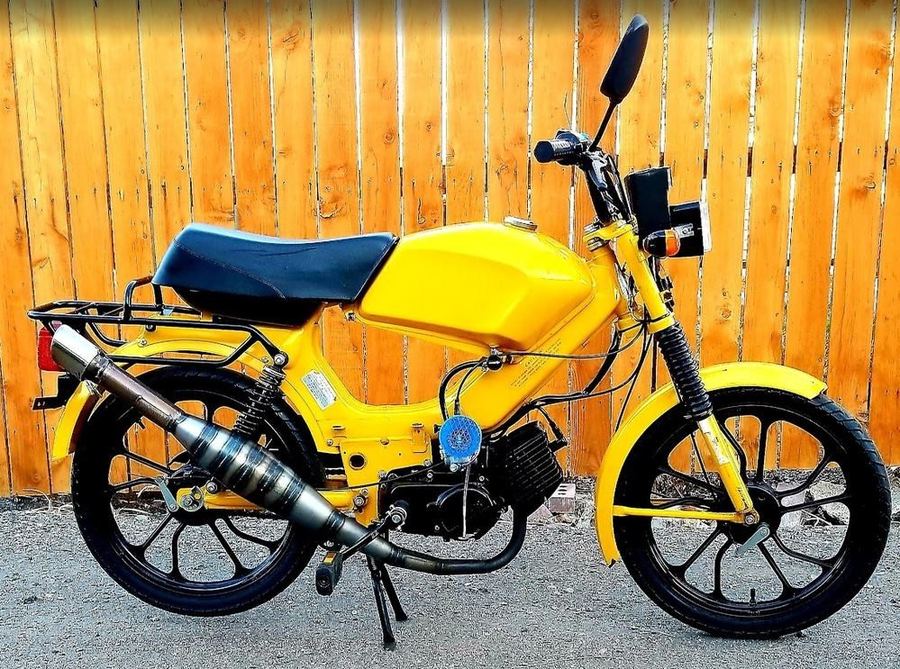
2002–2013 · A35
The step-through LX, started out as the Targa LX.
Full history →From the Moped Motel fleet
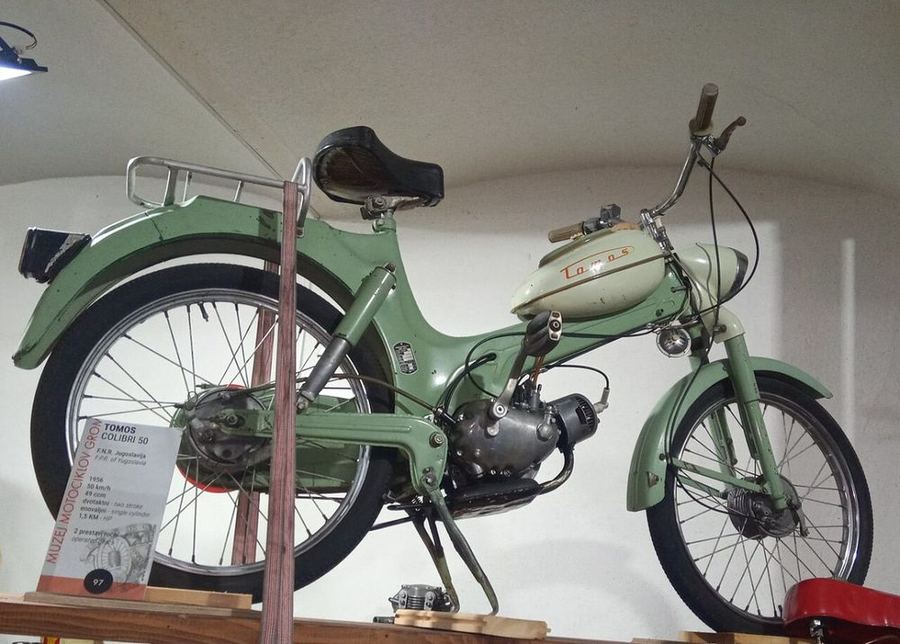
From the late 1950s · Two-stroke
Started as a Puch MS 50 built under license. The T12 of 1961 became the most popular moped in Slovenia.
Photo: Shabicht, CC BY-SA 4.0
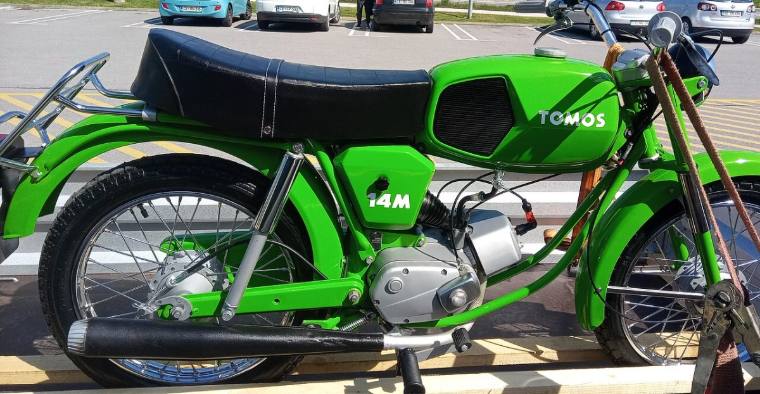
Yugoslav era
A small motorcycle-style Tomos from the Yugoslav years.
Photo: Shabicht, CC BY-SA 4.0
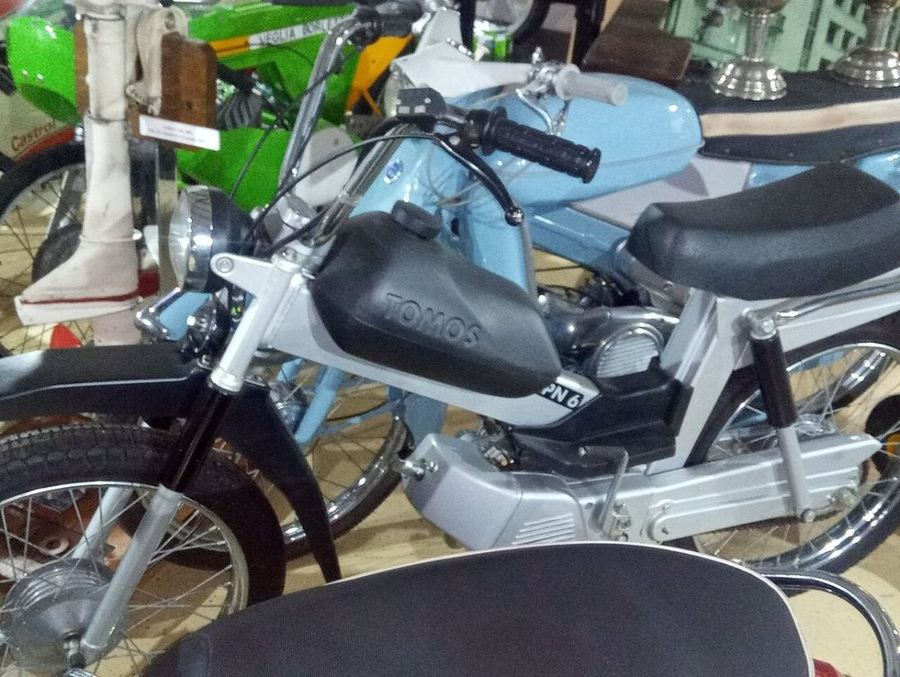
1970s–1980s · Two-stroke
The youth bike of 70s Slovenia, with raised bars and a backrest seat. The APN 6 arrived in 1981.
Photo: Shabicht, CC BY-SA 4.0
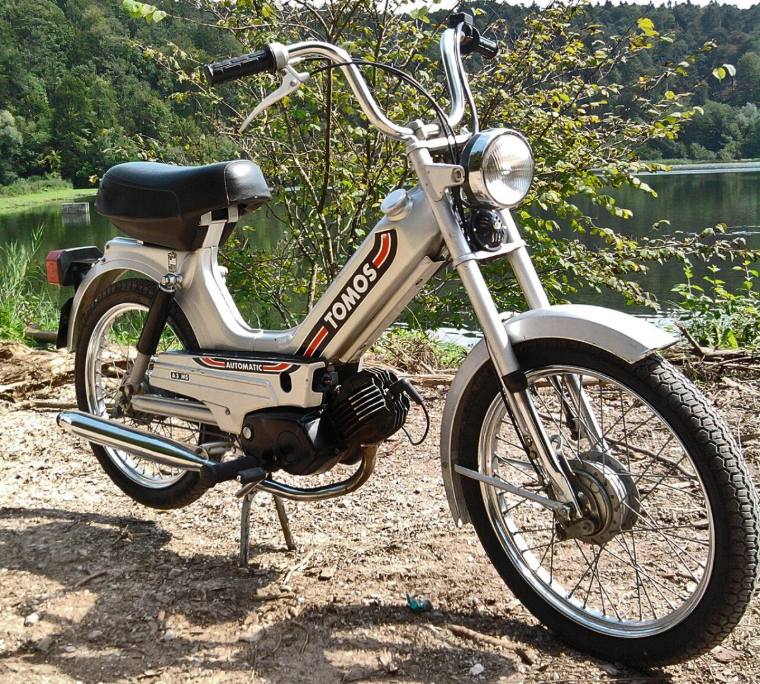
Shown: 1986 · A3 two-speed automatic
The European A3 moped. In the US the first imports (1974–76) were called the Automatic before it became the Bullet.
Photo: Zupec, CC BY-SA 3.0
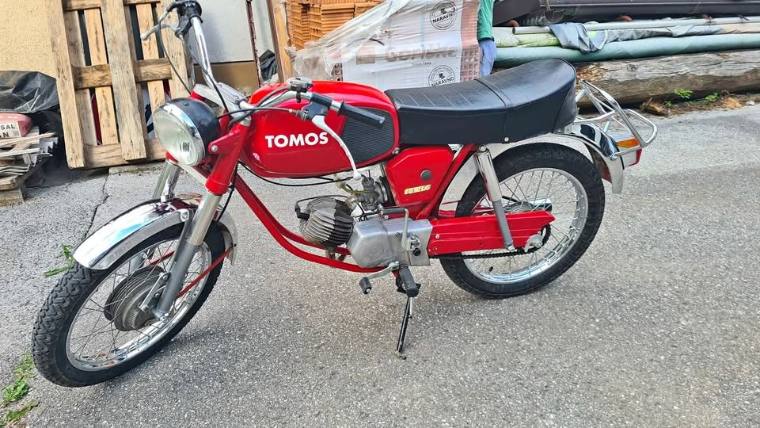
Yugoslav era · Tomos 15 range
A sport moped from Tomos's 15 range.
Photo: Shabicht, CC0
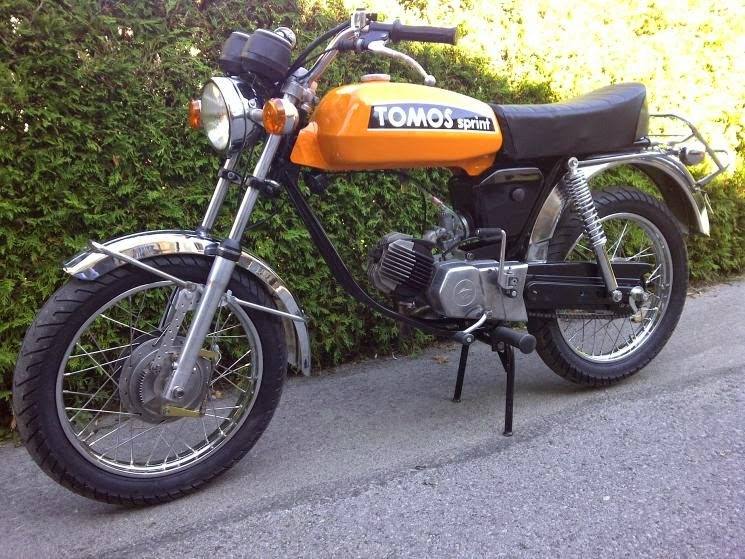
Yugoslav era · Tomos 15 range
The Sprint version of the 15 range.
Photo: Shabicht, CC0
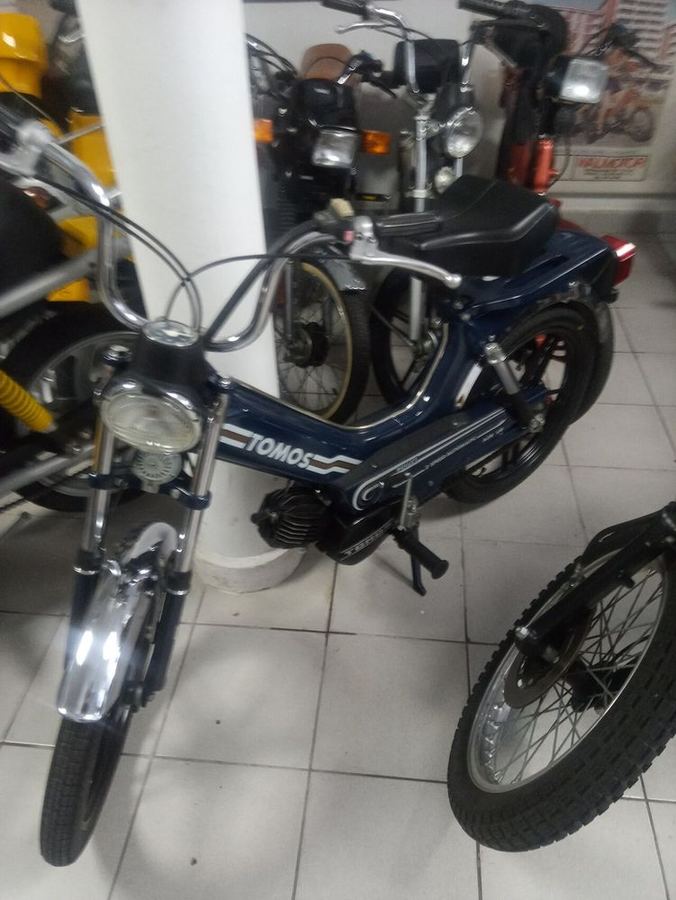
US 1977–1993 · 49cc A3, two-speed automatic
The classic US Tomos, in Bullet, Silver Bullet and Golden Bullet trims.
Photo: Shabicht, CC BY-SA 4.0
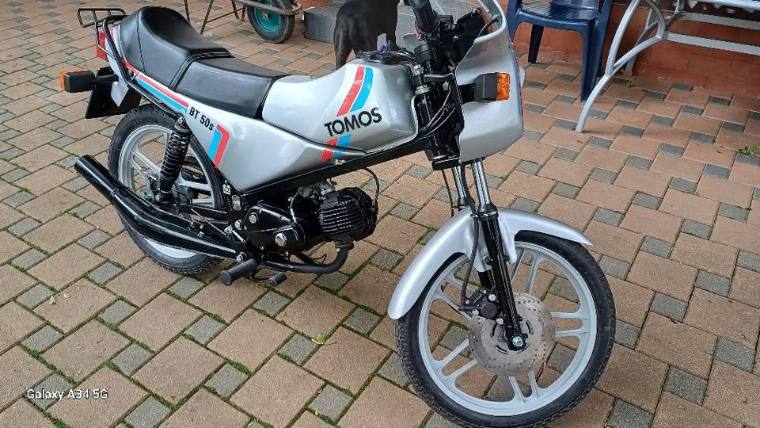
1980s · 50cc
A sporty Tomos with a fairing-style front.
Photo: Shabicht, CC0
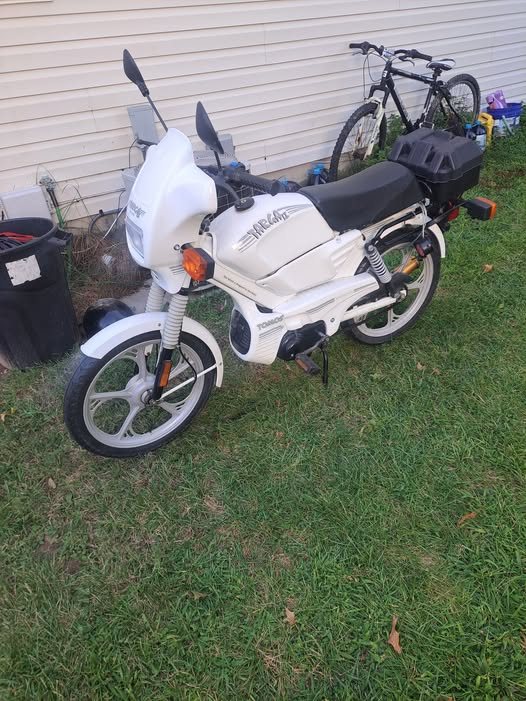
1990s · A35
Introduced in the 1990s and later renamed the ST.
Photo: Shabicht, CC0
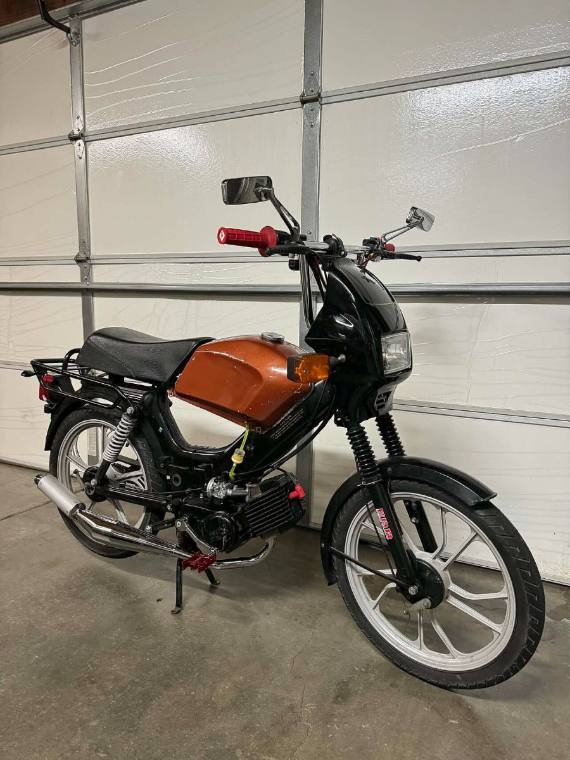
US 1994–2001 · A35, oil injection, top tank
The top-tank Targa that later became the LX.
Photo: Shabicht, CC0
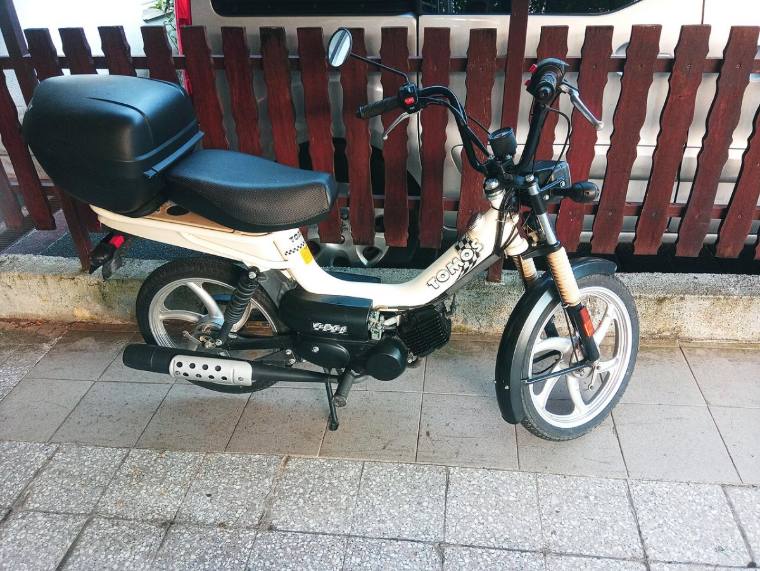
1998–2019 · 49cc, two-speed automatic
A favorite mail moped across the former Yugoslavia.
Photo: Shabicht, CC0
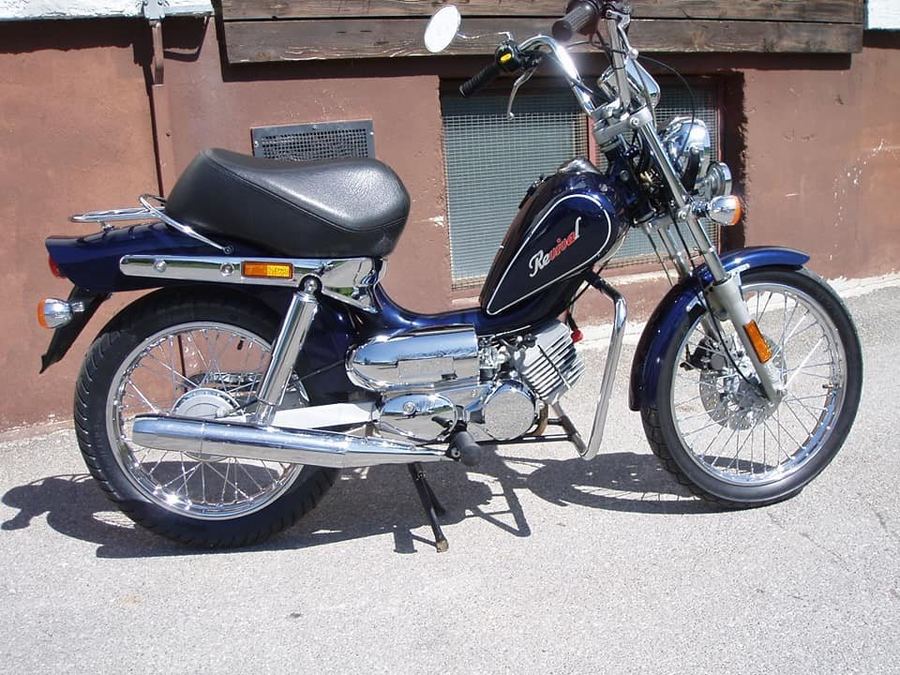
Dutch-developed · Two-stroke
A retro-styled Tomos from the Dutch team.
Photo: Shabicht, CC0
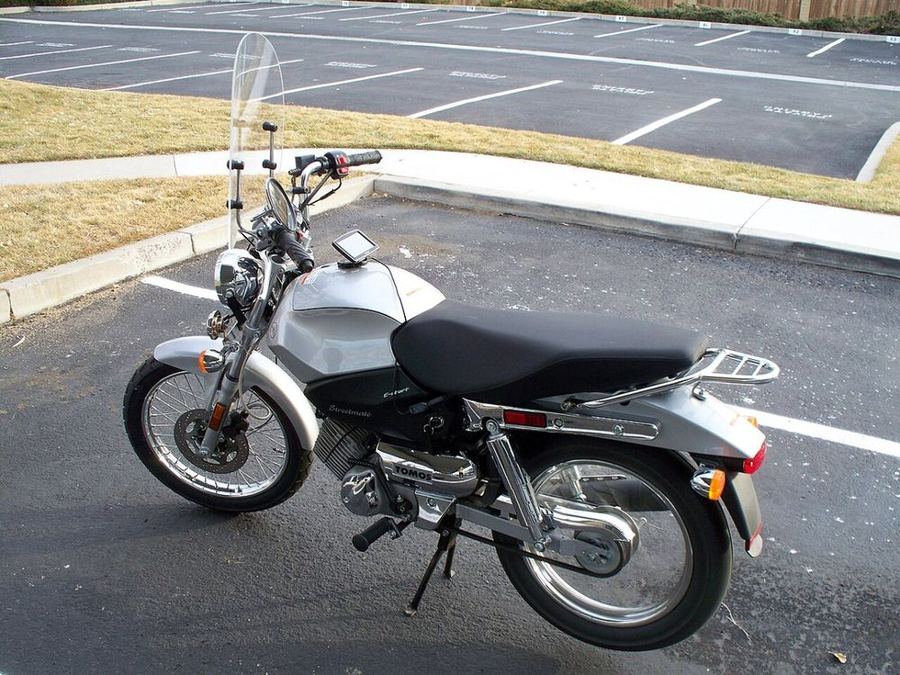
Dutch-developed · Two-stroke
One of the newer models from Tomos's Dutch development team.
Photo: Scott Thompson, CC BY 3.0
More Tomos models and versions (no free photo yet. Got one? DM us)
- Bullet A3SL / A3GM / A3SP 20, 25 and 30 mph versions of the US Bullet. 1977–91
- Silver Bullet A3 with oil injection. 1979–85
- Golden Bullet A3, later A35, with oil injection. 1985–93
- Sprint (US) Basic two-speed, A35 then A55. From 1993
- Targa Step-through, A35, oil injection. 1994–2002, renamed ST
- TT Classic Top tank, A35. 1998–99
- Arrow / Arrow-R A55, 12-inch wheels. 2005–08
- Streetmate-R A55 top tank. From 2008
- Revival TS A55 deluxe. From 2004
- Colibri (US) A35 deluxe. 1992–96
The VéloSoleX drives the front tire with a roller. It was built from 1946 to 1988, with over seven million made, and in France you could ride one from age 14 without a license.
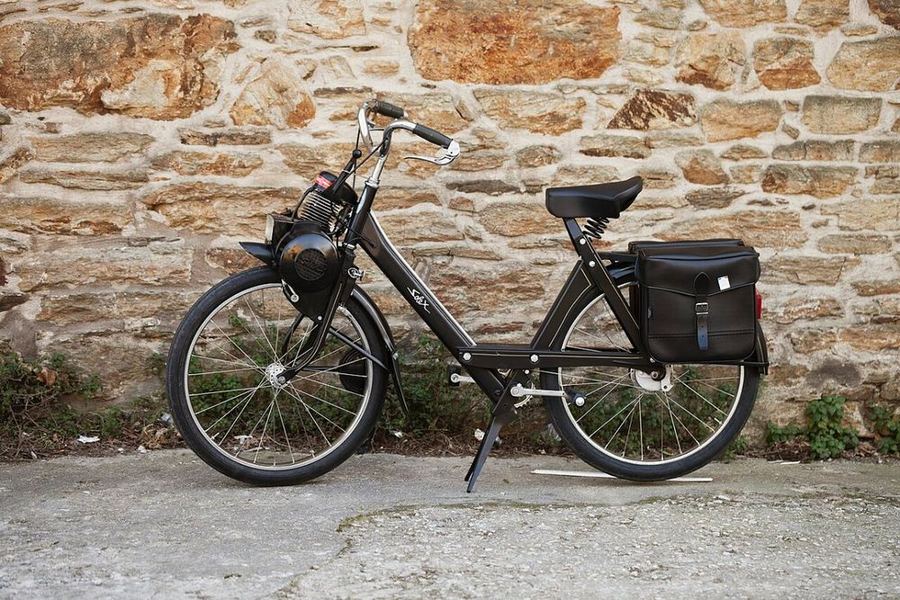
Shown: 1966 · 49cc, roller drive
The classic Solex: an engine over the front wheel, driving the tire with a roller.
Full history →Photo: Luis Miguel Bugallo Sánchez (Lmbuga), CC BY-SA 3.0
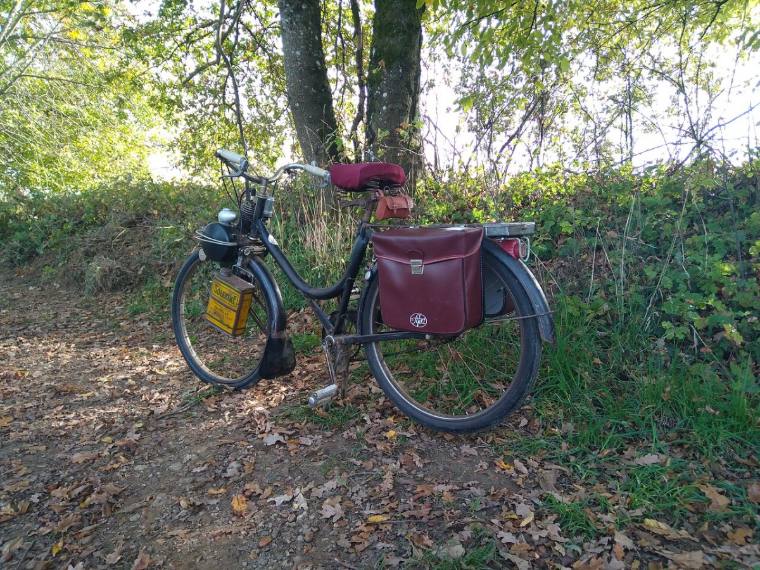
1946–1954 · 45cc friction drive
The first VéloSoleX.
Photo: RLDWF, CC BY-SA 4.0
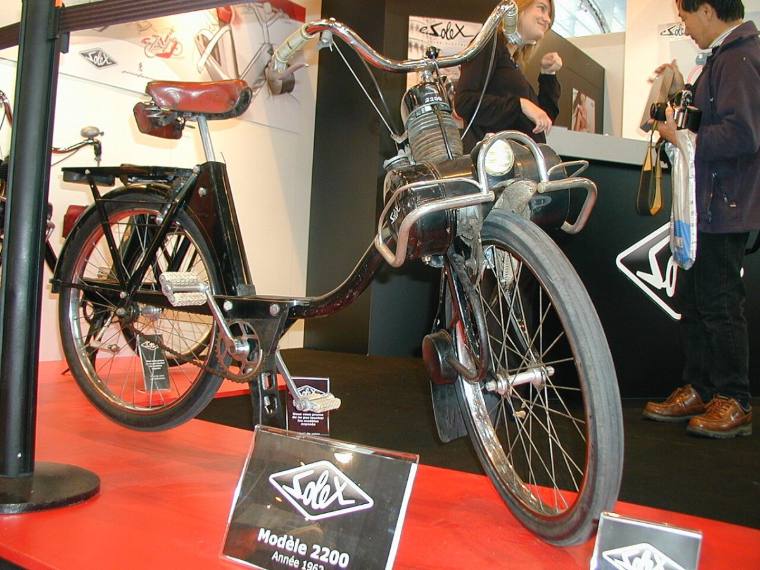
1961–1964
More power, 3,000 rpm.
Photo: Gérard Delafond, CC BY-SA 3.0
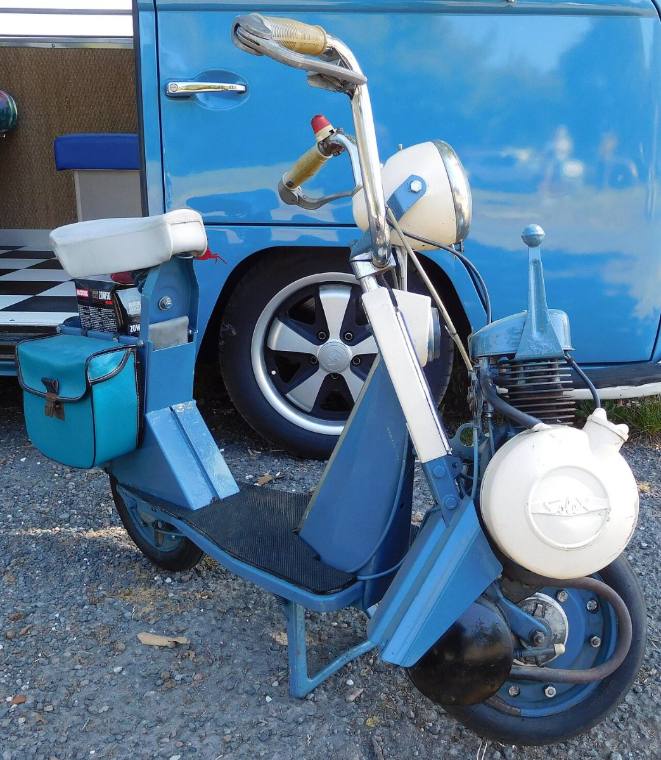
1968–1974 · 12-inch wheels
A small-wheel Solex with a bolt-together frame.
Photo: Cjp24, CC BY-SA 4.0
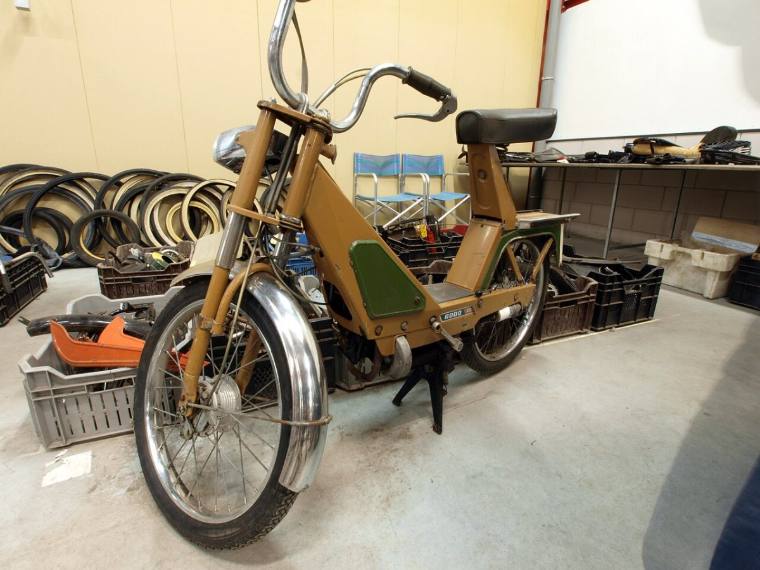
1969–1977 · shaft drive
A sideways engine with shaft drive, very different from the classic Solex.
Photo: Alf van Beem, CC0
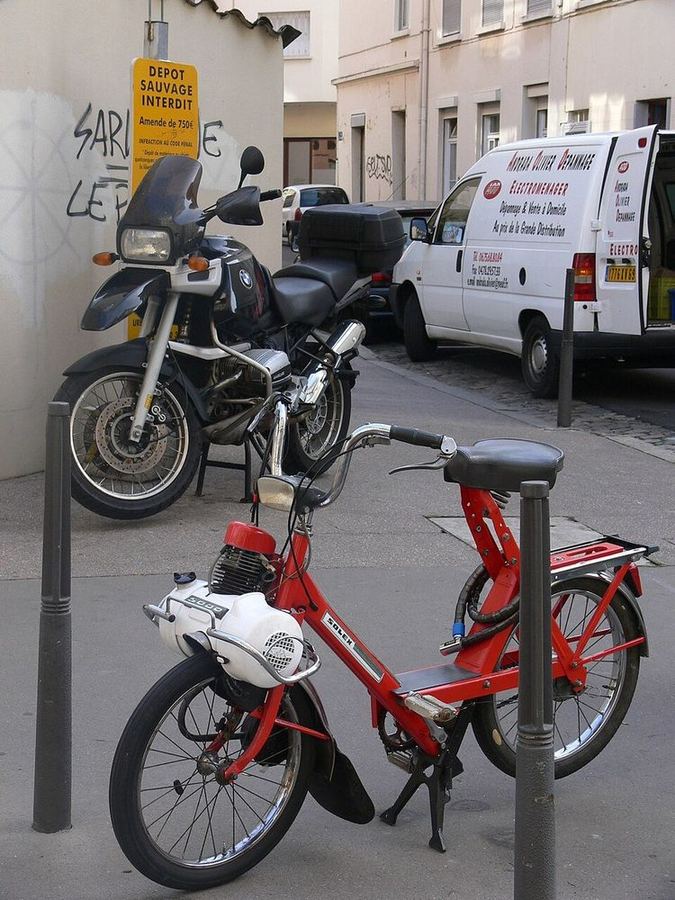
From 1971 · 49cc, roller drive
Smaller wheels, whitewall tires and a white motor, in yellow, blue, orange or white.
Photo: sam, CC BY-SA 2.0
More VéloSoleX models and versions (no free photo yet. Got one? DM us)
- 330 / 660 / 1010 / 1400 / 1700 The 1950s models, each with updates. 1953–61
- S 3300 Bolt-together frame. 1964–66
- 4600 US model with Magura levers. 1974–79
- Tenor (8000) Four different engines. 1973–77
- Pli-Solex Folding 5000. 1973–74
Piaggio built the Ciao from 1967 to 2006, with belt drive instead of a chain. Its Bravo, Si, Grande, Boxer and later Boss and Grillo all shared the same rotary-valve engine family.
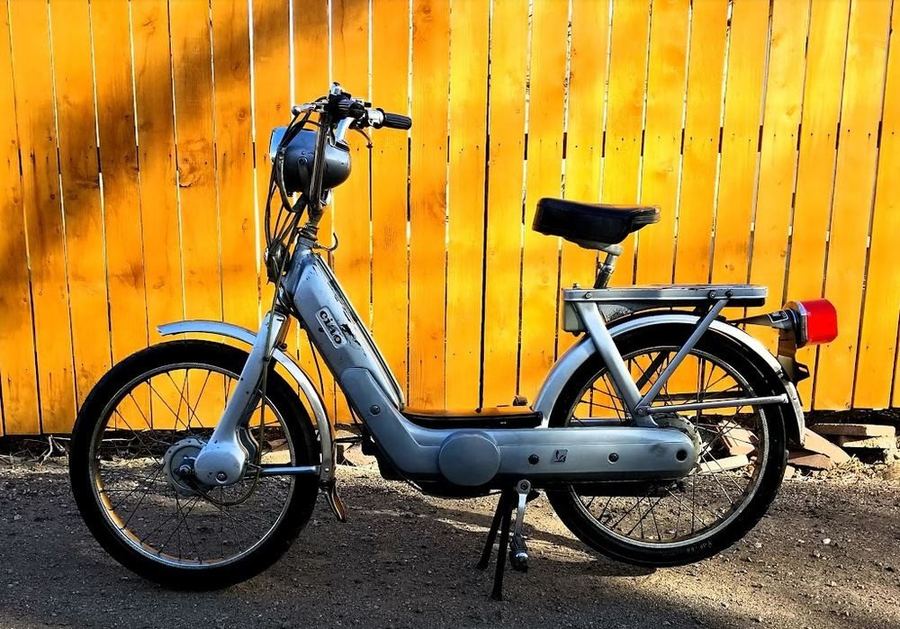
1967–2006 · 49cc two-stroke, belt drive
Piaggio's nearly 40-year classic.
Full history →From the Moped Motel fleet
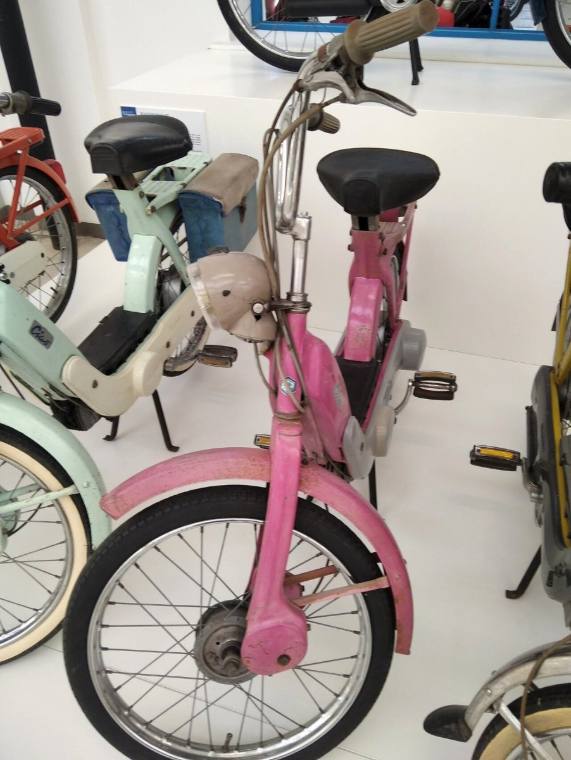
Shown: 1968
One of the very first Ciaos. Piaggio built the Ciao from 1967 to 2006.
Photo: Guzzista76, CC BY-SA 4.0
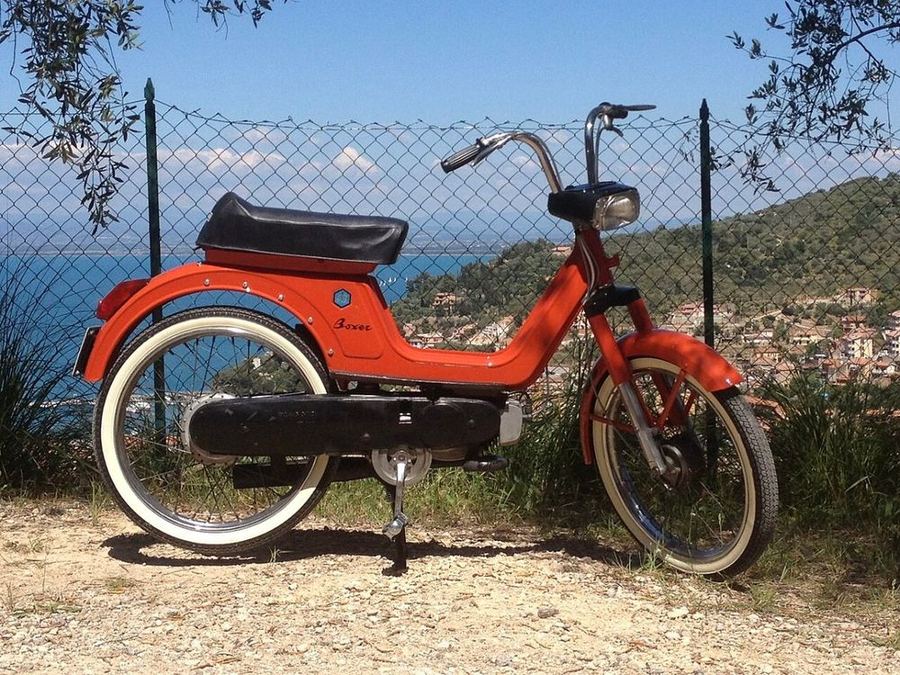
1970–1983 · Two-stroke, optional variator
Built in Pontedera with an underseat tank. The Si took its place.
Photo: Frankmils, CC BY-SA 4.0
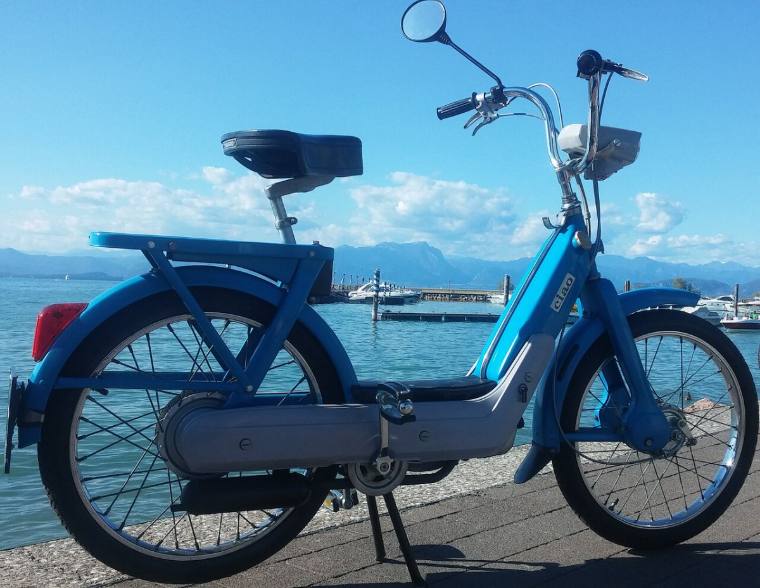
Shown: 1973
A 70s Ciao, shown in Arcobaleno trim.
Photo: Alsal65, CC BY-SA 4.0
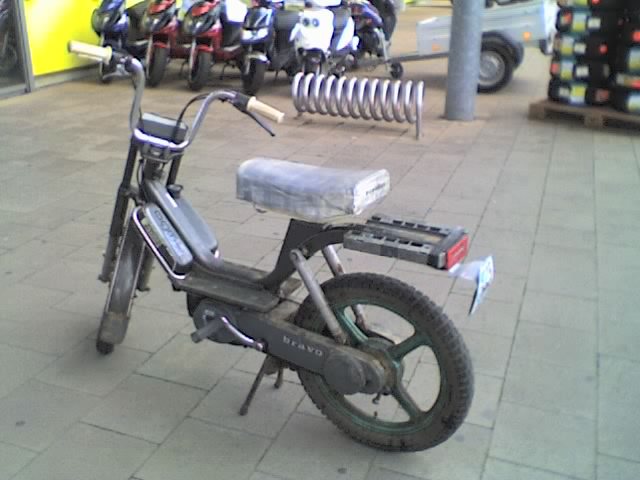
1977–1982 · 49.77cc rotary-valve two-stroke
The only Vespa moped with a detachable gas tank, and good for about 150 mpg.
Photo: Pineas, Public domain
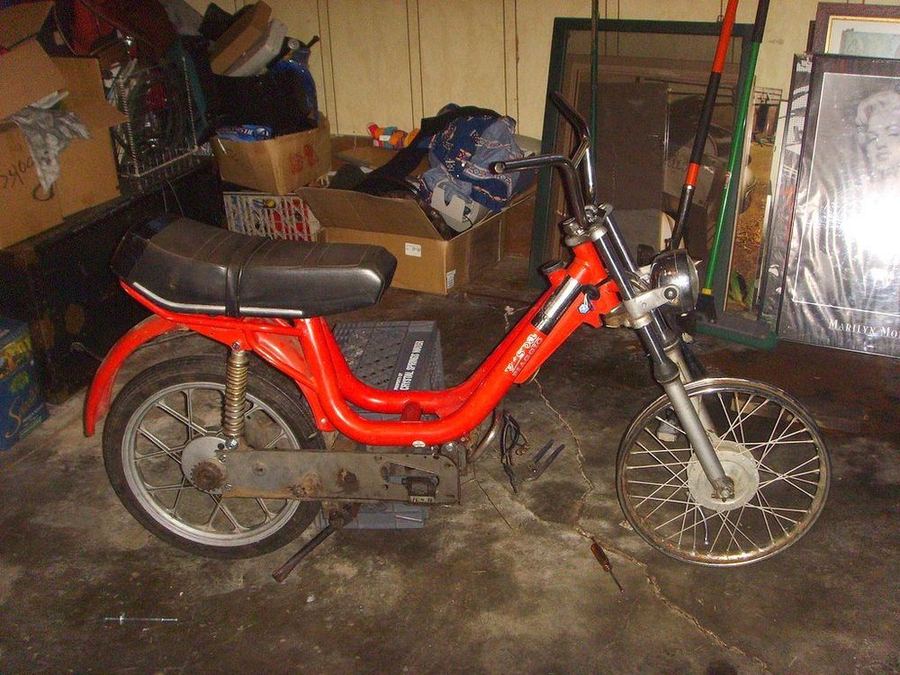
From 1978 · 49.9cc, automatic variator
Made only for the US, with a long two-up seat and a gas tank built into the frame.
Photo: oFace Killah, CC BY 2.0
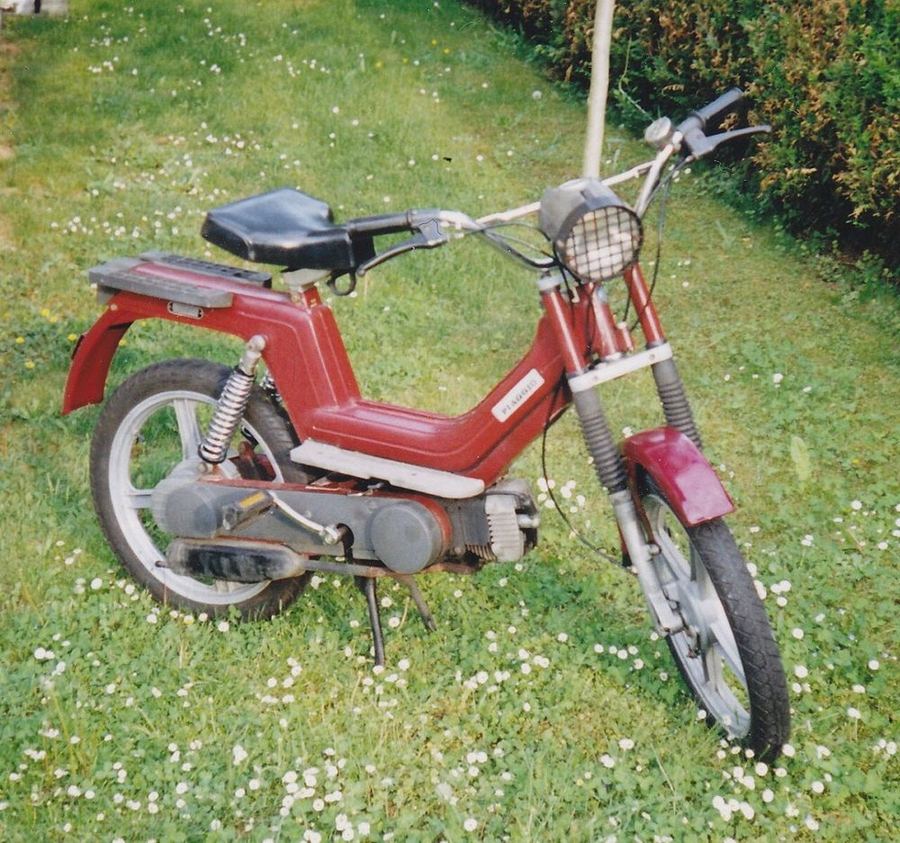
Replaced the Boxer · 49.9cc, variator
The sportiest Vespa moped sold in the US, and the last one imported here.
Photo: Krnoul, CC BY-SA 3.0
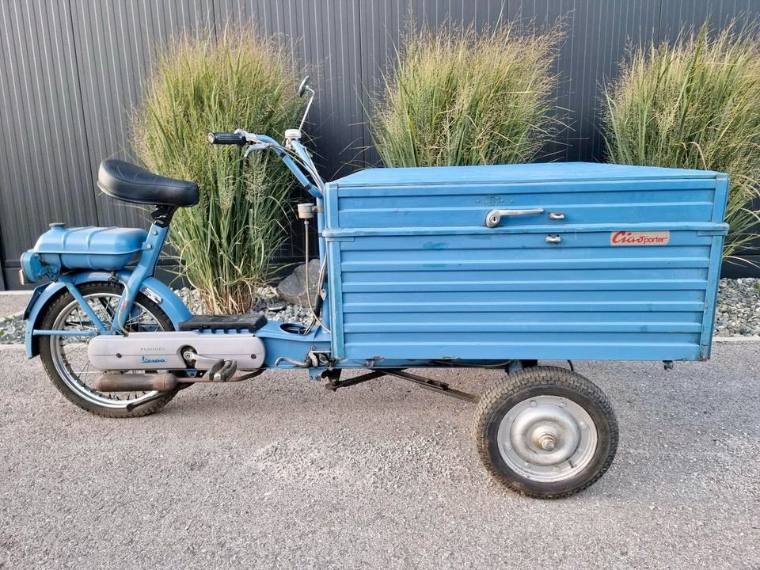
Three-wheel cargo Ciao
A Ciao with a cargo box on two rear wheels.
Photo: Laura Buononome, CC BY-SA 2.0
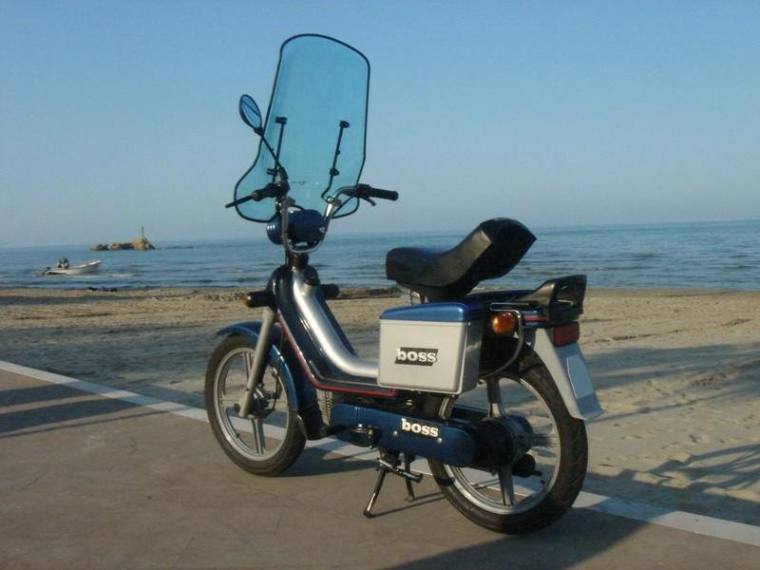
1988–1989 · about 10,000 built
On sale for just one year before the Grillo replaced it.
Photo: Lunove, Public domain
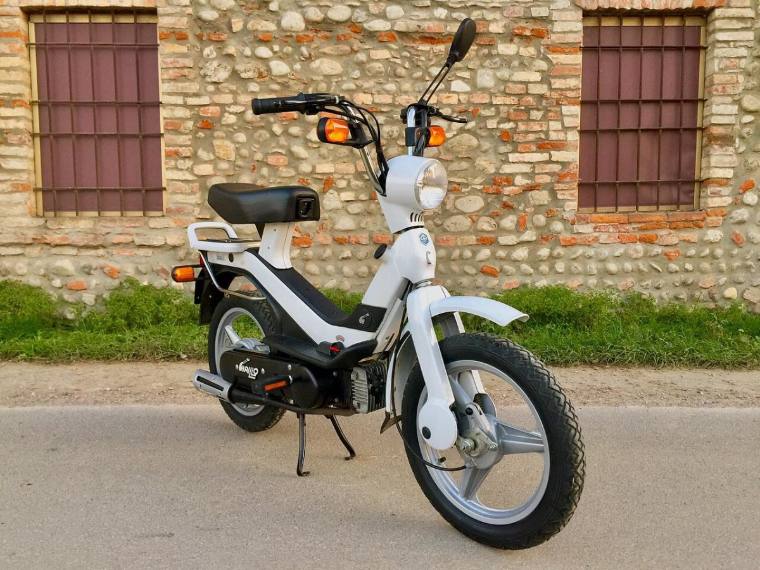
1989–1996 · 14-inch wheels
The Ciao/Si engine in a more compact bike with smaller wheels.
Photo: Ijet50, CC BY-SA 4.0
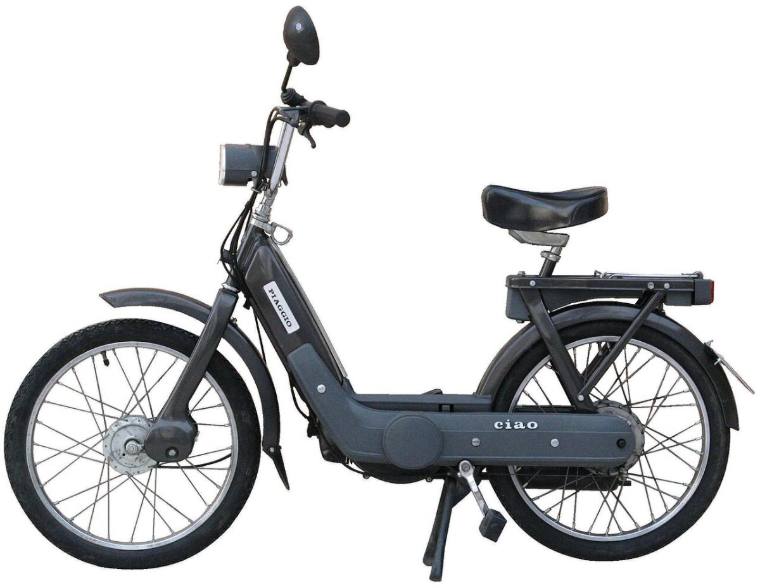
Later Ciao
A later version of the Ciao.
Photo: Daniele Serena, CC BY-SA 3.0
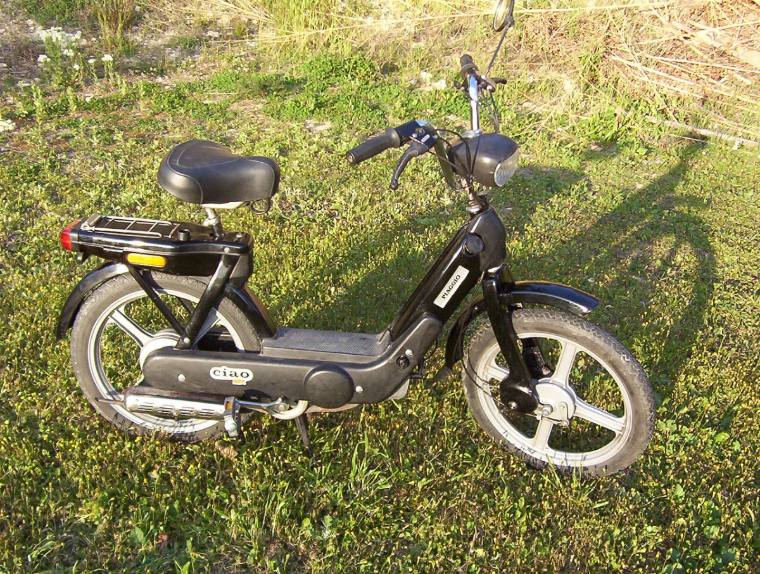
Later Ciao
A later Ciao.
Photo: Jerembeye, Public domain
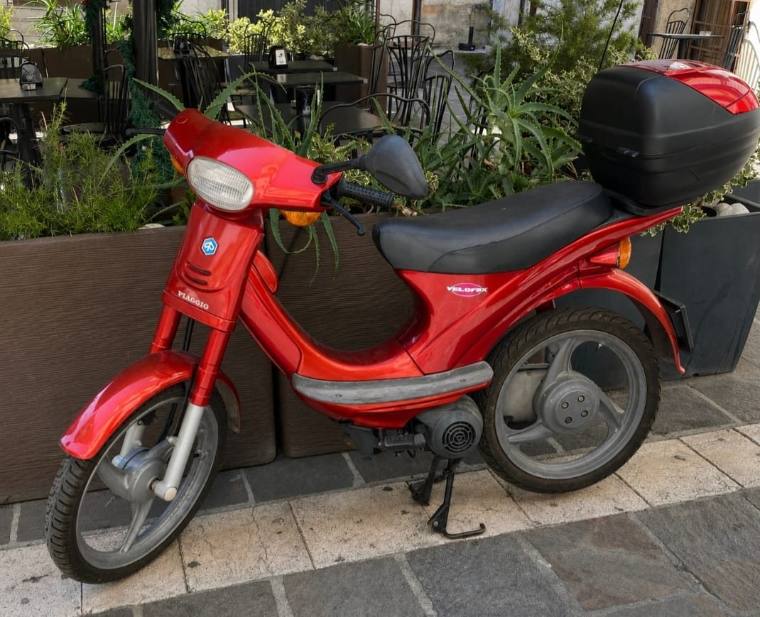
Small-wheel Piaggio
A compact Piaggio moped with small wheels.
Photo: Corvettec6r, CC BY 4.0
More Vespa / Piaggio models and versions (no free photo yet. Got one? DM us)
- Ciao C7N Standard / C7E Special / C7V Super The Ciao versions: N = normal, E = elastic suspension, V = variator
- Ciao Supreme (C7E/B) B = blinkers. 1976–84
Yamaha's small bikes ran from the step-through Mate to the QT50 'Yamahopper', the fat-tire Chappy and Britain's FS1-E 'Fizzy'.
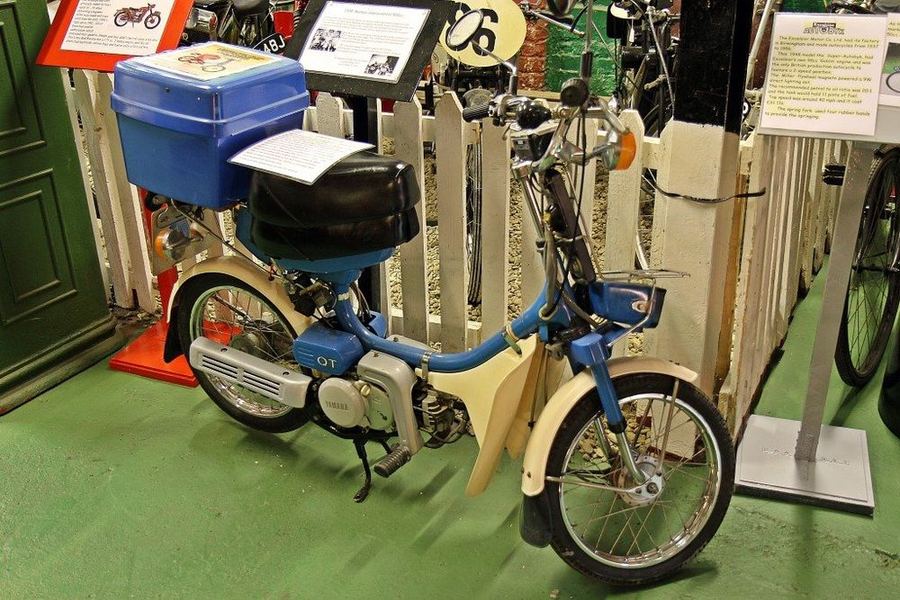
Late 1970s–late 1980s · 50cc two-stroke, shaft drive
A pedal-less "noped" with no chain at all.
Full history →Photo: El Pollock, CC BY-SA 2.0
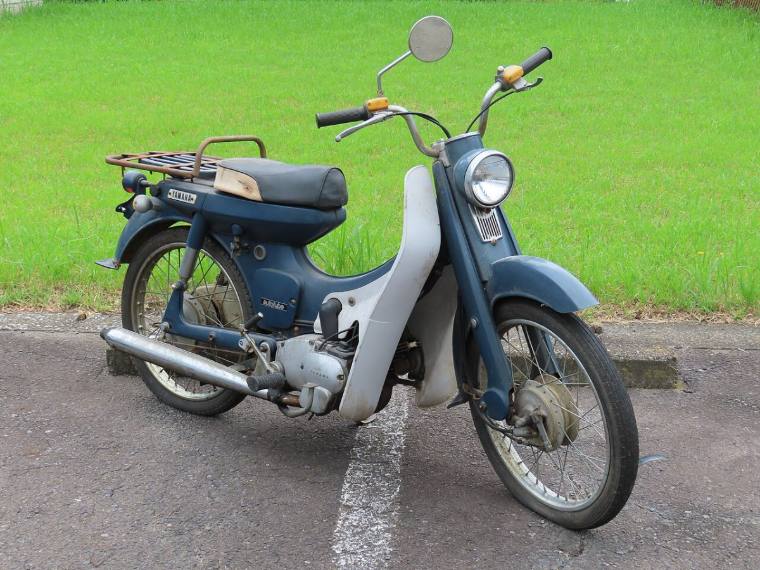
Shown: early U5
Yamaha's step-through.
Photo: カップメーン, CC0
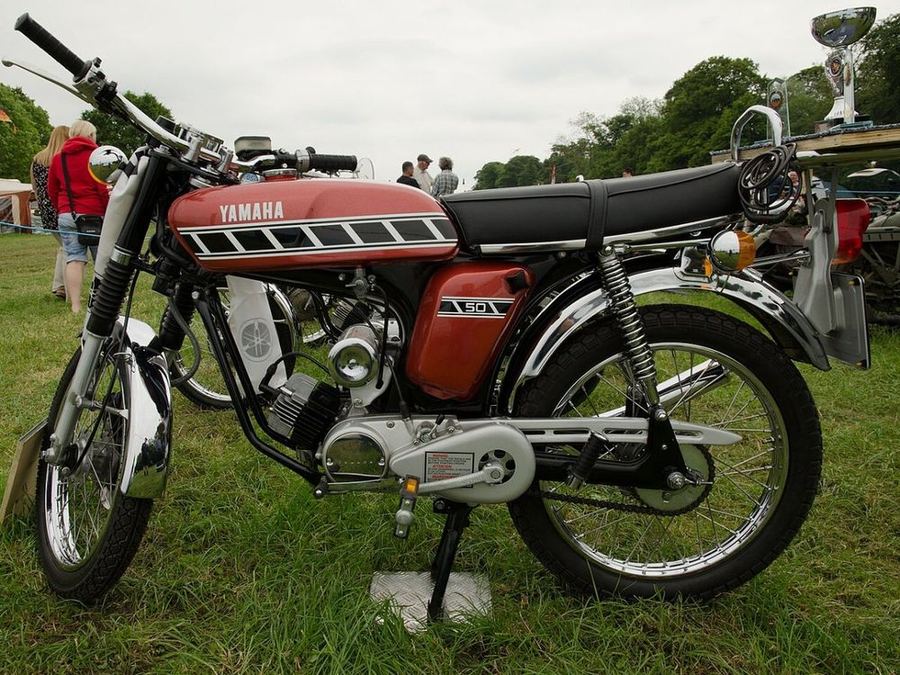
1970s · 49cc two-stroke, four-speed
Britain's cult sports moped, about 200,000 sold there. It had pedals only because UK law required them.
Photo: SG2012, CC BY 2.0
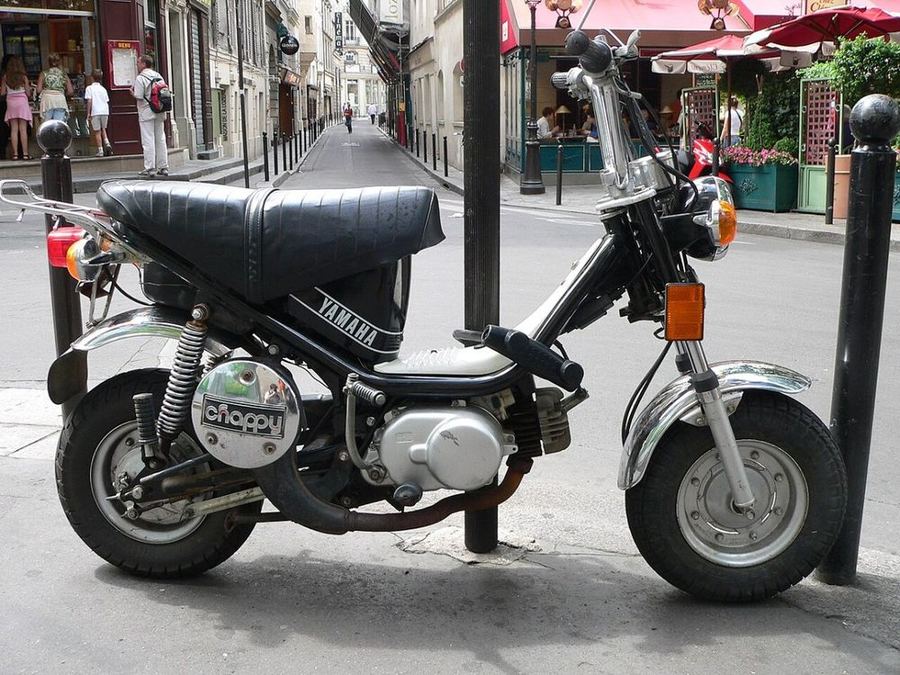
1970s–early 1980s · 50cc or 72cc, two-speed automatic
A small, chunky runabout with a selectable low gear for hills. The 72cc version could pull wheelies.
Photo: David Monniaux, CC BY-SA 3.0
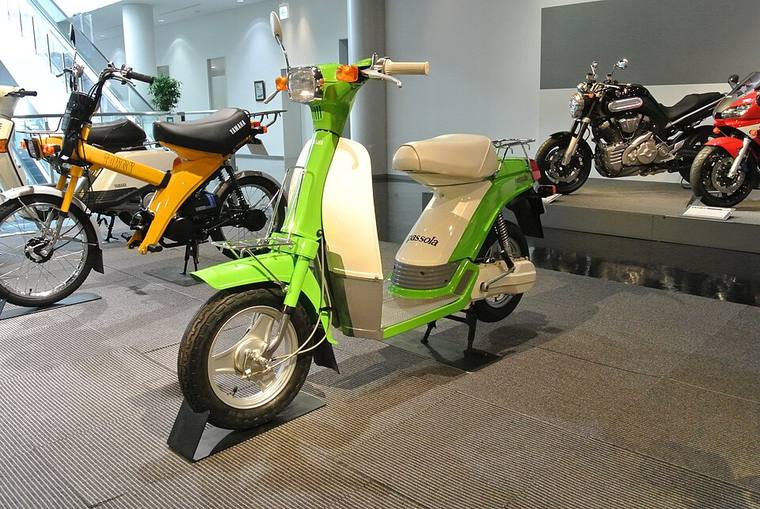
1978 · 49cc two-stroke
The dressed-up version of the 1977 Passol, the step-through that started Japan's "soft bike" craze. It added a fuel gauge, auto choke and an oil warning lamp.
Photo: Rainmaker47, CC BY-SA 4.0
More Yamaha models and versions (no free photo yet. Got one? DM us)
- Champ LC50 Two-speed automatic. US 1980–81
Zündapp built motorcycles and mopeds in Nuremberg and Munich from 1921 to 1984. Its mofas and mokicks ran from the Combinette and Bergsteiger to the ZD, ZR, CS and KS lines.
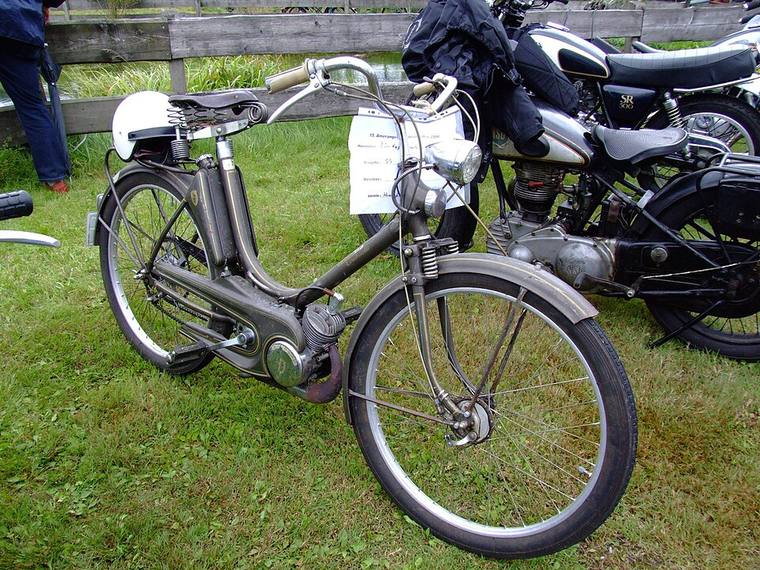
Shown: 1954 · 1.5 hp
The original Combinette that the Super and Sport Combinettes grew out of.
Photo: Späth Chr., Public domain
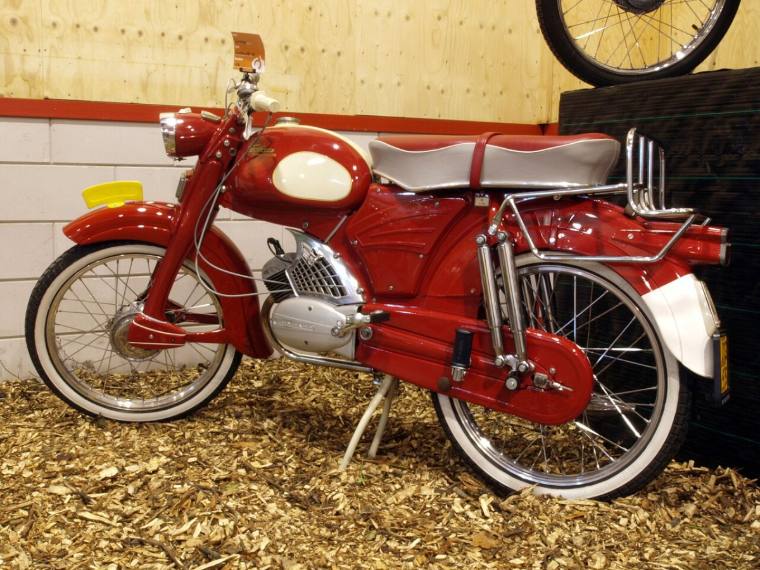
Shown: 1961
A step up from the Combinette.
Photo: Alf van Beem, CC0
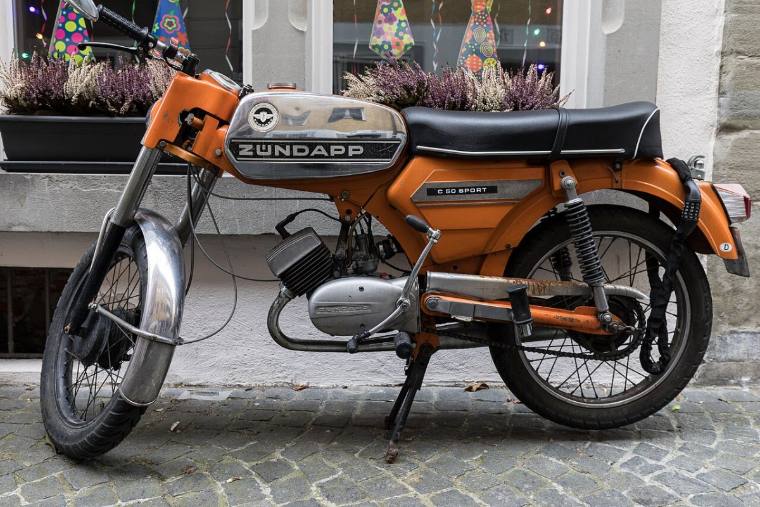
1961–1967
The sporty Combinette (types 510, 515, 517).
Photo: JoachimKohlerBremen, CC BY-SA 4.0
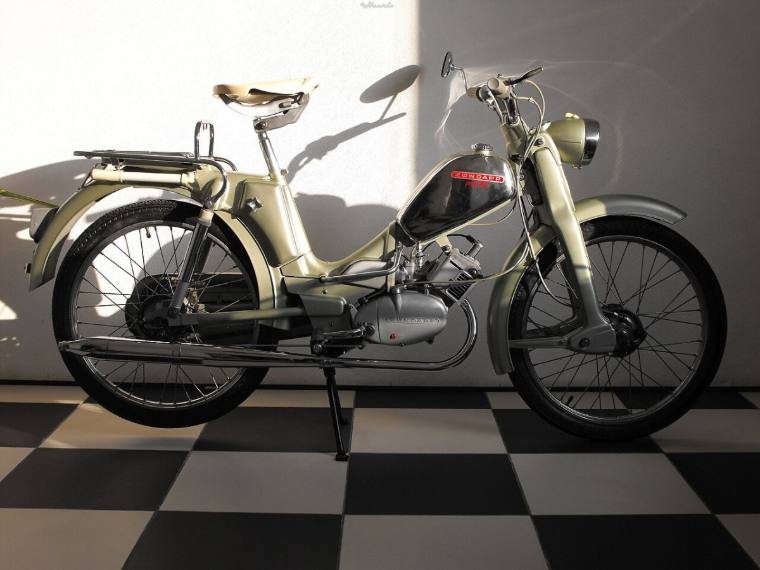
1965–1977 · two-speed
'Mountain climber': ads boasted it could climb a 30% grade.
Photo: Saoutchik, CC BY-SA 4.0
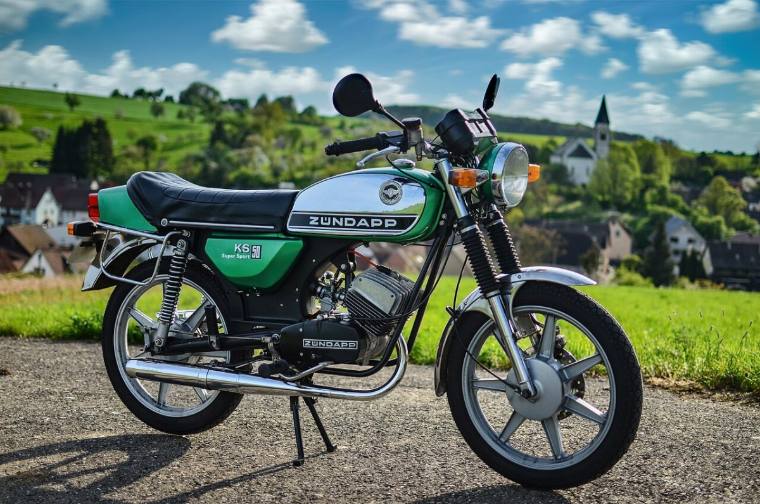
Shown: Super Sport
One of the most popular German 50s of its day, alongside the Kreidler Florett RS and Hercules K 50.
Photo: David Kratschmann, CC BY 4.0
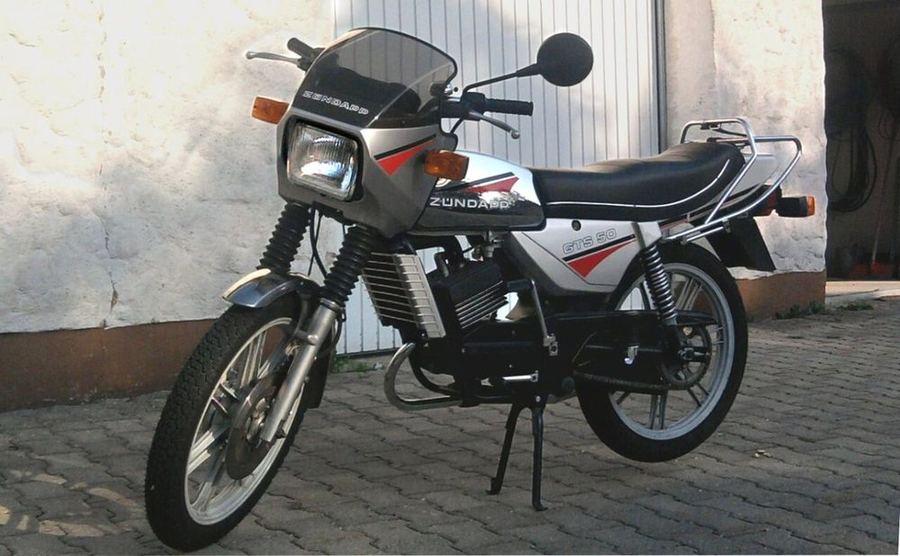
1972–1984 · 49.9cc, four or five speeds
"Grand Tourisme Sport." The final 1984 version was water-cooled and built for only half a year.
Photo: JonnyGTS, CC BY-SA 3.0
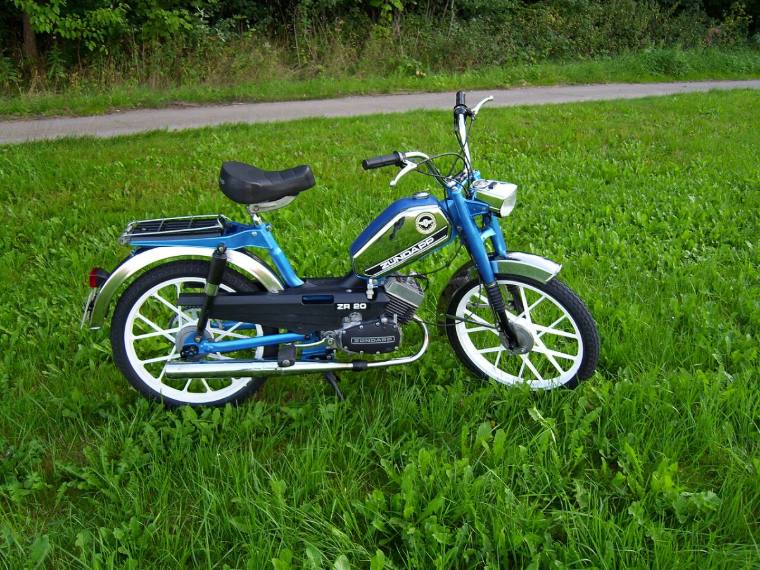
1976–1980 · two-speed
A mofa with a central tube frame, chromed tank and stainless fenders.
Photo: Klacid, CC BY-SA 3.0
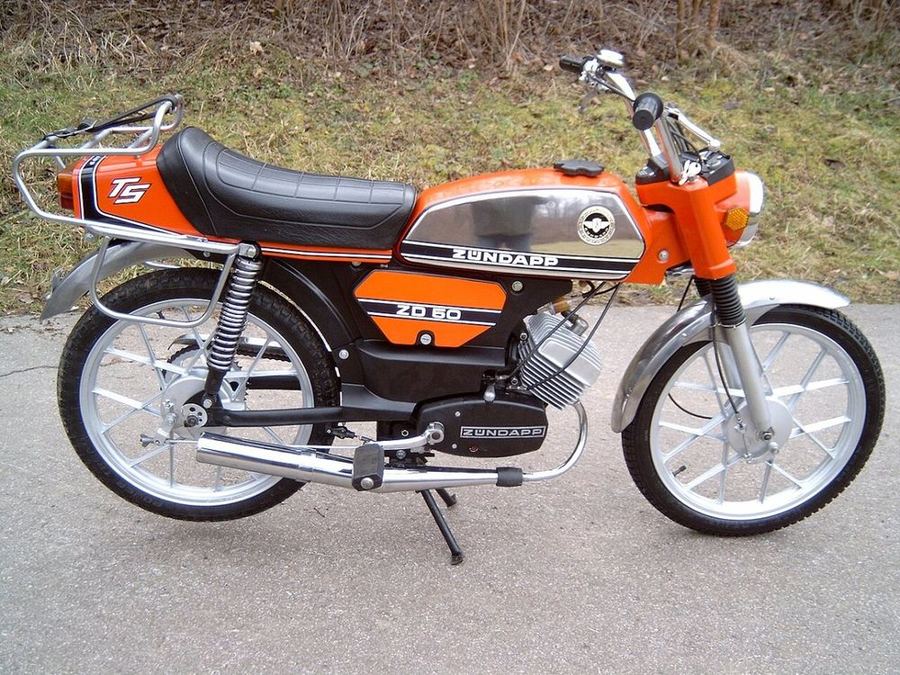
Shown: 1980 · 50cc two-stroke
One of Zündapp's late-era mopeds.
Photo: Brandy-911, CC BY-SA 4.0
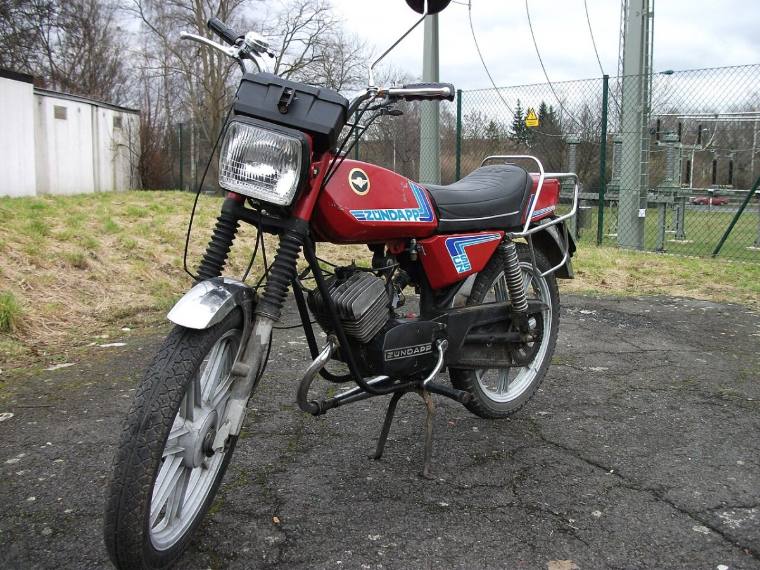
1980–1984
Replaced the ZD 50 TS. After Zündapp went bust it was built in India as the Zündapp Madras until 1995.
Photo: Tim h2, Public domain
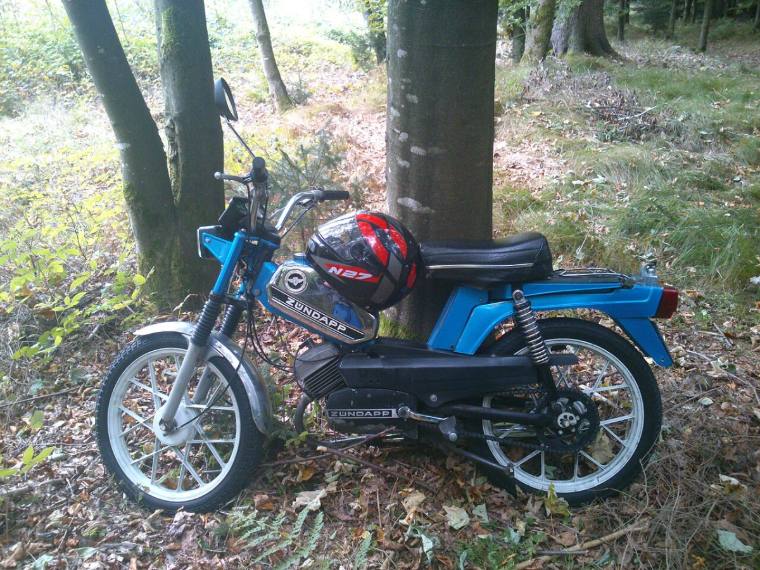
1981–1984 · three-speed twist grip
Unlike the two-speed ZL and ZX, it had three gears.
Photo: F F*1159357, CC BY-SA 3.0
More Zündapp models and versions (no free photo yet. Got one? DM us)
- Combinette The original Zündapp moped of the 1950s
- ZD 20 / ZD 25 / ZD 40 Mofa and mokick siblings of the ZD 50. 1976–84
- Hai 25 / CX 25 Off-road twin of the CS 25. 1980–84
More brandsPhotos wanted
These all sold in the US during the moped boom. We haven't found a free photo of any of them yet. If you ride one, DM us and it goes in the next update.
- Batavus Netherlands HS50, VA, Mobat, Bronco, Starflite (Laura M48, 1976–80); Regency (Laura M56, 1978–80); Mondial and Gran Prix (Peugeot 103 CVT, 1980–85)
- Foxi Austria / Netherlands Baron, Deluxe, Salzburg (KTM-built, Sachs 504, 1977–80); GT, GT Sport (1976–79)
- Pacer Italy Pacer I, II, III, 25, Sport, Super Sport (Morini MO-1, MO-2, M1, 1976–84)
- Cosmo Italy Colt I–5 (Morini or Sachs engines, 1978–85); Amico (Minarelli V1)
- Safari Italy 300 MT, 400 MT, Cobra, Shadow, Leader (Minarelli V1); Commando (four-speed); Fox (front engine)
- Casal Portugal K168, K177, K196 (Casal one- and two-speed, 1977–80)
- AMF USA Roadmaster (McCulloch or Minarelli engine, 1977–80)
- Indian Taiwan AMI 50 Chief and AMI 50 2S (four-stroke, 1977–80)
- Bianchi Italy Eagle and Snark (Minarelli V1, 1976–80)
- Beta Italy Alpha, Deluxe two-speed, SL5 (Morini, 1976–79)
- NVT England Easy Rider and Lance (Morini MO-1, 1976–79)
- Odyssey Germany 32/1, 40/1, 40/2 (Solo engines, 1976–78)
- Trac Korea Clipper, Eagle, Hawk (1979–87)
- Carabela Mexico Deluxe, Sport, Motomatic (Minarelli V1, 1977–80)
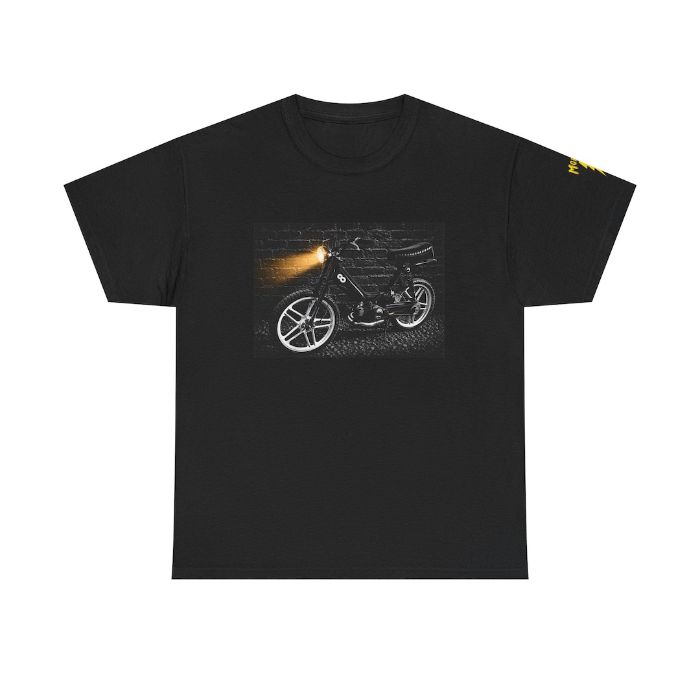
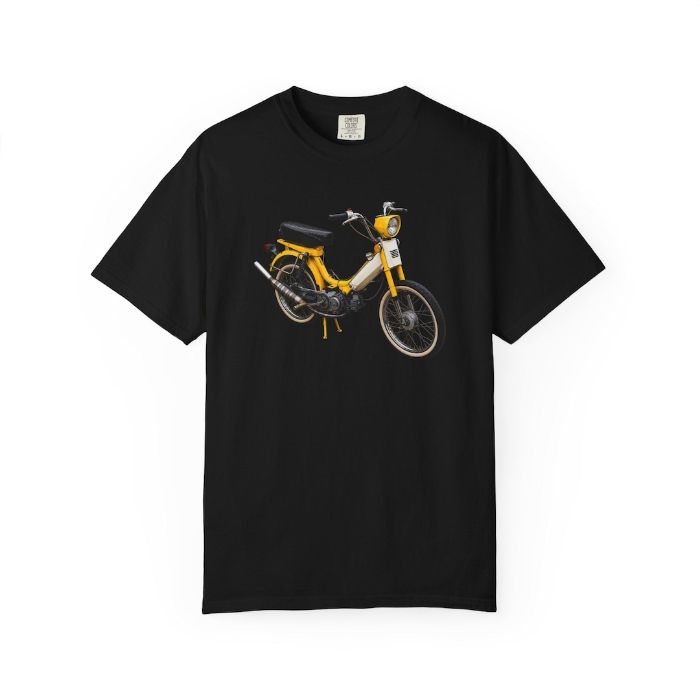
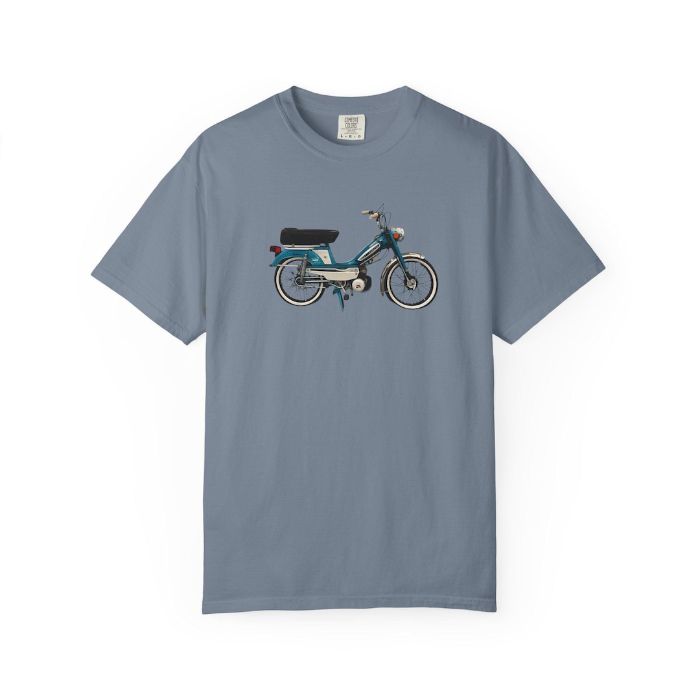
Wear the bike you ride
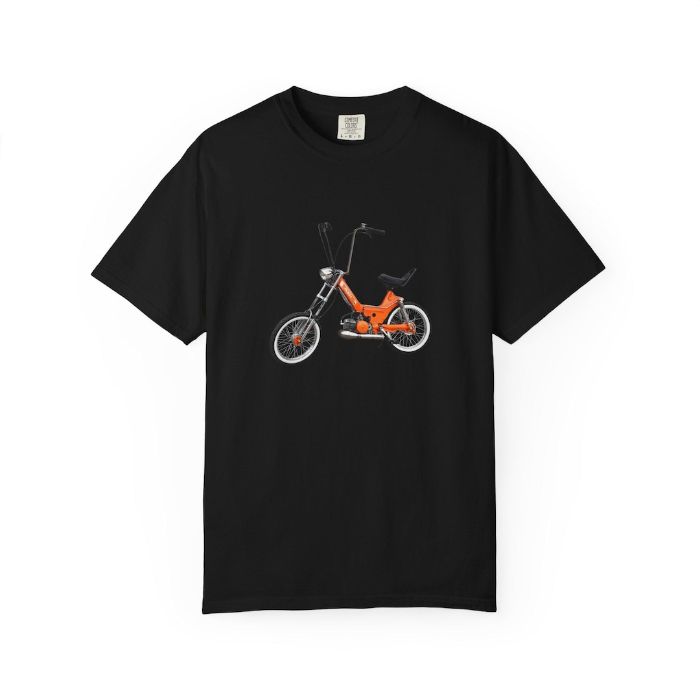
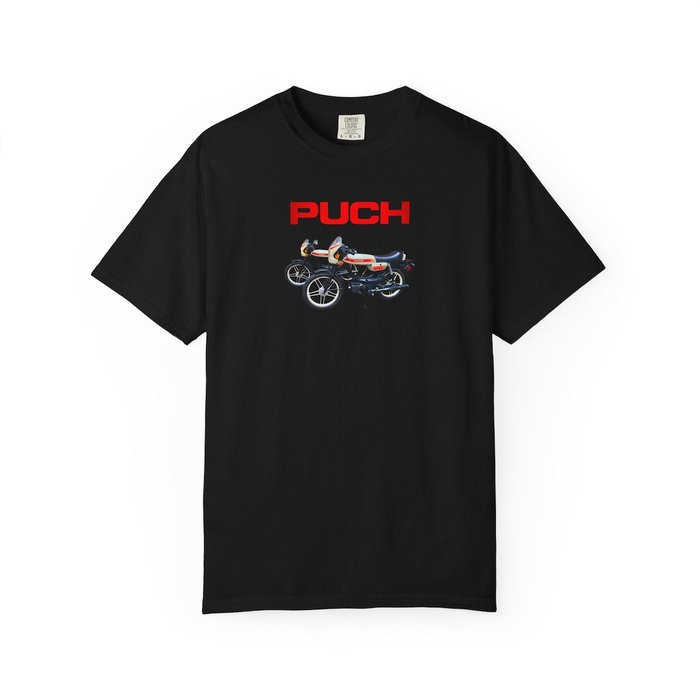
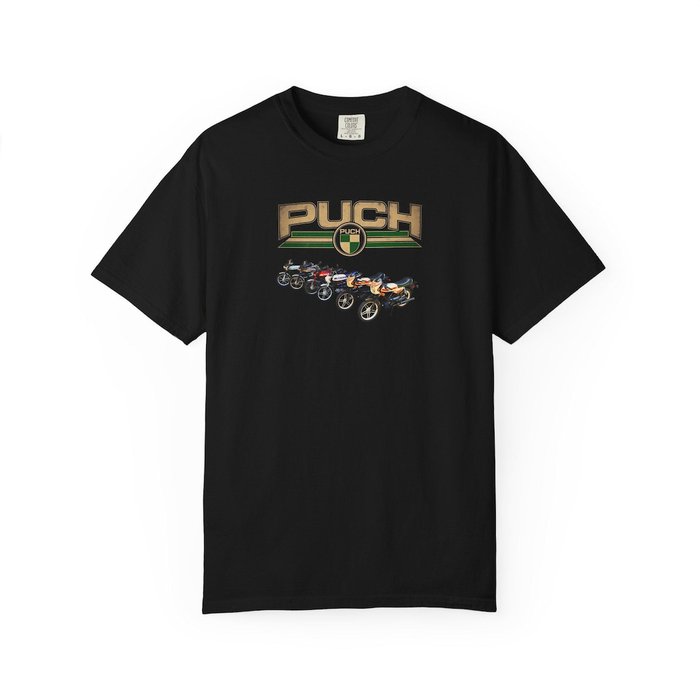
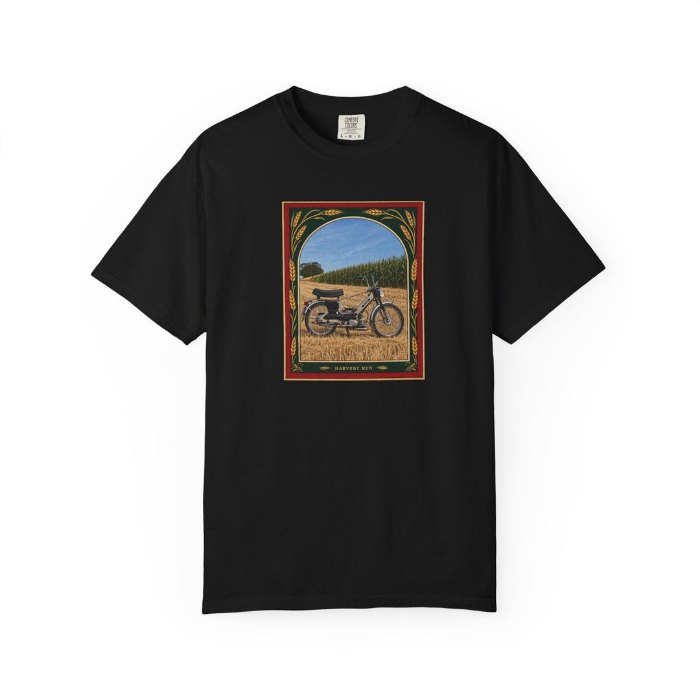
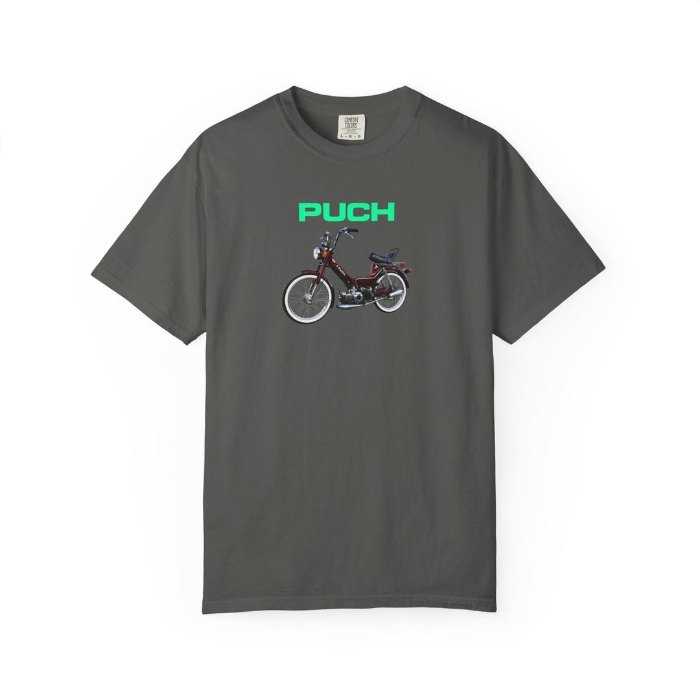
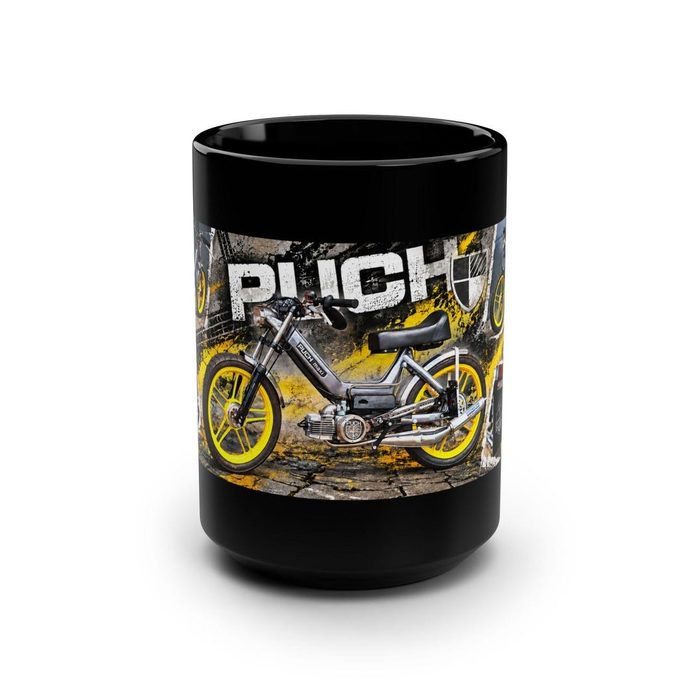
T-Shirts, hats and hoodies made from real vintage mopeds. Printed to order.